Black ice driving safety starts with understanding what you are looking at
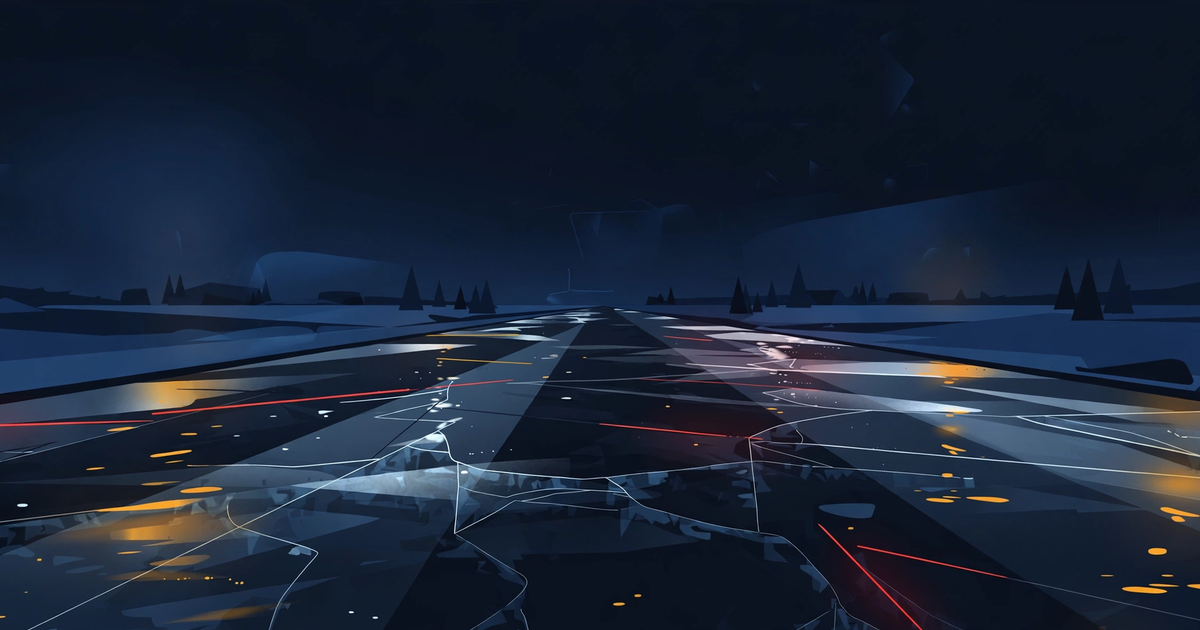
Most winter hazards announce themselves. Snow is obvious, fog is visible. Black ice does none of that: it is a thin, transparent glaze of ice on the road surface, so clear that the dark pavement shows through. What you see, if you see anything at all, is a stretch of road that looks merely wet — or even completely dry.
It forms from light freezing rain, drizzle landing on a freezing surface, or snow and water that melted during the day and froze again overnight. Because it forms without trapping air bubbles, it does not turn white like frost — it simply takes on the pavement's appearance. The U.S. National Highway Traffic Safety Administration (NHTSA) has long warned drivers that this glaze deserves special respect: it is real ice, it has almost no grip, and your car will tell you it is there only when it is too late to slow down for it.
One point matters more than any other for black ice driving safety: it is the temperature of the road surface that counts, not the temperature on your car's display. Ice can form on the tarmac even when the air reads a degree or two above freezing — so if it is a cold night and the road looks damp, assume the worst.
Where black ice hides
Black ice can form anywhere the temperature dips near freezing, but it has favourite places — slow down before you reach them:
- Bridges and overpasses freeze first. Cold air flows above and below the deck, so they lose heat far faster than ordinary road. NHTSA specifically warns drivers to be especially careful on bridges, overpasses, and infrequently travelled roads, which freeze first.
- Shaded stretches. Roads under trees, buildings, or on north-facing slopes can stay icy long after sunny stretches have melted dry.
- The road beneath overpasses. These get no sun at all and cool from the top as well.
- Near water and low spots. Rivers, lakes, and dips in the road create local cold pockets where freezing starts earlier.
- Quiet side roads. Less traffic means less tyre friction warming the surface, so ice survives longer there.
The first cold snap of the season is one of the worst times: drivers are still in autumn habits, and black ice arrives before anyone has started thinking about winter.
Four warning signs the road is icing up
You cannot see black ice clearly, but you can read the conditions around it — four clues to watch for:
- Temperature near freezing plus a damp road. Overnight cold and tarmac that looks wet even though nothing is falling: yesterday's rain or melt may have refrozen.
- A glossy patch in dull tarmac. If the road looks flat and dull but a patch ahead is shiny or glassy in your headlights, treat it as ice — that sheen is the one visual warning black ice gives.
- Sudden silence from the tyres. The UK Highway Code notes that on ice, tyres make almost no noise. If road noise fades for a moment on a cold morning, you may be on a frozen surface.
- Ice on everything else. Frost on windscreens, icy pavements, freezing drizzle on wipers — if the trees are white with frost, slow down.
What to do if your car starts to slide
Hitting black ice is a shock, and the instinct to slam the brakes is exactly the wrong response. Road-safety authorities give the same core advice:
- Stay calm and take your foot off the accelerator. The general rule is to do as little as possible and let the car pass over the ice. Sudden inputs — braking, swerving, accelerating — break what little traction you have left.
- Do not slam on the brakes. With anti-lock brakes (most modern cars), press the brake firmly and steadily and let the system work — the pulsing pedal is normal. Without ABS, squeeze gently and ease off if the wheels lock.
- Steer gently where you want to go. Keep your hands on the wheel, look at the open road ahead rather than what you fear hitting, and make small, smooth corrections — including steering into the skid if the rear slides sideways.
- Never use cruise control on icy roads. NHTSA lists this as one of its key winter rules — your foot needs full control of speed at all times.
Most black-ice encounters last only a few seconds — a short patch, not a whole road. The drivers who get through them are the ones who were already slow, already gentle, and already left themselves room.
Preparing before the first frost
A few habits make black ice dramatically less dangerous:
- Slow down and double your gap. Met Office-linked guidance advises doubling the normal following distance on icy roads; the UK Highway Code warns stopping distances can be up to ten times longer on ice.
- Be smooth with everything. Gentle steering, gentle braking, gentle acceleration — abrupt movements turn a slippery patch into a spin.
- Fit proper tyres and check pressures. Fit winter tyres where they are common or required, before the cold arrives. Cold also lowers tyre pressure, and soft tyres grip worse.
- Clear the whole car. Defrost all windows, clear snow off the roof and lights, and keep headlights on even in daylight so others can see you.
- Carry a winter kit. A blanket, torch, ice scraper and de-icer, sturdy boots, water, and a charged phone with a car charger — invaluable if you slide off the road and must wait for help.
- Plan the route, not just the time. Major roads are more likely to be treated or gritted; quiet untreated lanes are where black ice survives longest. Leave early so you never feel rushed into driving faster than conditions allow.
Winter driving hazards overlap, so prepare for the others in the family too: our fog-driving guide covers the other great invisible hazard of the season, our winter ventilation guide and gas heater and geyser safety guide cover the indoor risks of the cold months, and a family emergency communication plan keeps everyone aligned when winter disrupts normal life. And if a slide-off ever leaves you stranded in the cold, our hypothermia and frostbite guide explains how to recognise cold injury.
What our records show, and what they miss
Our incident records show black ice appearing the same way every year: as a surprise — single-vehicle slides on early-morning bridges, pile-ups where one car lost grip and several followed, and "car left the road" reports filed before sunrise. The pattern is consistent: the first cold week of the season, roads that looked merely damp, drivers travelling at normal speed.
What the records miss is the denominator. For every crash we log, thousands of drivers cross the same patch safely. Black ice rarely makes headlines the way storms do, so it never gets the public fear it deserves — and that is why it keeps catching people out.
The short version
- Black ice is a thin, transparent glaze of ice that looks like wet — or dry — road, forming from freezing rain, drizzle, or refrozen melt, mostly at night and in the early morning.
- Bridges, overpasses, shaded stretches, and quiet roads freeze first — slow down before you reach them, not after.
- Watch for the warning signs: air near freezing with a damp road, a glossy patch in dull tarmac, tyres going suddenly quiet, and frost on everything else around you.
- If you slide: stay calm, foot off the accelerator, no hard braking, steer gently where you want to go, and never use cruise control on ice.
- Before winter bites: double your following distance, drive smoothly, fit proper tyres, clear the whole car, and keep a winter kit in the boot.