When a disaster strikes, the plan most families count on is the one already in their hand: the phone. Then the network jams, the battery dies, or the signal simply disappears — and nobody can reach anybody. The American Red Cross, FEMA's Ready.gov and the fire service in almost every country agree on the same quiet lesson: communication is the first thing to fail, and it is the easiest thing to prepare.
Ready.gov's advice is plain: your family may not be together when a disaster hits, so know how you will contact one another and reconnect if you are separated. Ten minutes of calm planning on an ordinary evening covers what chaos will not let you improvise. This is the plan, not the kit — the companion to the go-bag you already have packed.
Build your family emergency communication plan in ten minutes
The whole plan fits on one sheet of paper and answers four questions: who do we call first, where do we meet, what do we carry, and when do we practise. Start with the hardest truth — assume the phone network is unusable. In wide outages and big earthquakes, mobile networks can be the first thing to fail, and in ordinary congestion a text message gets through overloaded networks far better than a voice call. So the plan has layers: text before calls, one person as the hub, a written backup when nothing electronic works.
Pick one out-of-area contact
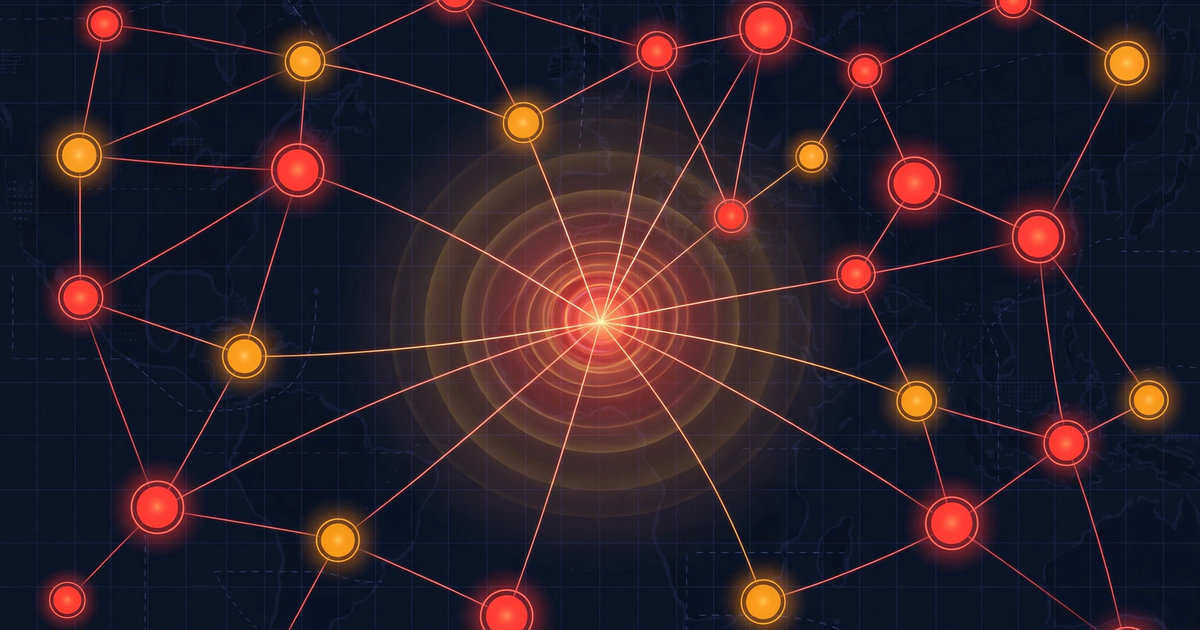
Give every family member one phone number that belongs to someone outside your area — a relative in another city, a trusted friend in another country. This is the oldest trick in the Ready.gov playbook and it works for a reason: when a disaster hits your city, local networks overload while long-distance routes often keep working. One person who is safe, reachable and outside the disaster zone becomes the family's message hub.
The rule for using them is simple: call or text the out-of-area contact once, then wait. Tell them where you are and where you are heading, and ask them to pass it on. One message per person stops everyone ringing everyone at once, which is exactly what jams the network. Make sure children can reach this contact too — saved in the phone, written on the paper card, and practised.
Agree on two meeting points
Ready.gov tells every household to establish a family meeting place that is familiar and easy to find. You need two:
- Near home — somewhere just outside your building or street: a corner shop, a park bench, the front gate of a neighbour's house. Somewhere the whole family can reach on foot in a few minutes if the building must be evacuated suddenly.
- Outside the neighbourhood — a second point further away, in case the first one is inside the affected area or unreachable. A well-known landmark, a school, a place of worship, a relative's house on the far side of town.
The point of naming them in advance is that nobody has to decide anything on the day. A frightened child does not choose a rendezvous; they remember one. Walk both routes once, in daylight, so the younger children know them by sight. If plans change on the day — one parent is diverted, a road is closed — the out-of-area contact gets told first, and everyone else checks with them.
The paper card in every wallet
Phones die. Paper does not. Ready.gov's family plan checklist expects the important details written down, and the easiest version is a small card carried in every wallet, every school bag, every jacket pocket:
- The out-of-area contact's name and phone number.
- The phone numbers of every family member.
- The two meeting points, written plainly.
- Each person's blood group and any allergies.
- Any medical condition the others should know about, plus your local emergency number.
Keep it to one side of a folded card — small enough to survive washing day. Update it when a number changes and when a child moves to a new school. The go-bag guide suggests keeping document copies with your supplies; the wallet card is the version you carry on your person, because you may not be at home when it matters. No medicine names or doses belong on it — this is a contact card, not a prescription.
What children should memorise
Devices get lost and screens go dark; memory does not run out of battery. Every child old enough to speak in sentences should know three things by heart: their own full name and their parents' names, the out-of-area contact's phone number, and the near-home meeting point. Turn it into a game — ask for the number on the walk to school, reward the correct meeting point.
Teach them one more habit: if we are separated, stay where an adult can find you, and go to the meeting point. Children who wander looking for parents are how reunions get delayed. A child who sits at the agreed bench, with a wallet card and a number in their head, is a solved problem. Rehearse what to say if a stranger offers help: name the meeting point, not the parents' schedule.
Practise it twice a year
Ready.gov's last step is the one most families skip: practise the plan with your household. A plan that has never been walked through is a piece of paper, not a plan. Twice a year — when the clocks change, when school terms start, any date you will remember — run the drill:
- Announce a pretend emergency at an inconvenient moment: dinner, a weekend morning.
- Everyone phones or texts the out-of-area contact with their pretend location.
- Everyone walks to the near-home meeting point and checks the time.
- Everyone pulls out their wallet card and confirms the numbers are current.
Ten minutes, twice a year. Check the battery radio and the power bank while you are at it — the outage guide puts them on the same maintenance rhythm. The drill also surfaces the awkward truths: the card is in last year's jacket, the child has a new school route, one parent never saved the number. Better to find that out on a Saturday than in a smoke-filled street.
What our records show, and what they miss
Our trending page shows it plainly: earthquakes, storms and fires make the news; the communication breakdown inside them almost never does. The incident record captures the earthquake's magnitude, not the three hours a family spent looking for a child who walked home alone. It logs the flood's depth, not the jammed networks that kept parents from confirming anyone was safe.
What our records do show, every week, is that the incidents keep coming — thousands a day across more than forty countries on an ordinary day. None of them warns the family it lands on. The records miss the entire household half of every disaster: who knew where to meet, who had the number, who practised. That half is unmeasurable, which is exactly why it has to be decided in advance. No feed will record your ten minutes on a quiet evening. Your family will.
The short version
- Assume the phone network will fail first: text before calling, and designate one out-of-area contact as the family's message hub.
- Agree on two meeting points — one near home, one outside the neighbourhood — and walk both routes with the children once.
- Put a paper card in every wallet: the out-of-area number, every family number, both meeting points, blood groups and allergies.
- Make sure every child memorises their own name, the out-of-area number and the near-home meeting point — memory has no battery to drain.
- Practise the whole thing twice a year, ten minutes at a time, and update the cards whenever a number changes.