Blizzard whiteout survival: when the world shrinks to an arm's length
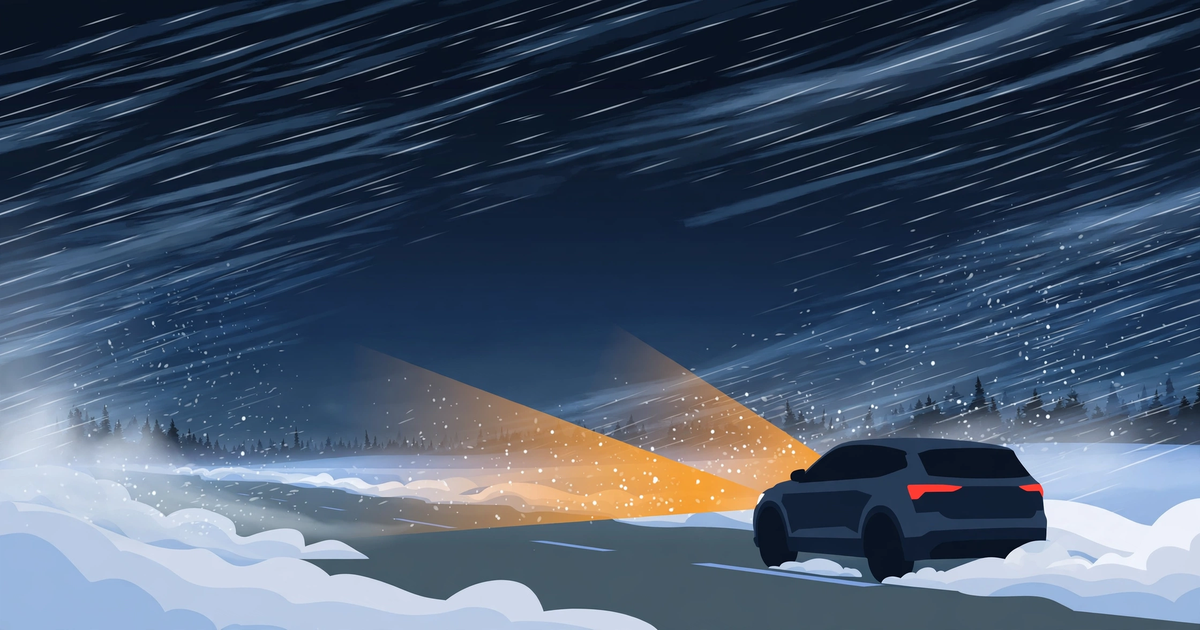
A blizzard's most dangerous feature is not the cold. It is the whiteout — the moment wind-driven snow erases the road, the horizon, and even the difference between up and down. In a whiteout you can lose your bearings within a few steps of your car: people who were metres from safety have walked in the wrong direction and never been found in time. Surviving a blizzard is therefore mostly a matter of decisions, not equipment — one big decision, stay or walk, and a handful of small actions that keep you warm and visible until the storm passes or help arrives.
This guide is about what to do when the storm catches you, on the road or on foot, anywhere winter storms happen. It is the companion to tomorrow's guide on the winter car emergency kit — today is the skill, tomorrow is the kit. No temperatures, wind-chill figures or survival-time thresholds are quoted here; none of them are universal, and you do not need them to make the right call.
The first decision: stay or walk
If your vehicle is stuck or stalled in a blizzard, stay with it. This is the single most important rule, and the hardest to obey when panic whispers that you should go for help. A car is shelter, a windbreak, and a landmark that rescuers and plough drivers can actually find. A person on foot in a whiteout becomes disoriented within minutes and is effectively invisible — to ploughs, to rescuers, and to other drivers.
Walk only if you can clearly see shelter — a building, a lit house, a service station — and it is genuinely close, not a hopeful shape in the snow. If you cannot see it clearly, you do not know how far it is. Stay.
Make yourself visible
Rescuers cannot help you if they cannot find you. The US National Weather Service's standard advice for a vehicle stranded in a winter storm is to make the car as easy to spot as possible:
- Turn on your hazard lights.
- At night, keep the dome (interior) light on while the engine is running.
- Tie a bright cloth — red is best — to the antenna or a door handle, so it moves in the wind.
- Once the snow stops falling, raise the hood to signal distress.
Do all four. In blowing snow, one signal can be buried or overlooked; several together make a pattern a searcher can recognise.
Warmth in bursts: how to stretch your fuel
Your fuel is now your lifeline, so spend it in bursts. Run the engine for about 10 minutes each hour for heat — the National Weather Service's standard figure — rather than idling continuously. Before each run, make sure the exhaust pipe is clear of snow: a blocked exhaust can push carbon monoxide into the car. Crack a window slightly on the downwind side for fresh air while the engine runs, and keep moving your arms, legs, fingers and toes from time to time to keep your circulation going.
Huddle together if you are with others, and keep everyone as dry as possible — wet clothing loses heat far faster than dry. Conserve your phone battery: dim the screen, switch off what you do not need, and call your local emergency number early, while you still have charge, rather than waiting until the situation feels desperate.
If you are caught on foot
Get behind a solid windbreak — a building wall, a large rock, a dense stand of trees — and stay there. Wind is what strips heat from you; shelter from it matters more than almost anything else. Stay as dry as you can, and cover all exposed skin: face, ears, hands. Frostbite starts on the parts you forgot.
Do not set out to find help in a whiteout. Without landmarks you will walk in circles, burn through your energy, and end up further from safety than where you started. If you must move, follow something you can feel — a fence line, a wall, a rope — never your sense of direction, which a whiteout destroys.
What not to do
- Do not leave the car to look for help in a whiteout unless shelter is clearly visible and close. The car is findable; you are not.
- Do not run the engine with a blocked exhaust pipe, and do not sleep with the engine running and the windows fully closed. Carbon monoxide is colourless and odourless — the exhaust check and the cracked window are what keep you safe.
- Do not eat snow for water. It seems sensible, but melting snow inside your body costs heat and energy, and can lower your body temperature further — the CDC advises melting snow and boiling it before drinking. If you are thirsty, melt snow in a container with body heat first; do not eat it by the handful.
- Do not wait too long to call for help. If you are stranded and conditions are worsening, call your local emergency number while your phone still works. An early call is a rescue; a late one is a recovery.
What our records show, and what they miss
GlobalIncidentTracker's live records log winter-storm incidents among the wider stream of events we track — stranded vehicles, road closures, rescue operations. But records only capture what was reported and confirmed. The quiet endings never become a record: the driver who stayed with the car, ran the engine in bursts, kept the exhaust clear, and was found by a plough at dawn. That gap is exactly why this guide focuses on decisions you make with your own eyes — stay with the vehicle, be visible, heat in bursts — rather than on anything in our database.
What the records do show is a pattern: the worst outcomes come not from the cold alone, but from the walk — leaving shelter to find help in conditions where no one can see you and you cannot see anything.
The short version
- Stay with the vehicle unless shelter is clearly visible and close.
- Be visible: hazard lights on, dome light at night, a bright cloth on the antenna, hood raised after the snow stops.
- Heat in bursts: engine about 10 minutes an hour, exhaust pipe cleared first, a downwind window cracked, limbs moving.
- On foot: get behind a windbreak, stay dry, cover all exposed skin, never wander in a whiteout.
- Call early: phone your local emergency number while you still have battery — and do not eat snow for water; melt it first.
A blizzard ends. The storm passes, the ploughs come out, and the road reappears. Your job is simply to be warm, visible and findable when it does — and tomorrow's guide will make sure your car is packed so you never have to improvise.
Related guides: choking first aid, earthquake drill in 60 seconds, never drive through floodwater, crowd-crush safety for festival nights and tsunami safety after shaking.