Kitchen burns first aid: a burn and a scald get the same treatment
The kettle tips, the pan spits, the steam rises — the kitchen delivers most of the burns most of us will ever get. The NHS draws one clean line first: a burn is damage from dry heat, like an iron or a flame; a scald is damage from wet heat, like hot water or steam. And then it says the line that matters: both are treated in the same way. Whether it was boiling water, hot oil, a hot tray or a steam cloud, the first aid is identical — no diagnosis needed before you start helping. You need one sequence, and you need it fast.
Here is the other line worth carrying into the kitchen: "The amount of pain you feel is not always related to how serious the burn is. Even a very serious burn may be relatively painless." That is the NHS — which is why you treat the burn by the rules, not by how much it hurts.
Step one: stop the heat
Before anything else, get the person away from the heat source to stop the burning — move them, move the pan, turn off the ring. The NHS frames this as the immediate priority, and it adds the obvious-but-easy-to-forget caution: do not put yourself at risk of getting burnt as well. A rescuer with two burnt hands helps nobody.
Step two: cool it — 20 minutes, running water
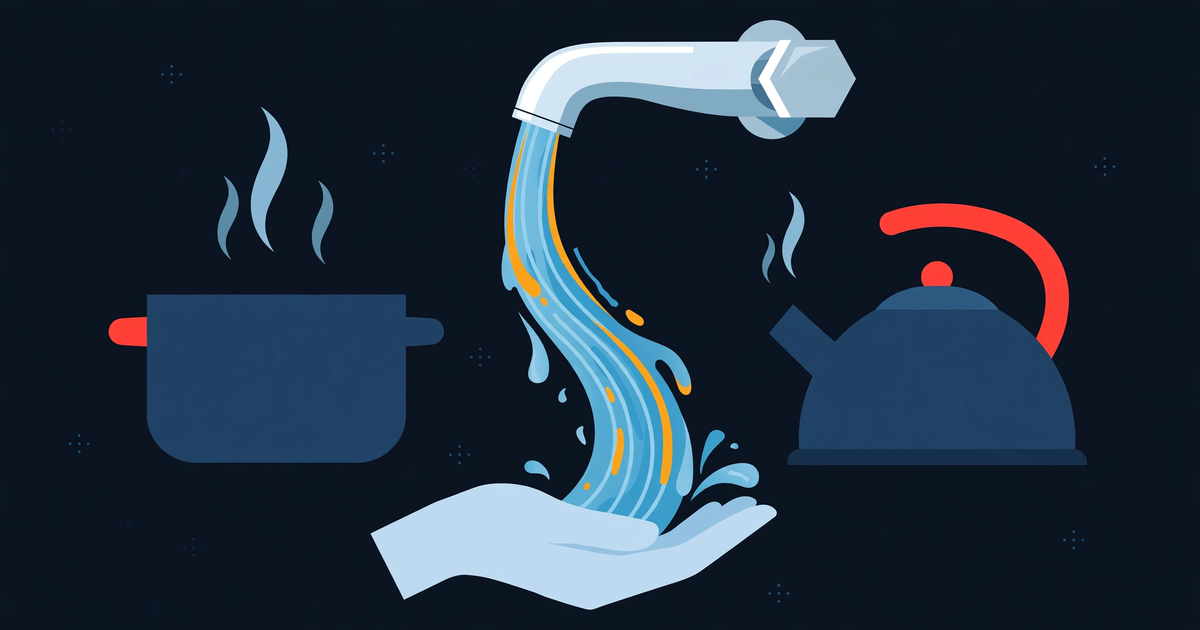
This is the single most important thing you will do, and it has a number: 20 minutes. Hold the burn or scald under cool running water for 20 minutes, as soon as possible — the NHS says within 3 hours of it happening, but sooner is always better. Running water matters: a wet towel or a bowl of water is much less effective, because running water carries the heat away continuously instead of warming up against the skin.
If there is no running water, the NHS allows two substitutes: cool bottled water poured over the burn, or a wet towel. But never put a burned child in a bath full of cold water — the South West Burns Clinical Network warns this can push a child into shock. Cold, yes; a cold bath, no.
While you cool, think about the rest of the person. The NHS says to keep them warm with a blanket or layers — kept clear of the burnt area. With a large burn being cooled, body temperature can drop below 35°C (95°F) — its own emergency. Cool the burn, warm the person.
Step three: cover it — loosely
Once the burn has had its 20 minutes, cover it — and the NHS is specific about the technique because people get it wrong: lay cling film over the burn. Do not wrap it around. A single layer, like a lid, keeps the burn clean and eases the pain of air on raw skin. For a burnt hand, a clean plastic bag works the same way; a clean, non-fluffy cloth is the alternative. "Loosely" matters for circulation and swelling — a tight wrap does harm, not good.
The remedies that make it worse
Almost every kitchen has the ingredients for well-meaning mistakes. What never to put on a burn, per the NHS: no ice, no iced water, no creams, and no greasy substances like butter. Ice damages already-injured skin; butter, oils, toothpaste and creams trap heat. They are the folk remedies of every culture, and the official guidance rejects every one of them.
Three more rules. First: remove clothing or jewellery near the burnt area — rings, watches, even a nappy on a baby — but never move anything stuck to the skin. Leave stuck fabric for the professionals; pulling it tears the wound. Second: do not burst any blisters. A blister is the body's own sterile dressing; popped, it becomes an open wound. Third: keep the burn clean, and manage pain with paracetamol or ibuprofen per the packet directions.
When this is an emergency
Some burns need a hospital, not a home first-aid kit. Go to A&E — call your local emergency number — for all chemical and electrical burns (these can damage deep tissue while looking mild); any burn bigger than the injured person's hand; burns causing white or charred skin, of any size; and burns on the face, neck, hands, feet, joints or genitals. Smoke or fume inhalation needs medical attention too — the NHS warns symptoms can be delayed: coughing, sore throat, difficulty breathing appearing later still count.
And some people should always be seen after a burn or scald, whatever its size: children under five, adults over sixty, and anyone pregnant. Any burn that has blistered deserves medical attention rather than wait-and-see.
The network's memory aid for the whole sequence is three words: COOL, CALL, COVER. Cool for at least 20 minutes, call your local emergency or medical-advice number for guidance, cover loosely.
After: the quiet checks
First aid done, the job becomes watching. Seek further medical advice if the wound becomes painful or smelly; temperature reaches 38°C or higher; the dressing soaks with leaking fluid; or the wound has not healed after 2 weeks. The infection tripwire: swelling, skin hot to touch, spreading redness or rash around the burn, discharge or pus, shivers or vomiting with a fever. Infection in a burn can turn serious quickly.
A calmer kitchen
The first aid is the skill; prevention is the quieter half. Turn pan handles inward. Keep hot drinks at the back of the counter, away from edges and small hands. Use oven mitts, not tea towels, for hot trays — towels slip. Keep children at a distance from the stove and the kettle's steam. Most kitchen burns happen on an ordinary evening, to someone who knew better.
Burns are only one kind of household emergency — the same calm-day habit of learning the sequence applies to every hazard we cover: tornado safety: the minutes that matter, cyclone preparation: the category number is not the danger, thunderstorm and hail safety, lightning safety and the 30/30 rule, and flash floods: never drive through floodwater.
What our records show, and what they miss
Our incident records hold burns the way they hold every disaster: the event, the injury counted, the outcome filed. What they show is how ordinary the setting is — a kitchen, an evening, a few seconds of contact. What they miss is the part nobody reports: the 20 minutes of cool running water that kept a scald superficial, the cling film that kept it clean. Nobody files an incident report for first aid that worked. Learn the sequence on a calm day — cool, call, cover — and you join the majority our records never see.
The short version
- Burn = dry heat, scald = wet heat. Both get the same first aid.
- Cool under cool RUNNING water for 20 minutes, as soon as possible (within 3 hours). No running water? Cool bottled water or a wet towel. Never a cold bath for a child.
- Keep the person warm while cooling (blanket, clear of the burn) — hypothermia is below 35°C.
- Remove clothing/jewellery near the area; never pull off anything stuck. Do not burst blisters.
- Cover loosely: lay cling film OVER the burn, not wrapped around. Clean plastic bag for a hand burn.
- Never ice, iced water, creams, butter, oils or toothpaste.
- Emergency: chemical/electrical burns, bigger than the person's hand, white or charred skin any size, face/neck/hands/feet/joints/genitals, smoke inhalation — or under-5s, over-60s, pregnant.
- After: painful or smelly wound, 38°C+ fever, soaked dressing, not healed in 2 weeks — get medical advice.