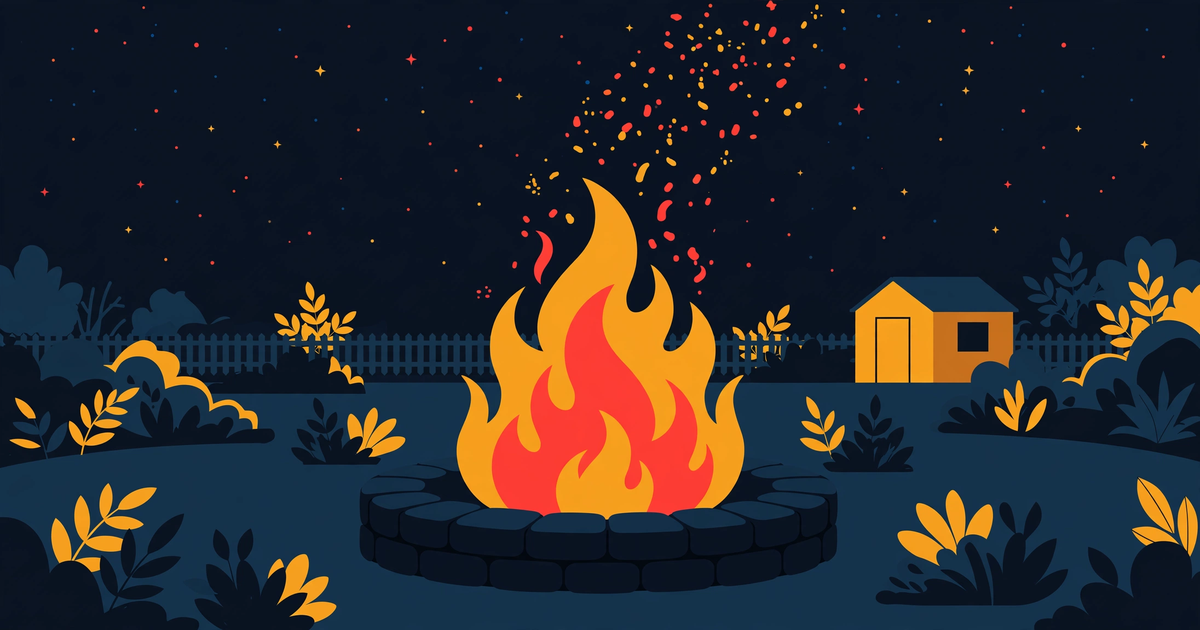
A bonfire is an open fire, not a decoration
Every Bonfire Night, gardens and fields across the country fill with one of the oldest entertainments there is: an open fire, deliberately lit, with the family standing around it. That is exactly why the fire services keep issuing the same advice every October. A bonfire generates a lot of heat, throws sparks without warning, and burns far hotter than it looks from three metres away. The London Fire Brigade puts it bluntly in its bonfire safety message: make sure the fire is the right size for the location — because bonfires generate a lot of heat, and burning material can fall out of the fire without warning.
The scale of the season's injuries is the reason this guidance exists. RoSPA says that historically around 1,000 people in the UK visit A&E for firework-related injury in the four weeks around Bonfire Night, with about half of those injuries in under-18s. Its senior policy manager Rebecca Guy calls fireworks what they are: "powerful explosives, not toys." And the same applies to the fire itself. RoSPA's first rule of the season is the simplest: the safest place to enjoy fireworks is at a large public display. If you are lighting your own bonfire, these are the official rules.
Plan it before you build it
The London Fire Brigade's advice starts with placement, because most bonfire problems are positioning problems. Build the bonfire well clear of buildings, garden sheds, fences, hedges and any cables above the fire. The area around the fire should be cordoned off, and anyone near it — especially children — should be supervised at all times. RoSPA's guidance adds the detail: light it away from wooden fences, sheds and anywhere children will be playing.
Then plan what goes on the pile. Never pour petrol, paraffin or spirits directly on the fire — this is one of RoSPA's Firework Code steps, and the Brigade repeats it for bonfires: never use flammable liquids to start one, and use fire lighters instead to prevent sudden flare-ups. Never burn dangerous items either: aerosol cans, paint tins, foam furniture and batteries can all explode or give off toxic fumes. The pile gets one fuel — wood and garden waste, nothing else.
Keep the support kit ready before you light: a bucket of water or a garden hose nearby, plus RoSPA's recommended extras — a torch, eye protection and gloves. If your display includes fireworks, the Firework Code requires them bought only with the UKCA or CE mark, kept in a closed box and used one at a time, with the instructions read on each one (using the torch if necessary).
One adult in charge, no exceptions
Only adults should handle the fire and any fireworks. That is not advice — it is the Firework Code's rule: adults should be the only ones to set up displays, light fireworks and dispose of them safely afterwards. Children and young people should be supervised, and watch and enjoy at a safe distance. RoSPA adds the social rule that stops most home accidents: fireworks and alcohol don't mix — never let anyone who has been drinking light a firework.
Lighting technique is in the Code too: light the firework at arm's length with a taper and stand well back; keep naked flames, including cigarettes, away from fireworks; never put fireworks in pockets and never throw them; direct rockets well away from spectators; and never return to a firework once it has been lit. For the bonfire itself, the Brigade's rule is matching: an adult supervises the fire until it has burnt out, and a bonfire is never left unattended — if it has to be left, damp it down with plenty of water. Fireworks carry their own injury risk, separate from the fire itself — our firecracker safety guide explains why the season turns deadly.
Dress for the fire
What people wear around an open fire matters more than they think. The Brigade warns: wear safe clothing — metal buttons and studs can get hot, and plastic clothing may melt. RoSPA's family advice says the same: avoid loose or floaty clothing, tie back long hair, and check outfits aren't made from highly flammable materials. Long sleeves are fine; trailing sleeves are not. Children running around a bonfire in loose costume-type clothing is exactly the combination the guidance is trying to prevent — everyone stays at a safe distance from the fire, and the supervisor watches the edges, not just the flames.
Sparklers deserve their own rules
Sparklers look harmless and burn extraordinarily hot — which is why they get their own set of official rules. Never give sparklers to a child under five — this is the London Fire Brigade's explicit line. Adults using one must never hold a baby while doing so, must wear gloves, hold the sparkler at arm's length, light them one at a time, and never wave them close to other people. And the part everyone forgets: never throw used sparklers into the bonfire — place them in a bucket of cold water when finished. A lit sparkler is a heat source; a dead one still goes in the water, not the flames.
Pets and neighbours
Keep pets indoors — the Brigade and RoSPA both say it, and firework noise stresses animals badly. Tell your neighbours you are having a bonfire before the evening, not during it. And if you are burning fireworks, know the local rules: in the UK, fireworks are generally banned between 11pm and 7am, with a midnight exception for Bonfire Night — check your area's curfew and keep to it.
Extinguish it properly
The night is not over when the flames die. The Firework Code's last step is the one people skip: make sure the fire is out and the surroundings are made safe before leaving. RoSPA's family guidance says to spray the embers with water once the fire has died down to prevent it reigniting. The Brigade's version: damp it down with plenty of water, and keep that bucket or hosepipe to hand until you are certain. Never return to a firework once it has been lit — and never assume a bonfire is done because it looks quiet. An unattended warm pile can reignite; an unattended fire with children nearby is the whole point of every one of these rules.
And if the worst happens and someone gets burnt, the first aid is in our burns guide: cool running water for 20 minutes, cover loosely, and call your local emergency number for anything bigger than the injured person's hand. The bonfire season's injuries are, in RoSPA's word, avoidable — and avoidability is a decision made before the match, not during the emergency.
What our records show, and what they miss
Our incident records hold fires the way they hold every disaster: the event, the damage counted, the outcome filed. What they show is how ordinary the setting is — a garden, an evening, a few seconds of inattention. What they miss is what nobody reports: the bucket of water already there, the adult who never looked away. Nobody files an incident report for a fire that stayed where it was put. For the indoor risks of the cold season, see our winter fire safety guide and our gas heater safety guide.
The short version
- Well clear of buildings, sheds, fences, hedges and cables — and the right size for the spot.
- No petrol, paraffin or spirits — fire lighters only. Never burn aerosols, paint tins, foam or batteries.
- One adult in charge; never unattended until burnt out. Fireworks and alcohol don't mix.
- No loose clothing, tie back long hair; no sparklers for under-5s — gloves, arm's length, one at a time.
- Extinguish fully: damp down with water, spray the embers, don't leave until it's cold.