A fuel tanker overturned and exploded on Cairo's Ring Road on Wednesday evening, 25 November 2026, killing at least 31 people and injuring at least 21, according to Egypt's Ministry of Health and Population. The Cairo fuel tanker fire broke out above a tunnel in Al-Warraq, Giza, spread to dozens of cars and motorcycles in the traffic around it, and shut one of Greater Cairo's busiest highways for hours.
The Health Ministry called the death toll preliminary — the figure moved during the evening as rescue crews reached vehicles that had burned where they stood. The injured were taken to three nearby hospitals, and Egypt's health minister went to the scene himself.
The Cairo fuel tanker fire: what we know so far
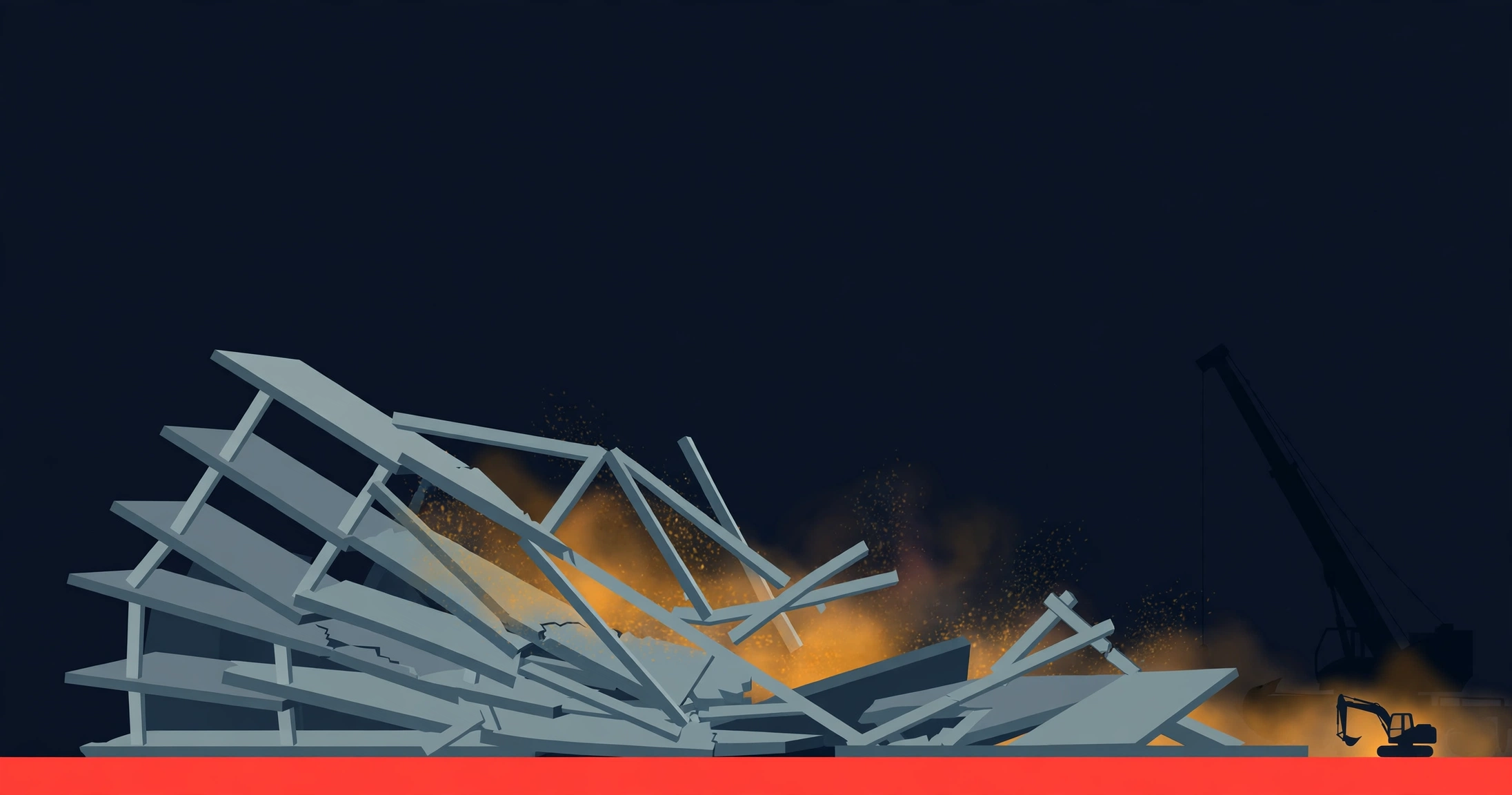
The crash happened just after 6 p.m. local time on Wednesday, on the Ring Road above Tunnel 10 in Al-Warraq, a densely populated neighbourhood in Giza inside the Greater Cairo area. The tanker was carrying petroleum products. It left the road, crashed and overturned, then caught fire, and within minutes the blaze had spread to the vehicles around it.
The Health Ministry's latest figures put the dead at 31 and the injured at 21. Egypt's Public Prosecution office said 27 cars and motorcycles were charred, with its teams still assessing the damage on Wednesday night. The Associated Press put the number of burned vehicles at more than two dozen.
Thirty-nine ambulances were sent to the scene. Health Minister Khaled Abdel Ghaffar put nearby hospitals on high alert and visited the scene and the treatment centres himself. Most of the injured were suffering from burns, and some were in a critical condition.
By late on Wednesday night the Ring Road had reopened, and a spokesman for the health minister told the state-linked al-Qahera News channel that the remnants of the accident had been cleared.
A busy road, a full tanker
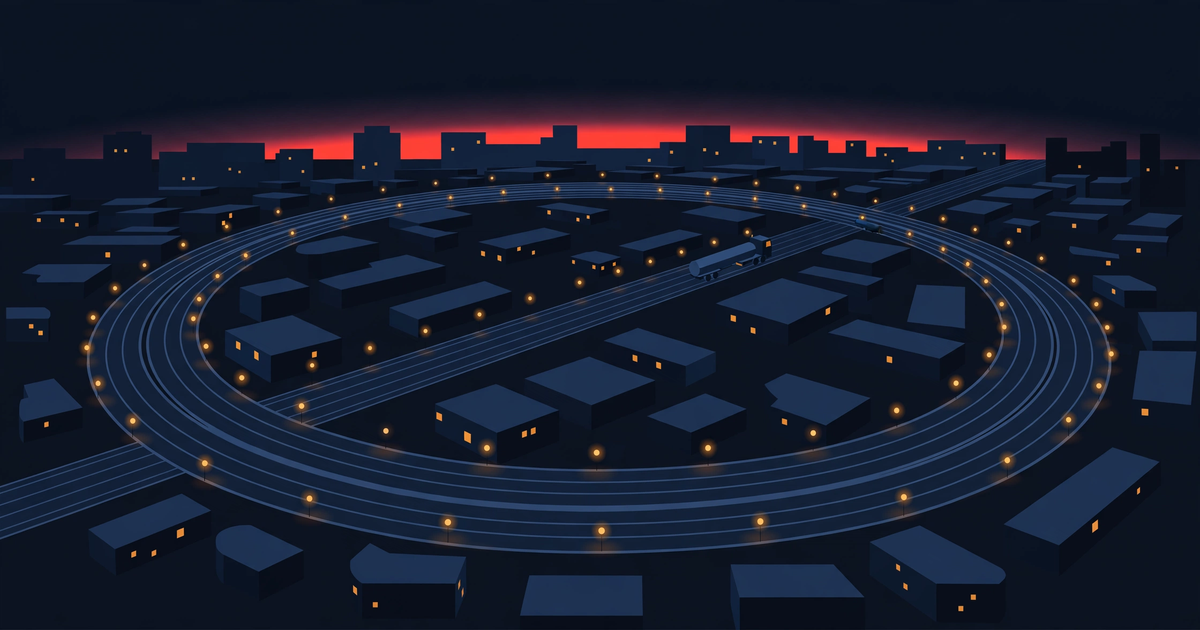
The Ring Road runs for about 100 kilometres around Greater Cairo, linking the governorates of Cairo, Giza and Qalyubia and carrying the traffic that crosses between them every day. At 6 p.m. on a Wednesday it is full — the detail that turns a bad crash into a mass-casualty fire, because the tanker left the road in moving traffic and the fire found fuel and vehicles all around it.
Egypt's Petroleum Ministry said the tanker was privately operated and had veered off the road and crashed before it exploded. A senior petroleum sector official told local media it belonged to a private contractor hired to transport petroleum products.
Road closures after a crash like this are not just about the fire — they keep the next collision from happening in the smoke and the queue behind it. The same logic applies on any motorway in the United States, the UK or Europe: when a tanker is involved, the road stays shut until the fuel is gone. Our recent coverage of the Thanksgiving storm disrupting travel across two American coasts shows the same trade-off, with journeys delayed so nobody drives into the danger.
What caused the crash
No official cause had been announced by Wednesday night — normal at this stage, and worth saying plainly rather than filling the gap with guesswork.
A preliminary inspection, reported by the state-run Al-Ahram newspaper, found the driver had lost control and the vehicle struck a concrete barrier before exploding. The Petroleum Ministry's account matches that sequence. Neither explains why the tanker left its lane.
Egypt's Public Prosecution office has opened a formal investigation, and Prime Minister Mostafa Madbouly ordered an inquiry. Prosecutors said DNA testing was under way to identify victims who had not yet been identified. President Abdel-Fattah el-Sisi expressed his condolences to the victims' families, and the prime minister directed the state to cover all medical expenses for the injured.
Why a fuel fire spreads so fast
A tanker full of petroleum products is not like an ordinary vehicle fire. Petrol gives off vapour that can ignite well away from the liquid itself, and once it catches, the heat is intense enough to set the vehicles next to it alight. That is how a single crash becomes a fire involving 27 vehicles. Fire crews deal with this by keeping their distance and cooling the tanks around the fire.
The toll moves for a reason that has nothing to do with reporting. Early figures count the people crews can reach, and more victims are found as the burned vehicles cool. That is what happened here: an earlier Health Ministry statement counted 30 dead and at least 15 injured, and the later figures raised the dead to 31 and settled the injured at 21. The prosecution's statement put the injured at 25, which does not line up with the ministry's 21. Where the sources disagree, we use the lower number and say "at least".
If you come across a tanker crash
Most people will never see one. If you do, the rules are simple, and the same whether the road is in Cairo, California or Kent.
- Keep your distance. Do not approach a tanker that has crashed, and do not stand downwind of it. Fuel vapour travels, and a fire can spread to nearby vehicles in seconds.
- Call the emergency services and warn others. Tell them a fuel tanker is involved, not just that there has been a crash, so the right crews and equipment are sent.
- Do not drive through the smoke. Turn around or wait well back — smoke from a fuel fire hides the road and the vehicles in it.
- Do not stop to film. A stopped car in a live lane becomes the next casualty, and it blocks the ambulances behind you.
- Do not try to pull people from a burning vehicle unless you can do so safely. Knowing basic first aid helps while help is on the way — our seizure first aid guide covers the same stay-safe principle that applies at any roadside emergency.
What our records show, and what they miss
Our records log road incidents like this one alongside the other disasters we track, from the building collapse in Karachi's Baloch Colony to the flood at an illegal gold mine shaft in Bogor and the plane crash off Mississippi's Horn Island. What the pattern shows is that the deadliest single events are rarely the ones with the biggest headlines in advance.
What our records miss is just as important. There is no single global count of fuel-tanker deaths, so a crash like this one is recorded as one incident among thousands, and its lessons stay local. The early numbers also disagree between agencies, as they did here, and the final toll only settles once identification is complete. And the cause — the one fact that would prevent the next crash — arrives last. Until the prosecution's investigation reports, the honest account is the one we have given here: what happened, where, and how many were hurt.
The short version
- A fuel tanker carrying petroleum products overturned and exploded on Cairo's Ring Road above Tunnel 10 in Al-Warraq, Giza, on Wednesday evening, 25 November 2026.
- At least 31 people were killed and at least 21 injured, according to Egypt's Health Ministry, which called the death toll preliminary.
- Twenty-seven cars and motorcycles were charred, 39 ambulances were sent to the scene, and the injured were taken to three hospitals.
- No official cause has been announced; prosecutors have opened an investigation and are using DNA testing to identify victims.
- The Ring Road reopened late on Wednesday night, and the state will cover the injured victims' medical expenses.