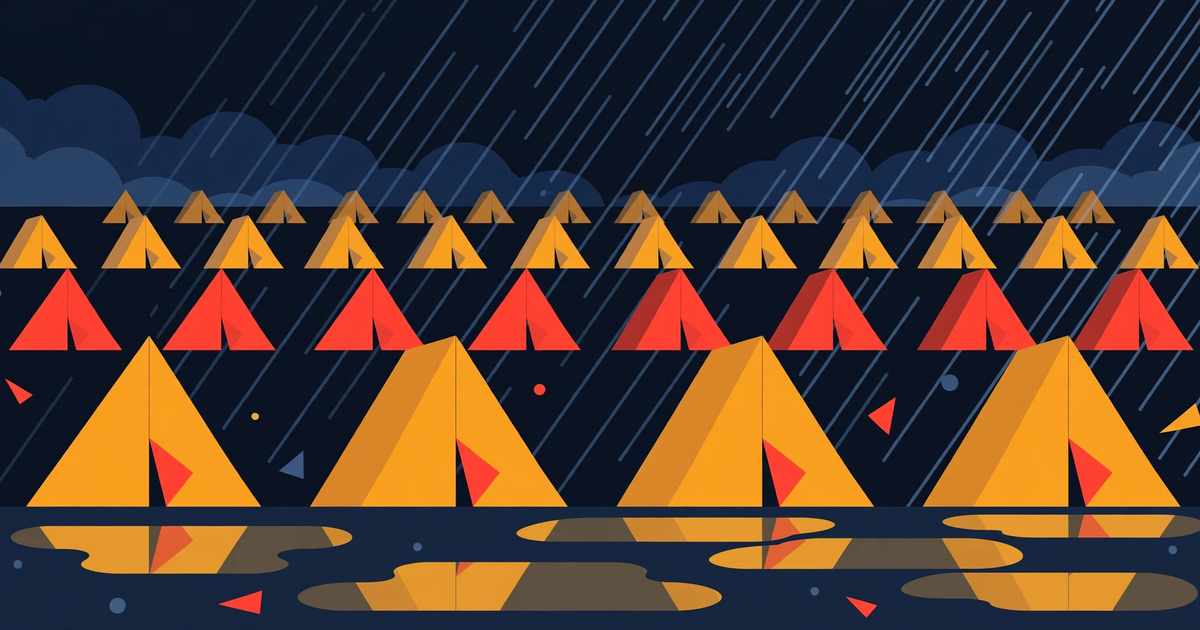
Heavy rain swept across Gaza on Saturday 7 November 2026, flooding the tent camps where displaced families have been living for months. By the end of the day, at least tens of thousands of tents had been swamped, and rescue teams were answering distress call after distress call from people standing in water inside their own shelters.
The exact scale of the flooding is still being counted, and the figures reported so far do not all agree. The BBC reported that tens of thousands of tents were flooded. Gaza's Government Media Office put the number higher, at 70,000 tents housing displaced families. Where sources differ, this article uses the lower figure: at least tens of thousands of tents.
Gaza's Civil Defence said it received about 1,500 distress calls in 10 hours as the storm moved through. The storm began early on Saturday, and in some tents the water rose to between 30 and 40 centimetres. Reported losses from the flooding were put at about $3 million.
For the families involved, the numbers describe a night spent standing in cold water with nowhere dry to sit, sleep or keep belongings. A tent that takes in 30 centimetres of water cannot be dried out by morning, and the families living in it have nowhere else to go.
What the Gaza tent flooding tells us about the winter ahead
The timing of the storm is what worries aid agencies most. The rain arrived as the rainy season begins, and the agencies working in Gaza say conditions will get worse before they get better, with more storms expected in the months ahead.
Jonathan Veitch, of the children's agency UNICEF, said people were desperate and begging for help. He warned that there were deaths in tents last winter and that the same is expected this winter unless urgent action is taken. His warning was about the season ahead, not about this storm alone.
The scale of displacement is what turns a storm into a crisis of this size. About 90 per cent of Gaza's population has been displaced, according to the BBC, which means most of the population is living in the kind of shelter the storm hit hardest: tents and makeshift structures with little protection against standing water.
Aid agencies also say that far fewer tarpaulins, plastic sheeting and tents are reaching Gaza than are needed. A tent with sound sheeting can shed heavy rain; one with worn or missing coverings fills with water instead. That shortage, the agencies say, is now the difference between a bad night and a ruined shelter.
Reuters reported that aid shortages are hampering relief efforts, as teams try to reach families whose shelters have been flooded while new supplies remain limited.
Why tents flood so easily
A tent is not a house. It has no raised floor, no drainage and no walls that keep water out once it starts pooling on the ground. When heavy rain falls on a crowded camp, the water has nowhere to go, and the lowest shelters take it first.
The camps in Gaza have been in place for months, and the tents and sheeting in them have already endured a long summer. Materials wear out, and replacements have been slow to arrive. When the first heavy rain of the season arrived on Saturday, it found shelters that were already fragile.
The storm itself was not unusual for the time of year. What made it destructive was what it fell on: a population living almost entirely in temporary shelter, with little in reserve to repair or replace what the water damaged. Anyone caught in floodwater should know their local emergency number before they need it.
What happens next
More rain is expected as the rainy season continues, and aid agencies say the situation will worsen unless more shelter material reaches Gaza. The immediate needs they describe are simple ones: tarpaulins, plastic sheeting and tents, in far greater numbers than are currently arriving.
Civil Defence teams spent Saturday answering distress calls, and that work will continue with each new storm. But rescue teams can only move people and pump water; they cannot rebuild a camp's worth of shelters between storms. That depends on supplies getting through.
The warning from UNICEF sets the stakes for the months ahead. Last winter, people died in tents. If the same conditions return this winter without urgent action, the agency expects the same outcome. Saturday's flooding is the first test of that warning, and it arrived early in the season. For advice on staying safe around floodwater, see our drowning prevention guide, and our hands-only CPR guide for bystanders.
What our records show, and what they miss
Our records show this as a weather event that struck a displaced population: heavy rain, flooded tents, distress calls and reported losses, all dated to Saturday 7 November. The figures come from the BBC, Al Jazeera and Reuters, and from Gaza's Civil Defence and Government Media Office, and where they disagree we have used the lower number. The site has covered other fast-moving incidents this week, including the US strikes on Qeshm Island, the Rawalakot crackdown and the Santo Domingo road crash in Chile.
What the records miss is the part that matters most to the families involved: the condition of individual camps, how much aid is actually arriving, and how people are coping night by night as the rainy season sets in. Those details come from the aid agencies working on the ground, not from incident records, and they are the reason this story will need updating as the winter goes on.
The short version
- Heavy rain on Saturday 7 November flooded at least tens of thousands of tents in Gaza's displacement camps.
- Gaza's Civil Defence received about 1,500 distress calls in 10 hours, and water reached 30 to 40 centimetres inside some tents.
- Gaza's Government Media Office put the total at 70,000 tents; this article uses the lower, independently reported figure.
- About 90 per cent of Gaza's population has been displaced, and aid agencies say too few tarpaulins, sheeting and tents are reaching Gaza.
- UNICEF warns that people died in tents last winter and the same could happen again this winter unless urgent action is taken.