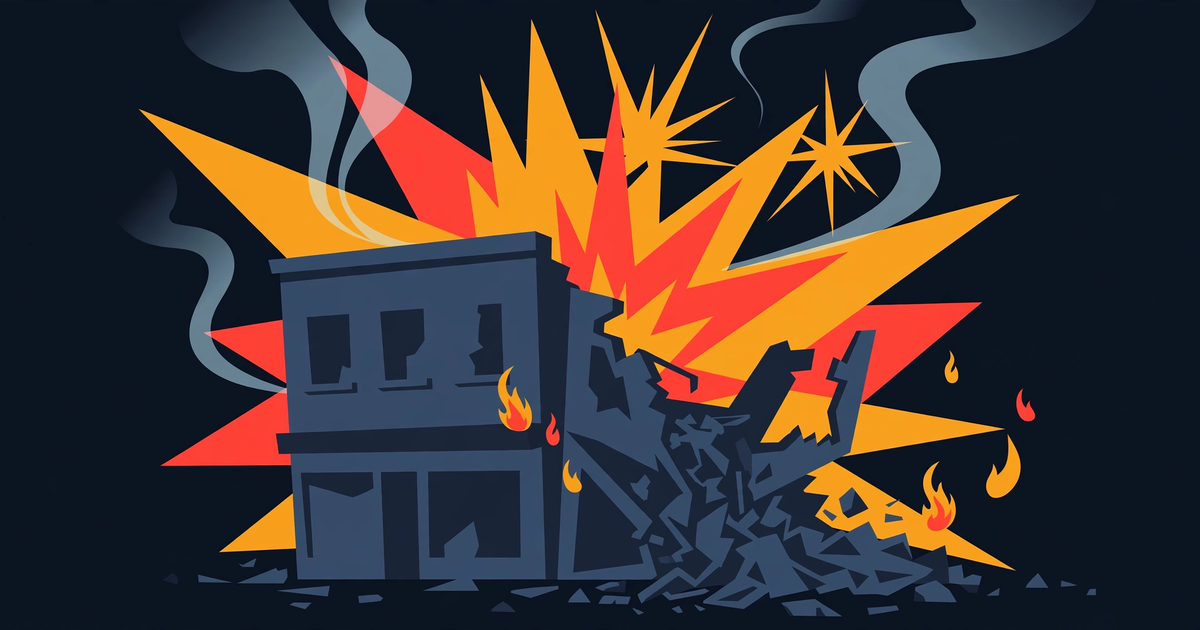
The Glace Bay explosion happened at about 6 a.m. on Wednesday 18 November 2026 at 130 Commercial Street in Glace Bay, Nova Scotia, Canada. An explosion, a fire and a partial collapse destroyed a building with a pizza shop on the ground floor and flats above it. Officials say 17 people were reported injured, at least 14 of them were taken to hospital, and all 24 residents of the building were accounted for. The cause has not been confirmed.
Cape Breton Regional Police say the front of the building collapsed. A fire broke out shortly after the explosion, according to CBC. No deaths were reported in the accounts published by CBC and CTV News. Downtown streets were closed while crews worked at the site, and a comfort centre opened for residents who had to leave their homes.
What happened in the Glace Bay explosion?
Police were called to Pizza 67 on Commercial Street after an explosion early on Wednesday morning, according to CTV News, which cited Constable Gary Fraser of the Cape Breton Regional Police. CBC reported that the explosion happened at about 6 a.m. The building held a pizza shop at street level and about 20 flats above it, according to CBC.
The front of the building collapsed, according to Cape Breton Regional Police. Firefighters entered through the back of the building, but the fire was too intense for them to stay inside, according to John Chant, chief of the Glace Bay Volunteer Fire Department. Most of the building then collapsed. Crews later used an excavator to take down what was left of the structure, at about 10:30 a.m., according to CTV News.
Crews from 16 fire departments responded, alongside police and paramedics, according to CBC. The force of the explosion broke windows in nearby buildings, according to CBC. Fire crews sprayed water on the nearby Savoy Theatre to protect it, and the theatre still suffered smoke and water damage, according to CBC.
More than 1,600 Nova Scotia Power customers lost electricity at about 6:30 a.m., according to CTV News. Power was restored hours later, according to CTV News. A comfort centre opened at the Glace Bay Miners' Forum, according to CBC. Streets in the downtown area were closed, and the closure was expected to last 72 hours, according to the Cape Breton Regional Municipality via CTV News. The fire has been extinguished, and crews were assessing the site, according to CBC.
You can follow other explosion records, fire records and incidents in Canada on this site. Each record shows its source and status.
How many people were hurt in Glace Bay?
Seventeen people had minor injuries, and 14 of them were transported to Glace Bay Hospital, according to Cape Breton Regional Municipality spokesperson Christina Lamey via CBC. CTV News reported that the municipality said 17 people were taken to hospital. Because the two accounts differ on the hospital figure, this article uses the lower number with "at least": at least 14 people were taken to hospital, and 17 people were reported injured in total.
All 24 residents of the building were accounted for, according to Glace Bay MLA John White via CBC. CBC and CTV News did not name the injured people in the accounts read for this article, and no deaths were reported in those accounts. Treat these figures as the latest confirmed position, not a final total.
Do officials know what caused the explosion?
Not yet. It was too early to say what caused the explosion, according to CBC, and CTV News also reported that the cause was unknown. Neither outlet reported a confirmed cause, and officials quoted in the two accounts did not name one. Readers should not treat social media claims about the cause as confirmed until police, fire investigators or the municipality publish findings.
The sequence reported by officials was explosion first, then fire, then collapse. That order helps investigators work out where the blast started. Our building collapse records separate collapses that follow explosions and fires from collapses with other causes, so the pattern can be checked over time.
What should you do if there is an explosion or fire in your building?
Get out first, then call for help. Do not stop to collect belongings, and do not go back inside for pets or documents until firefighters say it is safe. If smoke fills the hallway, stay low, feel doors for heat before opening them, and use a second exit if the main route is blocked. Agree a meeting place outside in advance, so everyone can be counted quickly.
- Leave by the nearest safe exit and close doors behind you to slow smoke and fire.
- Call your local emergency number from outside and give the address, the floor and what you saw.
- Do not use lifts in a fire, and do not open a hot door.
- Meet at the agreed place and tell firefighters if anyone may still be inside.
- Stay away from damaged walls, broken glass and fallen power lines until officials clear the area.
Working smoke alarms give the earliest warning in most home fires. Our guide to smoke alarms and your home fire escape plan explains where to fit alarms and how to practise two ways out. If someone is bleeding heavily after a blast or collapse, firm pressure on the wound can save a life before paramedics arrive; see our guide to stopping severe bleeding. Cracks, sticking doors and new gaps can also warn that a structure is failing; our explainer on building collapse warning signs lists what to look for and when to leave.
What our records show, and what they miss
Glace Bay is a mixed-use building case: a food business below, homes above. Our records capture the time, the address, the injury count and the road closures well, because police and the municipality publish those details quickly. They capture the building itself poorly. The accounts read for this article do not state the age of the building, whether alarms sounded, how residents escaped, or what fuel or equipment was involved. Those details usually appear later, if at all, in investigation reports rather than first-day news.
The hospital figure shows the same gap in miniature. CBC reported 14 people transported to hospital, while CTV News reported 17 taken to hospital, both citing the municipality. The difference may reflect timing, definitions or a later update, but neither account explains it. That is why this article attributes every number and uses "at least" where sources disagree. A single headline number looks certain; the underlying record rarely is.
What the record does show clearly is scale. Sixteen fire departments for one building, more than 1,600 customers without power, and a 72-hour downtown closure, according to the sources cited above, describe a town-centre emergency, not a single-shop fire. Readers who follow Canada incident records can compare Glace Bay with other explosion and collapse cases to see how often mixed-use buildings feature, and how often the cause remains unpublished.
The short version
- An explosion at about 6 a.m. on 18 November 2026 destroyed a building at 130 Commercial Street, Glace Bay, with a pizza shop below and flats above.
- Seventeen people were reported injured and at least 14 were taken to hospital, according to the Cape Breton Regional Municipality via CBC and CTV News.
- All 24 residents were accounted for, according to MLA John White via CBC, and no deaths were reported in the CBC and CTV News accounts.
- Crews from 16 fire departments responded, more than 1,600 customers lost power, and downtown streets were closed, according to CBC and CTV News.
- The cause is not yet known, according to CBC and CTV News; wait for police and fire investigators before trusting claims online.