The first minutes decide it
Most bleeding stops on its own: a small cut clots and the body does the work. Severe bleeding is different — blood pours, spurts or pools, the wound will not stop, and clothing soaks through fast. In those minutes, the person who makes the difference is rarely a medic. It is whoever is standing closest — and what they do first.
The official guidance is blunt about the priority. The American Red Cross puts it in one line: the most important thing with life-threatening bleeding is to get pressure on it right away. St John Ambulance says the same: your priority is to stop the bleeding. Everything else comes after that first pressure.
This guide is general first-aid education, not a substitute for hands-on training or professional care — and the call handler's instructions on the phone always come first.
How to tell it is life-threatening
Not every bleed is an emergency. Life-threatening bleeding has a look: blood flows continuously or spurts instead of oozing, pools on the ground, soaks through clothing quickly, or keeps bleeding despite pressure, while the person grows pale, cold, confused or drowsy.
Do not wait to be certain: if blood is pouring or spurting, or the wound will not stop, treat it as life-threatening and act. Blood spreads, so find the actual wound rather than pressing where the blood has run to, and cut clothing away if it covers the wound.
Protect yourself if you can: wear first-aid gloves if available. But do not waste the first minutes searching for equipment while the bleeding continues — pressure comes first.
Severe bleeding first aid: press hard — and keep pressing
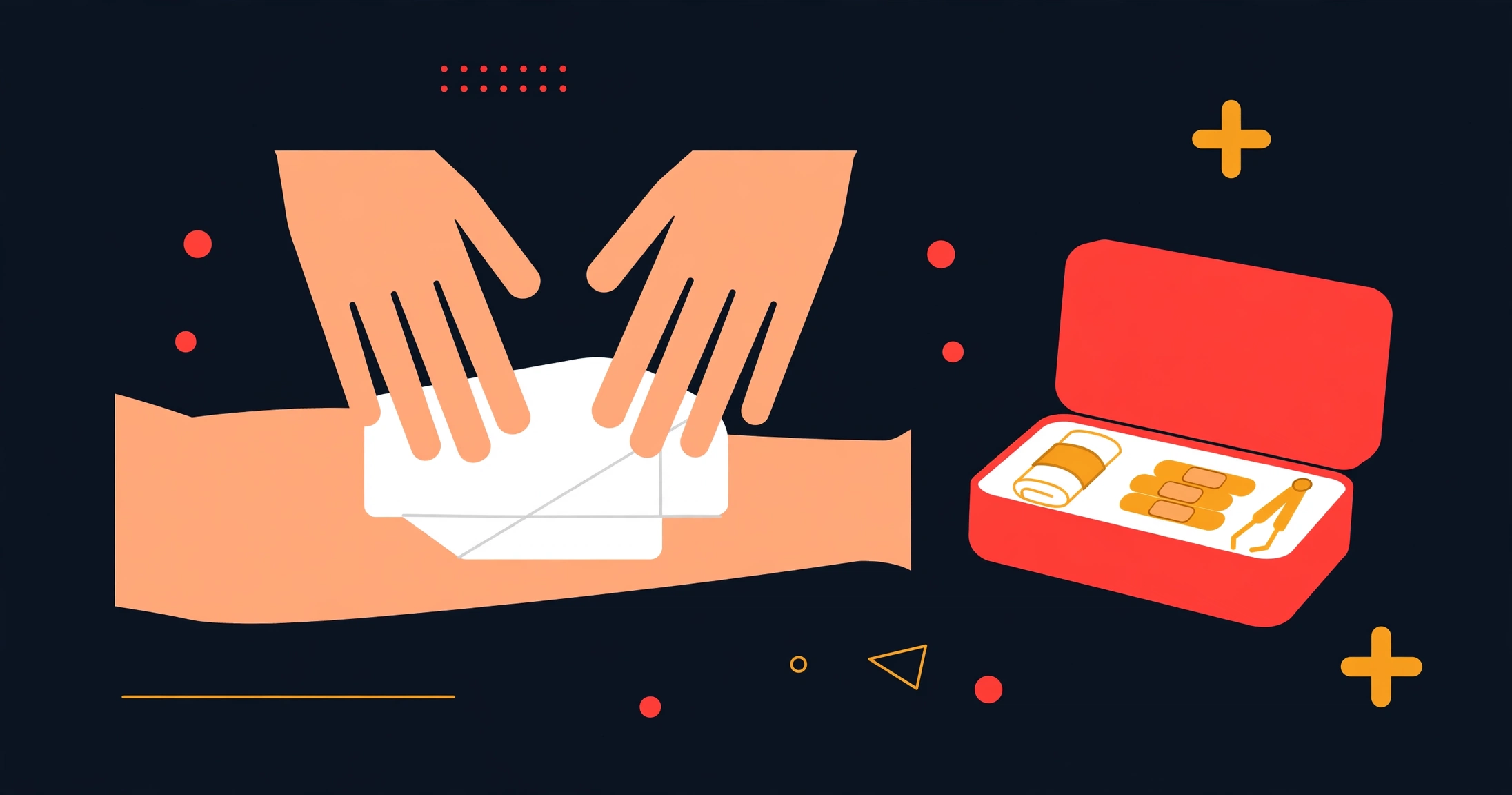
Cover the wound with a sterile dressing if you have one, or a clean non-fluffy cloth, a folded t-shirt or gauze. Then push straight down on it with both hands, steady and firm. The pressure must be directly over the wound, not beside it, and hard enough to slow the flow — a light touch does nothing.
Then do the hardest part: keep pressing and do not lift the cloth to check — every time the pressure comes off, the clot that was forming breaks up and the bleeding restarts. Hold steady until the bleeding stops or a tourniquet has stopped it. Ask a helper to call your local emergency number; if you are alone, use your phone on speaker and follow the call handler's instructions over anything in this guide.
If blood soaks through the first dressing, the sources disagree on the next move. The American Red Cross advises adding another layer on top and keeping the pressure on, without removing the first dressing; St John Ambulance advises removing the soaked dressing and reapplying pressure with a fresh pad. Either way, the rule that never changes is this: do not stop pressing.
If something is stuck in the wound
Sometimes the wound has an object in it — glass, metal or wood. Do not pull it out: it may be acting as a plug, holding back bleeding from a vessel underneath, and removing it can make the bleeding much worse. Instead, press on either side to push the wound edges together.
The same rule applies to anything sticking out of the body after a serious injury: leave it where it is, control the bleeding around it, and let medical professionals remove it.
When pressure is not enough: the tourniquet
A tourniquet is for life-threatening bleeding from an arm or a leg that direct pressure is not controlling. It is not a first step: the Red Cross advises it only if you are trained, and St John Ambulance adds that the emergency call handler may ask you to improvise one. If the handler tells you to apply one, follow their instructions exactly.
Place it on the limb a few inches above the wound, never on a joint — if the wound is at a joint, go above it. Tighten until the bleeding stops, note the time, and tell the responders when they arrive. Never loosen it to check, and never place one on the neck, head or torso, where pressure or packing is used instead.
For bleeding from the scalp, neck, shoulder, groin or back, a tourniquet cannot be placed at all. The Red Cross guidance there is wound packing, but only if trained: pack the wound with gauze or a clean cloth, then press firmly on top with both hands. If you are not trained, keep firm direct pressure on and stay on the phone with the call handler.
After the bleeding slows: hold it and watch
Once the bleeding is under control, secure the dressing with a bandage tied over the pad, firm enough to hold it down but not so tight it cuts off circulation. Check by pressing a nail or the skin beyond the bandage for five seconds until pale, then letting go: if the colour does not return within two seconds, the bandage is too tight — loosen and reapply. Recheck circulation every ten minutes, and support the injured part with a sling or bandage so it does not move.
Losing blood can bring on shock — a life-threatening condition, not just fright. Help the person lie down on a rug or blanket, and raise and support their legs above heart level, unless a leg, hip or pelvis may be injured. Loosen tight clothing, keep them warm, give nothing to eat or drink, and watch their breathing — be ready to start CPR if they become unresponsive.
What not to do
Do not keep lifting the dressing to check. Do not pull out an object stuck in the wound. Do not give the person anything to eat or drink while the bleeding is severe, and do not move the injured part more than you must. Do not improvise a tourniquet for a bleed that pressure is controlling — it is a last resort for a limb bleed pressure cannot stop, in trained hands or under the call handler's instructions. Do not leave to fetch help while holding the pressure — send someone else, or call on speakerphone.
None of this is complicated, and that is the point: the whole response is three moves — press hard, keep pressing, call for help. The best time to learn them is before you need them, so take a first-aid course and keep a few clean dressings and gloves in your kit. Our other first-aid guides cover choking first aid and kitchen burns and scalds. The next person who needs them may be standing right next to you.
What our records show, and what they miss
Our incident records log the events where severe bleeding happens — road crashes, fires, industrial accidents, attacks — but almost never what happened in the minutes before the ambulance arrived: whether a bystander pressed hard or a tourniquet was applied in time. That half of the story is missing from nearly every record we publish, yet it is the half that decides the outcome more often than the event itself.
The short version
- Press hard, right away. Cover the wound with a clean cloth or dressing and push straight down with both hands — do not keep lifting it to check.
- Call for help while you press. Ask a specific person to call your local emergency number, or use your phone on speaker if you are alone.
- Never pull out an embedded object. Press around it or on either side instead.
- Tourniquet only as a last resort. For a limb bleed pressure cannot control, if trained or if the call handler advises it — above the wound, never on a joint, and note the time.
- Watch for shock. Lie the person down, raise the legs above heart level, keep them warm, give nothing to eat or drink, and be ready to start CPR if they become unresponsive.