Shock is not a feeling. It is a failure.
People use the word shock for the dazed feeling after a fright. In first aid it means something far more serious: a progressive, life-threatening condition in which the circulatory system fails to deliver enough oxygen-rich blood to the body's tissues and organs. The Red Cross is blunt about it — a person showing signs of shock needs immediate medical attention, and no first-aid kit can fix it on its own. What first aid can do is buy time: keep blood flowing to the brain and heart, keep the person warm, and keep them alive until emergency help arrives.
Shock can follow many different injuries and illnesses — severe bleeding, serious burns, a severe allergic reaction, a heart problem, a bad infection. That is why the first rule of treating it is to treat the cause as well as the person: stop the bleeding, deal with the injury in front of you, and call for emergency help at the same time. This guide is general first aid only — not a substitute for first-aid training or an ambulance.
Shock first aid: the signs to spot
Shock does not always look dramatic at first, which is part of the danger. The early signs are easy to dismiss in someone who has just been hurt. The Red Cross lists them plainly: a rapid, weak heartbeat; rapid breathing; pale, gray, cool or moist skin; confusion, restlessness or irritability; nausea or vomiting; and excessive thirst. The Finnish Red Cross adds the same picture in different words — skin pale and in a cold sweat, the person first restless and later incoherent, breathing quickened, the mouth dry, the pulse fast and difficult to feel.
As shock gets worse, the signs deepen: the person becomes drowsy or unresponsive, the pulse grows weaker, breathing becomes shallow and fast, and in late shock the lips, face and fingernails can turn blue. Blue lips are a late sign and mean the person is very sick. Do not wait for the worst signs to appear before acting. If someone has had a serious injury or a large bleed and shows even the early signs — pale, cold, clammy skin with a rapid weak pulse — treat it as shock and call for emergency help now.
First: call for help and treat the cause
Call your local emergency number at once. Shock cannot be treated with a first-aid kit; it needs hospital care — fluids, blood products, and treatment of whatever caused it. While you wait, do what you can about the cause. The most important of these is severe external bleeding: press firmly on the wound with a clean cloth or dressing and keep the pressure on. A person can lose enough blood to go into shock quickly, and controlling the bleed is the single most useful thing a bystander can do.
Do not move the person unless they are in danger where they are. Treat them where they lie, keep them calm and still, and do not leave them alone. Reassure them in a steady voice — anxiety and restlessness are part of shock, and a calm helper helps the casualty stay calm too. If they are sick or injured in a way that needs other first aid — a burn, a fracture — deal with that as well, but the shock itself comes first.
Lie them flat, feet up — with one condition
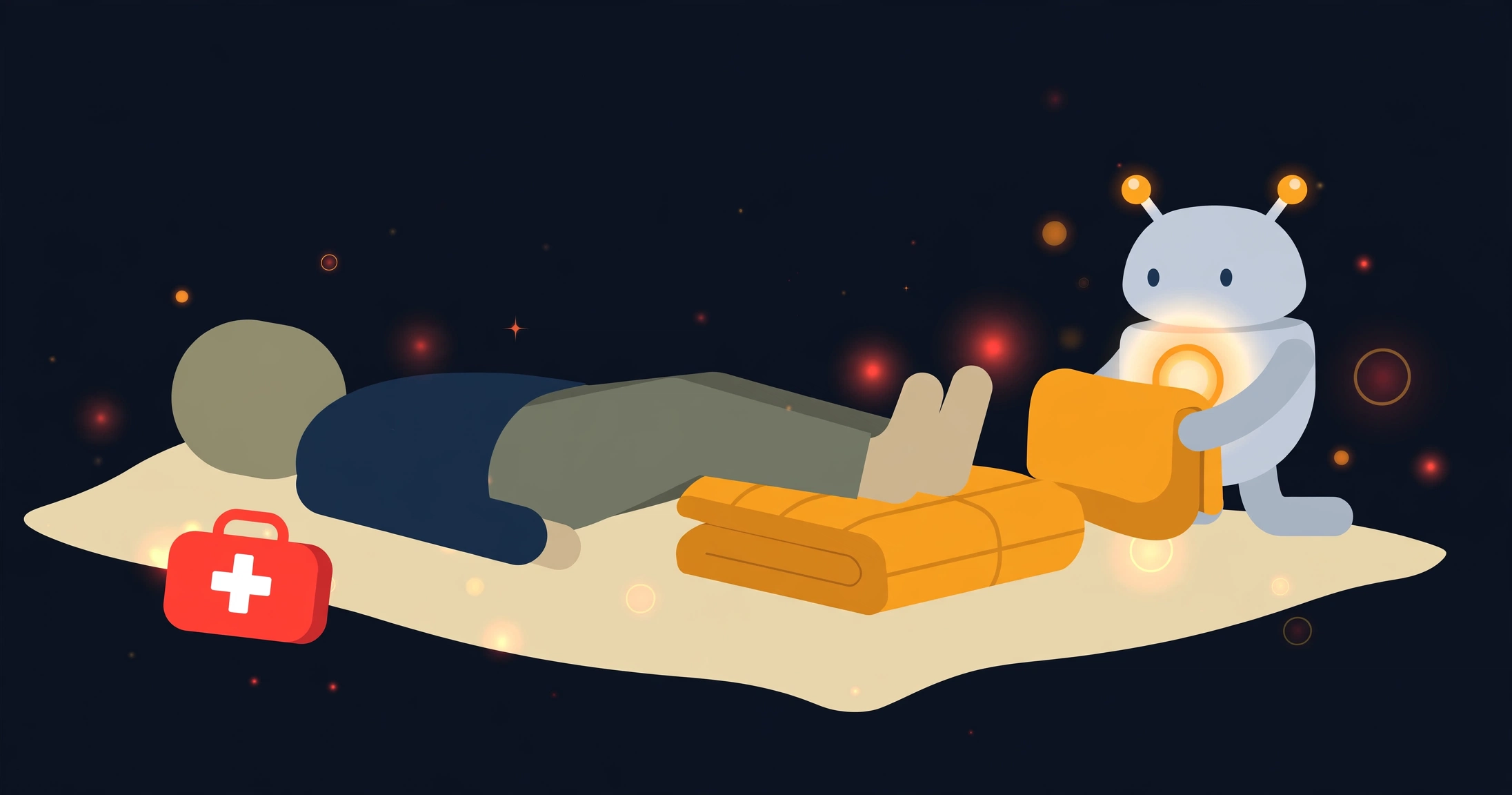
Have the person lie flat on their back. If there is no evidence of trauma or injury, the Red Cross advises raising their feet about 6 to 12 inches, unless a different position is better for their comfort and breathing. The raised feet help gravity send blood back toward the brain and heart. But the condition matters as much as the step: do not raise the legs if a head, neck, back or leg injury is suspected, or if raising them causes pain. In that case, leave the person lying flat.
Do not put a pillow under the head — it can interfere with breathing. If the person is at risk of airway obstruction — for example they are less alert, actively vomiting, or cannot be continuously watched — place them in the recovery position instead, on their side, so fluid can drain from the mouth. Loosen any tight clothing around the neck, chest and waist so breathing and circulation are not restricted.
Keep them warm, give them nothing
Shock impairs the body's ability to regulate its own temperature, so cover the person with a blanket, coat or jacket and insulate them from cold ground underneath. Do not use any direct heat source such as a heating pad or a hot-water bottle — direct heat can make things worse. If they are hot, removing a layer of clothing is enough.
Do not give the person anything to eat or drink. The Red Cross is explicit about this: food or drink increases the risk of vomiting and aspiration — inhaling vomit into the lungs — which can cause pneumonia, and it can also complicate emergency surgery if that is needed. Thirst is a symptom of shock, not a sign that drinking is safe. A dry mouth and a request for water are expected; the answer is still no food and no drink.
Watch, wait, and know when it is CPR
Stay with the person and keep watching their breathing and level of response until help arrives. Talk to them, keep them warm, and note any change — are they getting more confused, harder to wake, breathing faster or slower? Tell the emergency services what you see when they arrive: what happened, what the signs were, and what you have done. That handover matters.
If the person stops breathing normally, start CPR — but only if you are trained to do so. Untrained compressions can do serious harm, and our hands-only CPR guide from 7 November covers the technique for trained bystanders. If you are not trained, call for help, stay on the phone, and follow the dispatcher's instructions — they will talk you through it.
What our records show, and what they miss
Our records log shock as it is reported — usually as a complication of another incident: a bad bleed, a serious burn, a bad fall. What they show is where and when those injuries happen; what they miss is the first aid that followed — whether someone was laid flat, kept warm, or given nothing to eat or drink. That is why this guide relies on the American Red Cross and the Finnish Red Cross, and sits alongside our hands-only CPR guide, our sprains, strains and fractures guide, and our kitchen burns and scalds guide.
The short version
- Shock is a medical emergency: the circulation fails to deliver enough oxygen-rich blood to the body's organs. Call your local emergency number at once.
- Signs: pale, gray, cool or moist skin; a rapid weak pulse; rapid breathing; restlessness, confusion or irritability; nausea or vomiting; excessive thirst.
- Treat the cause first — above all, control severe external bleeding with firm pressure.
- Lie the person flat on their back; raise the feet about 6 to 12 inches only if there is no trauma or injury and it causes no pain — never if a head, neck, back or leg injury is suspected.
- Keep them warm with a blanket or coat, insulate them from cold ground, and use no direct heat.
- Do not give anything to eat or drink — it risks vomiting and aspiration.
- If they are vomiting, less alert, or cannot be watched continuously, use the recovery position. Stay with them, keep them calm, and monitor breathing until help arrives.
- Start CPR only if trained and they are not breathing normally.