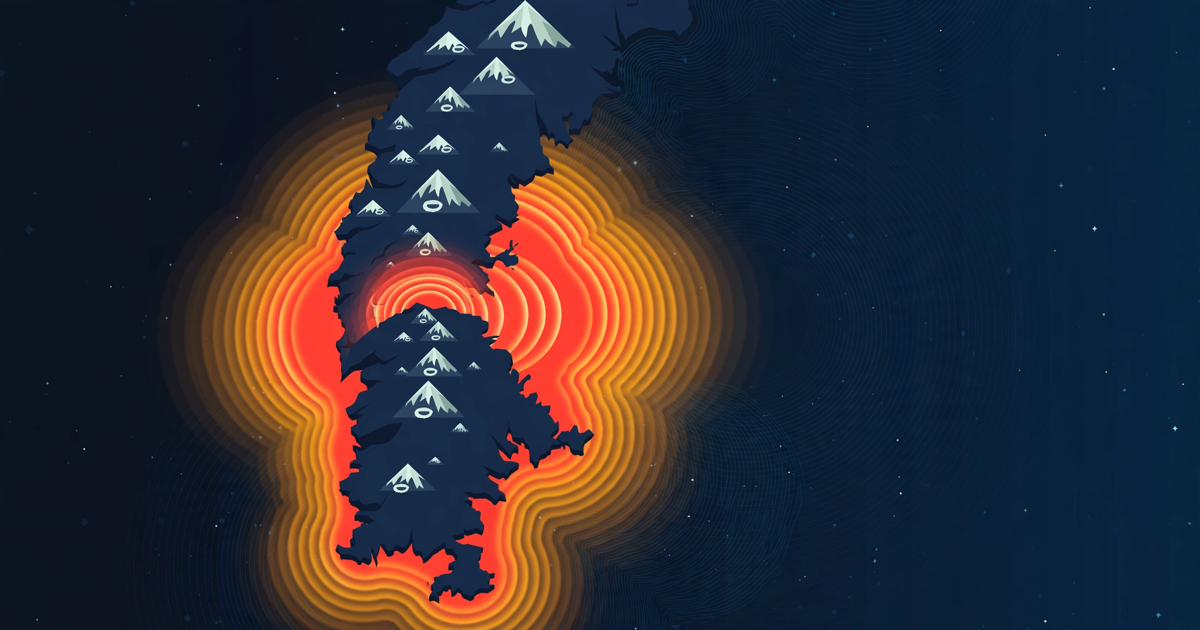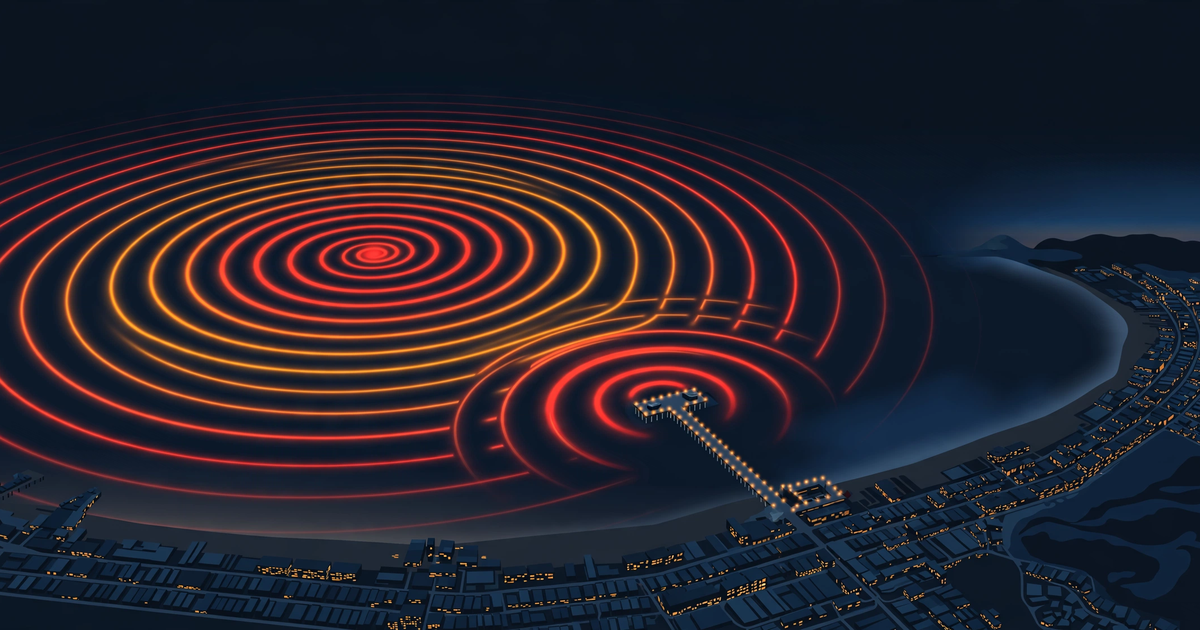
A magnitude 5.0 earthquake struck just off the coast of Los Angeles on Saturday morning, 28 November 2026. The Los Angeles earthquake M5.0 was centred only 5 kilometres south-west of Manhattan Beach, in the shallow water of Santa Monica Bay, and it was felt across Los Angeles County and into Ventura County. Nobody was reported hurt and no major damage was found — but for a city that has not felt a quake this big in more than a decade, it was a sharp reminder of where it lives.
The shaking arrived at 9:30 a.m. local time — 17:30 UTC, 22:30 in Pakistan — on a Saturday when the beaches were already filling up. Manhattan Beach closed its pier as a precaution, according to the Los Angeles Times. At Los Angeles International Airport, a Delta plane was told to abort its landing as the ground moved, circled over the city and touched down at 10:01 a.m. A few windows broke near a security check-in line at the airport.
Los Angeles earthquake M5.0: what the instruments recorded
According to the US Geological Survey, the earthquake was a magnitude 5.0, reviewed by a seismologist, at a depth of 12.8 kilometres and 5 kilometres south-west of Manhattan Beach. The first readings bounced around — the USGS initially listed the quake at 5.2, then at 4.7 — before the reviewed figure of 5.0 was settled on, according to ABC7 Los Angeles. It makes this the strongest earthquake to hit the Los Angeles area since 2014, according to The Times.
The shaking was strong, but not violent. The USGS recorded a maximum felt intensity of VI — strong shaking — from the nearly 20,000 people who filed "Did You Feel It?" reports, while its ShakeMap put the peak at V, or moderate. Its PAGER system, which estimates casualties and damage, stayed at green, its lowest alert level.
A strong aftershock, and dozens more
Just over two hours later, at 11:41 a.m. local time, a magnitude 4.5 aftershock struck 6 kilometres west-south-west of Manhattan Beach, at a depth of 12.2 kilometres, according to the USGS. Nearly 1,700 people reported feeling it to the USGS. By Saturday evening, ABC7 reported at least 40 aftershocks, citing a Caltech seismologist, and the USGS counted 57 events in the sequence. The USGS put the chance of another magnitude 5 or larger in the next week at 4 per cent, a magnitude 4 or larger at 27 per cent, and a magnitude 3 or larger at 79 per cent.
No injuries, no major damage — but a fright
By Saturday afternoon there were no immediate reports of injuries, according to NBC News and the Associated Press, and no reports of major damage, according to the Los Angeles Times. Los Angeles Mayor Karen Bass said the city had seen no major damage so far and urged residents to be ready for aftershocks. The Los Angeles Fire Department went into "earthquake mode", with all 106 of its fire stations surveying 470 square miles of the city, according to ABC7. The city of Manhattan Beach said there was no tsunami threat.
In Lomita, a woman of 66 told ABC7 that painted bottles had fallen from a shelf and her dog was frightened. On the Manhattan Beach pier, fishermen felt the boards move under their feet. And at the Rose Bowl in Pasadena, the ground shook as fans gathered for the USC-UCLA college football game, according to Bleacher Report. The game went ahead.
Why a 5.0 offshore still rattled millions
What made this one so widely felt was where it happened: shallow, at 12.8 kilometres, and only a few kilometres off a densely built coastline. California's ShakeAlert early warning system engaged, according to the climate scientist Daniel Swain, writing on X, who added that the quake was "shallow and close — so local minor damage possible". The energy travelled easily through the Los Angeles basin, which is why people felt it from the San Fernando Valley to the coast. A deeper quake of the same size would have passed almost unnoticed.
Southern California is one of the most closely watched seismic regions on Earth. That is why even a moderate offshore quake becomes a news event: the shaking is felt by millions, the phones light up, and the city checks itself before getting on with the day.
Los Angeles, nine days of shaking
The Manhattan Beach quake did not come out of nowhere. It followed nine restless days in the region, including a magnitude 4.4 near Commerce on 20 November — which we covered — and smaller quakes of 4.2, 3.9 and 3.3 in the same stretch, according to the Los Angeles Times. It was the strongest shaking the Los Angeles area has felt since 2014, when the last magnitude 5 struck, according to The Times. Seismologist Lucy Jones told the Los Angeles Times it was "highly improbable that there was major damage from the earthquake".
What to do when the ground moves
Most people in Los Angeles will never be hurt by an earthquake, but the advice is the same everywhere the ground shakes. The USGS and Ready.gov guidance is simple: drop, cover and hold on. Get under a sturdy table or desk, cover your head and neck, and hold on until the shaking stops. If you are near the coast and feel strong shaking, move to high ground once it stops and do not wait for an official warning — this quake made no wave, but you cannot tell the depth from your feet. Afterwards, check on neighbours and expect aftershocks.
What our records show, and what they miss
Our own records put this quake in context. Nine days earlier we covered a magnitude 4.4 near Commerce, California. Earlier this month we covered a magnitude 5.0 at the Pinnacles in California, and a magnitude 5.7 off Baja California. Yesterday we covered a magnitude 2.5 in Laconia, New Hampshire, and today a magnitude 6.7 deep beneath Kamchatka. The pattern is the same in all of them: what matters is depth, distance and what is built above the fault. A 6.7 at 188 kilometres depth in Kamchatka did no damage; a 5.0 at 12.8 kilometres under a city of millions rattled a whole region.
What our records miss is the quiet majority. The USGS lists dozens of earthquakes of magnitude 2.5 or more every single day, and most never make the news. The ones that do are either shallow, near cities, or big enough to trigger a warning. A 5.0 off Manhattan Beach qualifies on all three counts — and a reminder that the time to check your emergency kit is before the ground moves, not after.
The short version
- A magnitude 5.0 earthquake struck 5 km south-west of Manhattan Beach, California, at 9:30 a.m. on Saturday, 28 November 2026, at a depth of 12.8 km, according to the USGS.
- Shaking reached intensity VI, with nearly 20,000 "Did You Feel It?" reports, and was felt across Los Angeles County and into Ventura County.
- A magnitude 4.5 aftershock followed at 11:41 a.m.; at least 40 aftershocks were counted, with a 4 per cent chance of another magnitude 5 within a week.
- No injuries or major damage were reported and there was no tsunami threat; the pier was closed as a precaution.
- It was the Los Angeles area's biggest earthquake since 2014, after nine days of smaller quakes in the region.
Sources: USGS event page ci41581136 (M5.0); USGS event page ci41581512 (M4.5); ABC7 Los Angeles; Los Angeles Times; NBC News; Associated Press; The Times. Figures are attributed in the text; where early reports differed, the reviewed USGS figure is used.