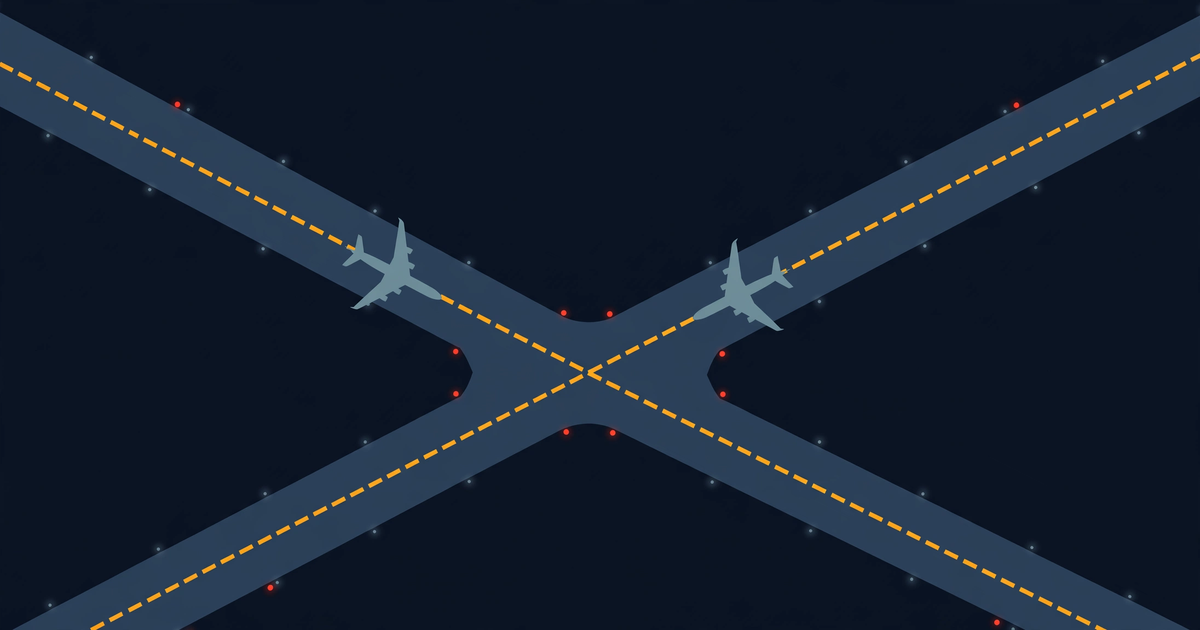
Two aircraft collided on the ground at Miami International Airport on Saturday night, 14 November 2026, injuring two people and damaging both planes. The wingtip of a Copa Airlines Boeing 737 struck the nose of a UPS Boeing 767 while both aircraft were taxiing, according to the Federal Aviation Administration (FAA). The collision happened at about 9:15 p.m. local time. Both aircraft were moving slowly on the ground, yet the impact was forceful enough to crumple the nose of the UPS jet and tear the left wingtip from the Copa aircraft. The two people hurt suffered minor injuries and were treated at the scene by fire and rescue teams, the airport's communications director, Greg Chin, told CNN. The UPS crew was reported safe. The incident came a day after a nationwide FAA ground stop disrupted US flights — a separate event, covered in our report on the FAA lifting the nationwide ground stop.
What the Miami airport plane collision tells us about taxiway safety
A collision on the ground can look minor beside a crash in the air, but it carries real risk. Aircraft on taxiways move at low speed, yet they weigh tens of tonnes, their wings stretch far beyond what a pilot can see from the cockpit, and the ground around them is crowded with other aircraft, vehicles and equipment. In this case the damage tells the story plainly: the UPS nose was crumpled, with a gaping hole in the panels, and the Copa aircraft lost its left wingtip. The passengers felt it too. People on the Copa flight described a sudden sideways jolt, followed by alarm in the cabin before the crew moved quickly to keep everyone seated. About ten minutes later the captain told passengers there was no imminent danger and that a tug would be brought in to move the aircraft. All 166 passengers and six crew members on the Copa flight later left the aircraft, which was returned to the terminal.
What happened, step by step
The sequence of events, as reported by CNN from FAA and airport sources, is short. The Copa Airlines flight had just landed in Miami after a flight from Panama City, Panama, and was taxiing after landing. The UPS flight was preparing to depart for Bogotá, Colombia, and was also taxiing. Air traffic controllers had told the UPS crew to give way to the Copa flight. The two aircraft then met, with the Copa wingtip striking the UPS nose. Air traffic control audio captured the moments just after impact. The Copa pilot said, "Somebody hit us," as the controller asked the UPS crew whether they had made contact. The UPS pilot replied, "Yeah, we went too far, and then he, he clipped us with the wing." The Copa pilot later added, "It seems that we are missing the left wingtip." The FAA has said it is investigating the collision. UPS said it is committed to working with the authorities to determine what happened. Copa Airlines said it regrets the disruption the incident may cause its passengers, that the safety of its passengers and crew is its top priority, and that it will cooperate with the authorities as they investigate.
Why a low-speed collision still matters
Ground collisions are among the most common kinds of aviation incident, and they are also among the most preventable. The reason they keep happening is that the ground environment is the busiest part of an airport. Runway crossings, taxiway junctions and apron areas put aircraft close together, often at angles where neither crew can see the other aircraft's wingtip. At night, which is when this collision happened, the task is harder still. That is why ground movement relies on a chain of defences rather than on eyesight alone. Controllers give clearances and instructions, including who should give way. Painted markings and signs show where aircraft should stop and wait. Crews follow set taxi routes and read back instructions. When one link in that chain fails, the others are meant to catch the error. Here, the FAA has said controllers told the UPS crew to give way. The investigation will need to establish what happened next: whether the instruction was heard and understood, whether the aircraft moved beyond the point it should have held at, and whether anything about the taxiway layout, the lighting or the workload that night played a part. None of that is known yet.
How an investigation like this works
When the FAA investigates a ground collision, it looks at the same kinds of evidence every time: recordings of air traffic control, the instructions given and the readbacks received, radar and surface-movement records, the positions and headings of the aircraft, and the statements of the crews and controllers. In the United States, serious aviation incidents can also draw in the National Transportation Safety Board, which investigates accidents and serious incidents independently. The outcome of an investigation is usually a report setting out what happened, what caused it and what should change. Early reports establish the basic facts, as the FAA statement did here. A full account, with causes and recommendations, follows later. Until then, the facts that can safely be stated are the ones the FAA and the airport have already confirmed: the time, the place, the two aircraft, the point of contact, the two minor injuries, and the fact that an investigation is under way.
What passengers and crews should know
For passengers, the lesson of this incident is a simple one: stay seated and follow crew instructions after any unexpected jolt on the ground. The Copa crew's quick response, keeping passengers seated while the situation was assessed, is exactly what training calls for. For crews, the incident is a reminder of how little margin there is at a taxiway junction, and how important the give-way instruction is. Travellers do not need to change their plans because of this incident. Ground collisions of this kind are rare, and when they do happen they usually cause damage and delay rather than serious injury, as they did here. But they are a reminder that safety on the ground deserves the same attention as safety in the air.
What our records show, and what they miss
Our records track aviation incidents in the air crash, airport incident and transport categories, and our live incident pages list warnings and events as they are reported. What they show is the pattern: ground collisions, runway incursions and near misses happen regularly at busy airports, and most end with damage and delay rather than casualties. What they miss is the detail that only an investigation can supply. Our records cannot say why the UPS aircraft moved beyond the point where it should have waited, whether the crew misheard an instruction, or whether the layout of that taxiway junction played a part. Those answers will come from the FAA investigation, and we will update this report when they do. Readers should treat this article as a record of what has been confirmed so far, not as a final account of the incident.
The short version
- On 14 November 2026 at about 9:15 p.m., a Copa Airlines Boeing 737 and a UPS Boeing 767 collided while taxiing at Miami International Airport.
- The Copa aircraft's wingtip struck the nose of the UPS aircraft; the UPS nose was crumpled and the Copa aircraft lost its left wingtip.
- Two people suffered minor injuries and were treated at the scene by fire and rescue teams.
- Air traffic controllers had told the UPS crew to give way to the Copa flight, and the FAA is investigating.
- All 166 passengers and six crew on the Copa flight disembarked safely, and the aircraft was returned to the terminal.