The Hanoi restaurant gas explosion: what we know so far
At least six people were killed and at least 10 injured when a suspected cooking-gas explosion tore through a crowded hotpot restaurant in Hanoi on Tuesday morning, 24 November 2026. The blast hit at about 8am local time in the Dong Da district, flattening the ground-floor restaurant and shattering windows across the street, with rescue teams digging through rubble for hours afterwards.
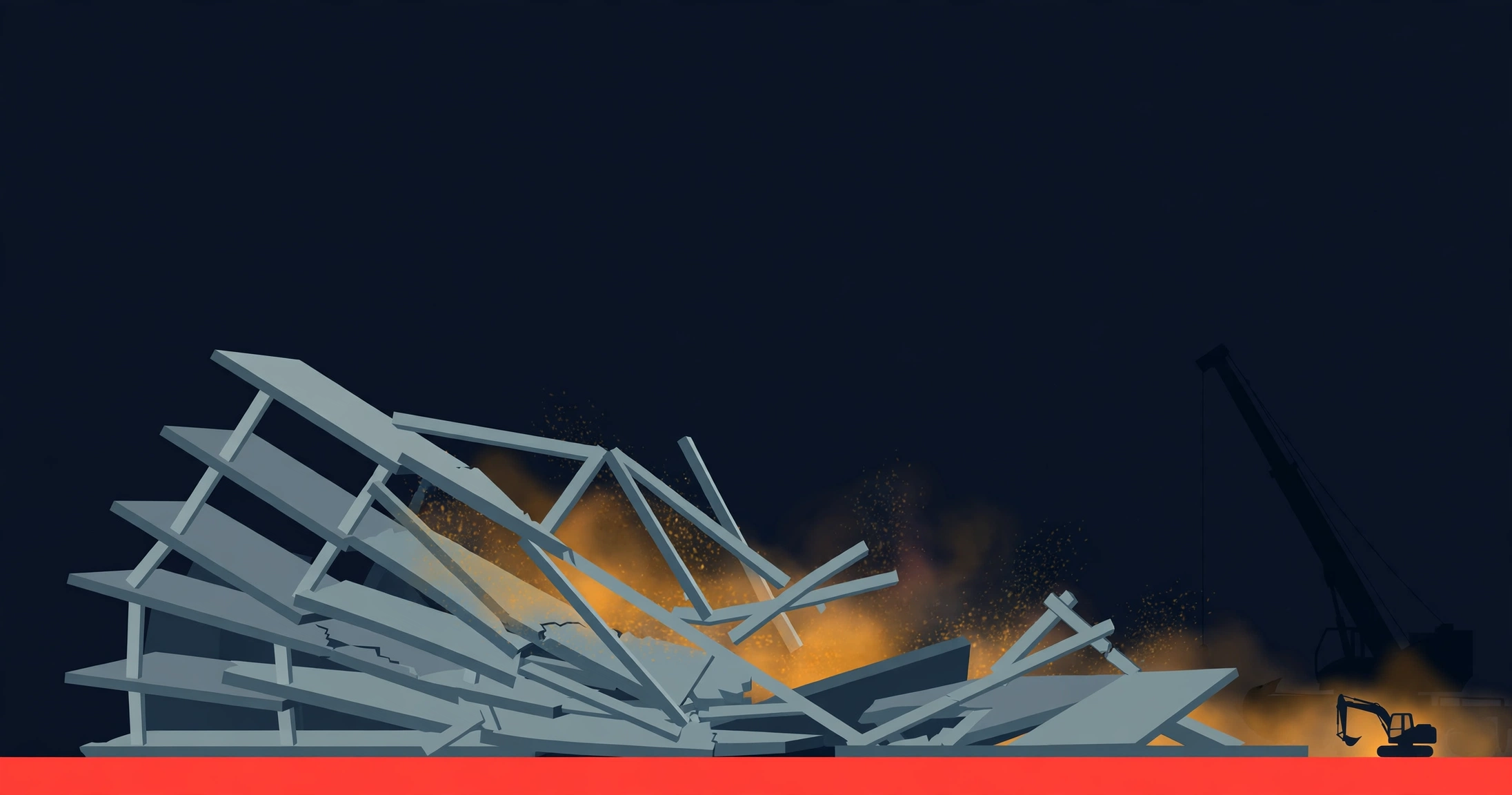
The restaurant was full of people at the time, local authorities told Al Jazeera. It sits on Nguyen Van Tuyet Street, a busy food street in Dong Da, and the blast tore metal shutters from their frames, cracked walls nearby and brought down corrugated roofs and awnings. VnExpress photos showed the restaurant almost completely collapsed, with rubble across the narrow street outside.
One resident described the blast as deafening. "There was a flash of light, and doors, glass and everything around me were sent flying," the resident told VietNamNet, as reported by Al Jazeera.
Vietnam's Ministry of Public Security believes the blast was related to cooking gas, Al Jazeera reported, citing local authorities. Police said their preliminary findings pointed to a gas explosion; the exact cause is still under investigation. City officials have ordered an investigation into the cause and whether any regulations were broken.
The casualty figures carry the usual early-reporting caveats. Hanoi's Department of Health said six people had died and 10 others were in hospital. The Associated Press, citing VnExpress, reported more than a dozen injured, with more than 14 people taken to hospital, one with a traumatic brain injury. Reuters also reported six killed and 10 injured. We are using the figure most outlets agree on: at least six killed and at least 10 injured.
Dozens of firefighters were sent to the scene and were still digging through rubble four hours later, VnExpress reported. Police used detection equipment to search for survivors and hydraulic machinery to lift concrete slabs, fearing more people were trapped underneath. The city's mayor was at the scene, and people were evacuated from nearby buildings deemed structurally unsafe; local reports said 125 households were moved out.
Why a gas leak can level a building
A gas explosion is not like a fire that grows: it is a leak nobody notices, then a single spark. Cooking gas — usually liquefied petroleum gas, or LPG, in cylinders, or piped natural gas — is colourless and naturally odourless. Suppliers add a chemical called mercaptan so a leak smells of rotten eggs, but that warning only helps if someone is there to smell it and act on it.
Once gas escapes into an enclosed space, it mixes with the air, and all it needs then is a spark: a light switch, a phone, a fridge motor, a pilot light, a cigarette. In a restaurant the risk is higher still: gas is in constant use — burners at tables are part of how hotpot is served — and the room is full of people who cannot all move quickly.
The Hanoi blast shows how fast the chain runs: a leak fills a room, something sparks, and the pressure wave does the damage in a fraction of a second. In Dong Da, it was the blast itself that brought the building down. The difference between a leak and a disaster is usually measured in minutes, and in whether anyone in the room knew what the smell meant.
What should you do if you smell gas?
If you smell gas — that rotten-egg smell — or hear hissing near a gas line or appliance, treat it as an emergency and act at once, even if the smell is faint. The National Fire Protection Association (NFPA) sets out the same sequence every gas utility gives:
- Leave the building immediately. Take everyone with you. Leave the door open behind you. Do not stop to gather belongings or look for the leak.
- No flames or sparks. Do not light a match, a lighter or a cigarette. Do not switch any light, appliance or phone on or off — flipping a switch can make the spark.
- Call from outside. Once you are outside and well away, call 911 or your gas provider. Do not use a phone inside, and do not assume a neighbour has called.
- Do not go back in. Stay out until your gas provider or emergency responders say it is safe, and let them check the whole system before you use any gas appliance again.
Two instincts get people hurt: walking towards the smell, and switching on a fan to ventilate. Both put a spark into a room that may already hold enough gas to ignite. The right move is the boring one: out, away, call. If a gas alarm sounds, do exactly the same, even if you cannot smell anything — noses tire after a minute or two of the same odour, so the absence of a smell proves nothing.
Do gas alarms actually help?
Most homes have a smoke alarm, and many now have a carbon monoxide alarm. Very few have a fuel gas alarm — the gap the NFPA's standard 715 was written to close. It detects gas in the air and sounds before the concentration can ignite, giving people time to get out.
NFPA 715 puts alarms near fuel gas burning appliances, in basements where gas enters, in attached garages with a gas entry point, and outside sleeping rooms. The standard is recent and only some jurisdictions require the devices, but the logic is straightforward: a leak you cannot see needs a device that can. An alarm is no substitute for maintenance, though. Cylinders, hoses and regulators wear out, and a professional check catches what a nose cannot — in a restaurant, where cylinders are swapped often and burners run all day, the connections deserve a regular look from someone qualified.
What our records show, and what they miss
Our tracker logs incidents as officially recorded, and the Hanoi blast fits a pattern we see again and again: an ordinary hazard — a fuel, a building, a crowd — turning catastrophic in seconds. This week alone our records carry a Cairo fuel tanker fire that killed at least 31 people, a Karachi building collapse that killed at least three, a flooded Bogor gold mine that trapped 17 miners, and a Horn Island plane crash that killed six — different causes, same shape: everyday systems failing where people are gathered.
What our records miss is the near-miss layer: for every restaurant that explodes, many more have a leak caught by a smell, a hiss or an alarm, and none reach an incident database. We also have no reliable global count of LPG incidents, so the Hanoi blast looks like a one-off in our data when it is the visible tip of a much larger, uncounted problem. The earthquake in Nepal and the Thanksgiving storms we covered this week are tracked the same way. The useful lesson is not in the statistics. It is in the sequence: smell, leave, call.
The short version
- A suspected cooking-gas explosion hit a hotpot restaurant in Hanoi's Dong Da district about 8am on Tuesday 24 November, killing at least six people and injuring at least 10.
- Vietnam's Ministry of Public Security believes the blast was related to cooking gas; the exact cause is still under investigation.
- The ground-floor restaurant almost completely collapsed; rescue teams dug through the rubble for hours and nearby buildings were evacuated.
- If you smell gas, leave at once, touch no switches or phones, call 911 or your gas provider from outside, and stay out until you are told it is safe.
- A fuel gas alarm near gas appliances can warn you before a leak can ignite — most homes still do not have one.