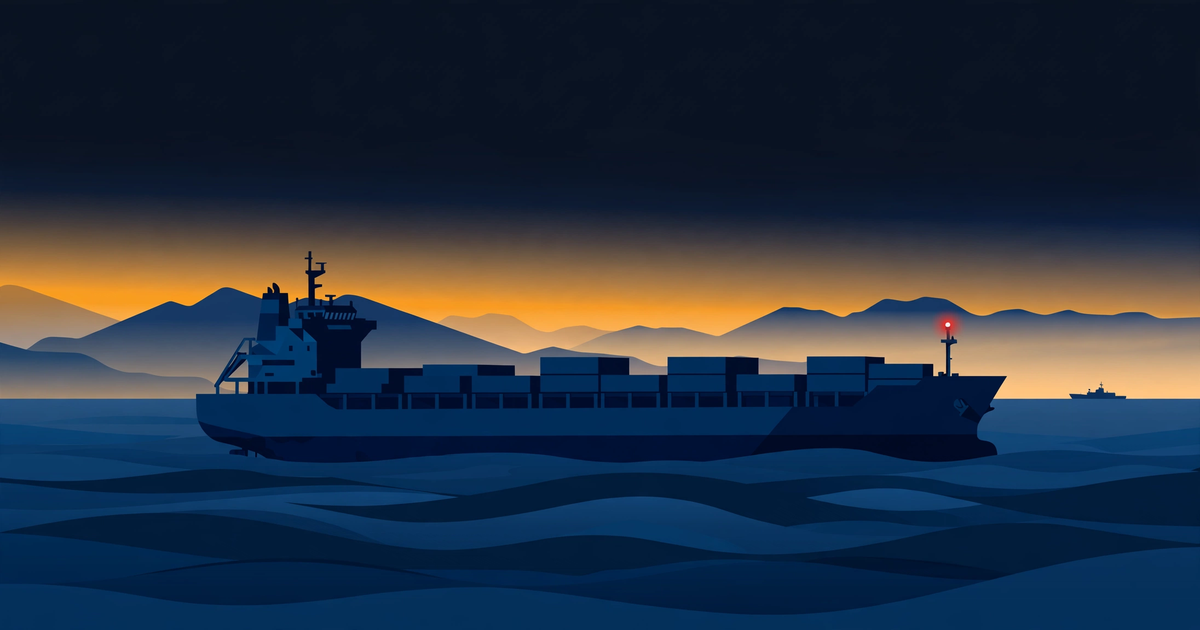
On 26 November 2026, US forces disabled a bulk carrier in the Gulf of Oman after its crew tried to sail through a US naval blockade. The Pacific Archer Gulf of Oman incident ended without anyone hurt: according to US Central Command (CENTCOM), a US military aircraft fired precision munitions at the stern of the Palau-flagged M/V Pacific Archer, knocking out its propulsion, and the civilian crew was unharmed.
It was the sixth vessel CENTCOM says it has disabled for refusing to comply with the blockade, and the episode played out in one of the busiest shipping lanes on the planet. The US military released a short video of the strike, Fox News carried the story within hours, and by the next morning an Iranian military commander was making claims about the operation that CENTCOM called false. This is what is confirmed, what is still unclear, and why it matters.
What happened in the Pacific Archer Gulf of Oman incident
The ship left Bandar Abbas, the Iranian port on the northern shore of the Strait of Hormuz, and headed out into the Gulf of Oman. According to CENTCOM, its crew was warned more than once to turn back and kept going. The command's public release, published on 27 November, says the crew attempted to run the US naval blockade, despite multiple warnings, after leaving an Iranian port.
What happened next was short and, by the standards of these encounters, precise. A US military aircraft fired munitions that hit the stern of the Pacific Archer. The strike disabled the ship's propulsion — it could no longer move under its own power — and CENTCOM says the civilian crew was unharmed. The command also released nine seconds of video from the aircraft, marked unclassified, showing the stern of the vessel.
Palau is a small Pacific island nation whose flag is a common sight on commercial shipping. The flag tells you where the ship is registered, not who owns it or what it carries, and CENTCOM has said neither about the Pacific Archer — which leaves the most basic question about the voyage unanswered for now.
Why the blockade is being enforced this way
CENTCOM says it is strictly enforcing the blockade, and it put numbers on that in the same release. According to the command, US forces have redirected 158 commercial vessels that complied with its instructions, and disabled six that refused. The Pacific Archer is one of those six. The ratio is the point: most ships turn around when warned, and the ones that do not are stopped.
The same release carries a warning to every other ship in the area. CENTCOM urged all mariners in the Gulf of Oman and near the Strait of Hormuz to heed blockade warnings from its forces. The Gulf of Oman sits just outside the strait, the narrow waterway between Iran and Oman through which a large share of the world's seaborne oil moves.
That is also why the story travelled so fast. 'Gulf of Oman' and 'CENTCOM' both trended on X on 28 November, and the command's own post of the strike video had passed 840,000 views by the morning of 28 November. Fox News reported the strike the same day, quoting CENTCOM's account that the aircraft hit the stern after the crew ignored multiple warnings.
The claims that followed — and what CENTCOM says is false
Within a day, an Iranian military commander was making a very different set of claims about the operation, and CENTCOM answered them one by one in a public fact-check on 28 November. The commander claimed that the US military had stolen two Iranian oil tankers and that Iran's navy had retaken the vessels while American troops on board slept. CENTCOM called the whole account fabricated, and added a blunt line: Iran no longer has a navy.
A second claim was that Iranian forces had struck the aircraft carrier USS Abraham Lincoln on the first day of an operation CENTCOM calls Operation Epic Fury, and forced US forces to seek evacuation help. CENTCOM says the Abraham Lincoln Carrier Strike Group was never struck and has since completed its deployment and returned to the United States. A third claim was that CENTCOM charges ships $2.5 million each to pass through the Strait of Hormuz. CENTCOM says there is no toll, and that thousands of ships and billions of barrels of crude oil have passed through freely under US protection.
None of the three claims can be checked against an independent source yet, and that is worth saying plainly. What can be checked is the record: CENTCOM's own release confirms the Pacific Archer strike and the blockade numbers, and the video it published matches the account. The Iranian claims, by contrast, come with no video, no wreckage and no named vessels. Readers should treat them as claims, not facts, until something verifiable backs them.
What this means for shipping through the strait
For shipowners and crews, the practical message is the one CENTCOM put in writing: heed the warnings. A ship that turns back loses time; a ship that keeps going risks being disabled in open water, with a dead engine, far from a friendly port. The Pacific Archer's crew was unharmed, but a disabled bulk carrier still needs a tow, a repair yard and an owner willing to pay for both — and none of that is quick in the Gulf of Oman.
For everyone else, the incident is a reminder of how thin the line is between a shipping delay and an international incident. Six disabled vessels out of more than 160 stopped is a small share. The version backed by a named command, a dated release and footage is the one to trust first — and our conflict-related incident records and maritime incident records track each of these cases as the picture develops.
This is not the first time a tanker or bulk carrier has made our front page this week: a diesel tanker capsized off Ibiza on 27 November, killing one crew member. Our live map tracks maritime incidents as they are reported, and the today's incidents page lists the latest verified entries. Our methodology explains the verification badges we put on every record.
What our records show, and what they miss
Our records show a maritime incident confirmed by an official source: a named vessel, a date, a place, and a casualty count of zero. They show the blockade's scale in CENTCOM's own figures — 158 vessels redirected, six disabled — and they show the competing claims that followed, flagged as claims. What they miss is almost everything about the ship itself: its owner, its cargo, its destination, and what happens to it now. We also have no independent confirmation of the Iranian commander's claims, and no record of the warnings the crew received. Those gaps are normal for a story less than two days old, and they are why this article attributes every number to the source that published it.
The short version
- On 26 November, US forces disabled the Palau-flagged bulk carrier M/V Pacific Archer in the Gulf of Oman after its crew tried to run the US naval blockade despite repeated warnings, according to CENTCOM.
- A US military aircraft struck the ship's stern with precision munitions; its propulsion was disabled and the civilian crew was unharmed.
- CENTCOM says it has redirected 158 compliant vessels and disabled six that refused to comply.
- An Iranian commander claimed the US stole two tankers, hit the USS Abraham Lincoln, and charges a $2.5 million toll — CENTCOM calls all three claims false.
- CENTCOM urges all mariners in the Gulf of Oman and near the Strait of Hormuz to heed its blockade warnings.