Volcano safety: the danger is mostly not lava
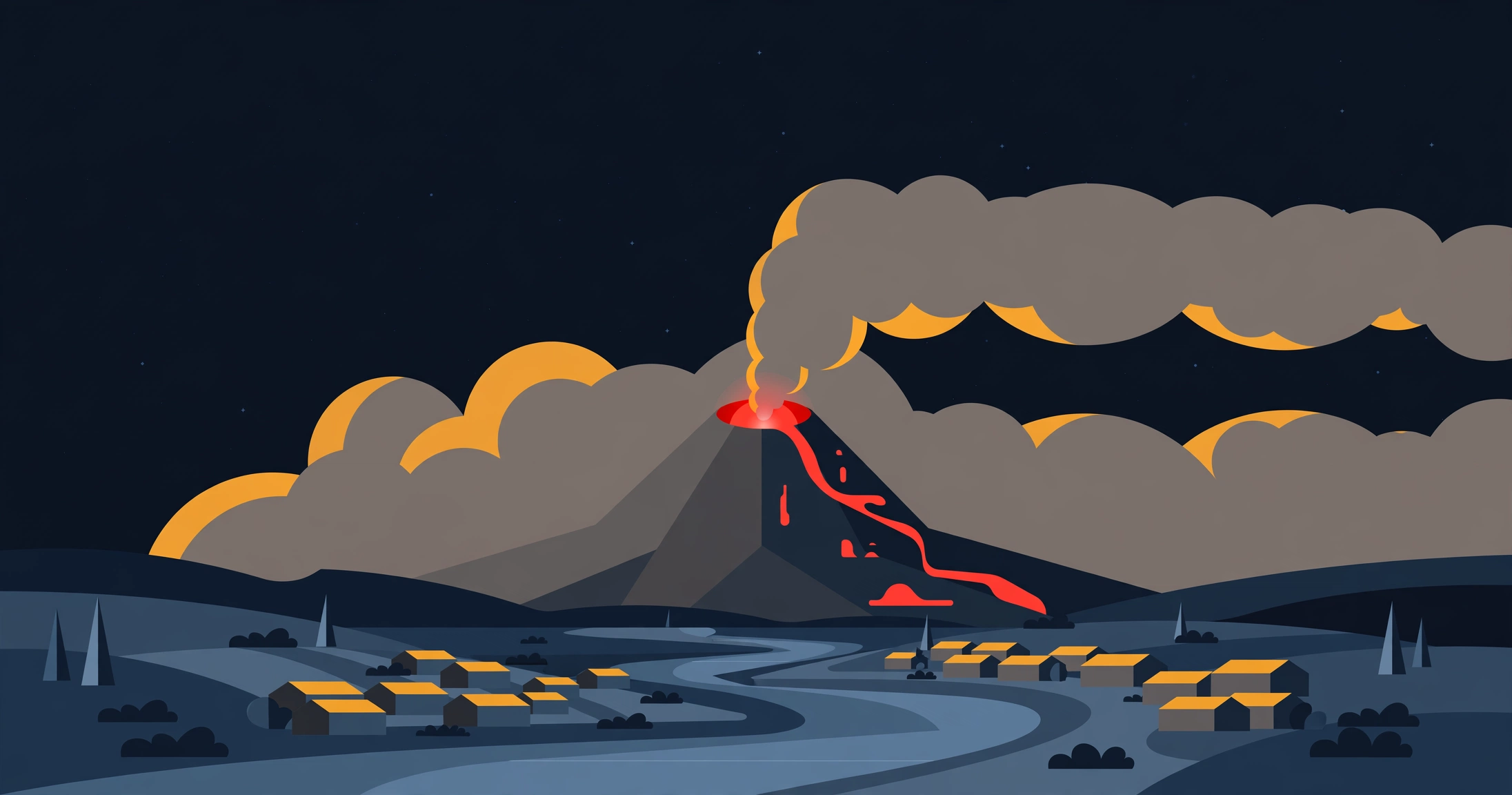
Most people picture lava when they picture a volcano. The danger that reaches the most people is quieter, and travels further: falling ash that gets into lungs, eyes and engines, hot gas, and fast-moving mud that comes down river valleys long after the eruption. The U.S. Geological Survey's guidance starts from that fact: how you prepare depends on where you are, and you might be asked to shelter in place or to evacuate. Either way, the plan is made before the sky changes.
Volcanoes usually give warning. Observatories watch them, alert levels rise, and local officials issue the orders — closures, evacuations, shelter-in-place. Follow the official instruction for your exact location: a USGS alert describes what the volcano is doing, it does not replace the local order.
Before anything happens: know your zone and your route
If you live near a volcano, or are visiting one, find out first if you are inside a mapped hazard zone. Observatories publish simplified hazard maps, and your community will have signed evacuation routes. Learn yours before you need it — which road, in which direction, and where it crosses a river valley, the paths lahars take. Lahars are fast-moving flows of volcanic mud, rock and water, and they are one of the deadliest volcanic hazards; they can travel far down river valleys. Our drowning prevention guide covers the water safety rules that apply anywhere.
Keep a small kit ready, as for any emergency, with volcano additions: a well-fitting N95 respirator for each person, goggles, long-sleeved shirts and long pants. The Red Cross advises short-term use of N95 masks against volcanic ash — they help with ash, but not with volcanic gases, so a mask is never a reason to stay where officials told you to leave. Keep water, food and medication for at least 72 hours, and know your school or care provider's plan.
If an eruption starts: evacuate early, or shelter — whichever officials say
When officials order an evacuation, leave by the route they specify, even if the sky looks clear. Do not enter a closed area to watch, photograph or film the volcano — the hazard moves faster than a person can. If you are on the volcano when it erupts, move away from hazard zones fast. If lahars threaten, stay off valley floors and out of low-lying areas; get to high ground and shelter in place. If someone collapses while you move to safety, our hands-only CPR guide explains what any bystander can do while help is on its way.
The Red Cross's plainest line is worth taking literally: the only way to stay safe from blast, flying debris, hot gases, lahars and lava flow is to evacuate if local officials advise it. There is no safe vantage point for watching an eruption. If you are near, downstream or downwind of the volcano and no evacuation order applies to you, shelter in place — but keep listening, because officials update hazard zones as it develops.
Ashfall: stay inside, seal the house, protect your eyes and lungs
Volcanic ash is not smoke. It is tiny, abrasive particles of rock and glass, small enough to be inhaled deep into the lungs. That is why every agency's ashfall guidance agrees: stay indoors. If ashfall is forecast, go home if you can. If you are outside when it starts, seek shelter in a car or a building.
Once inside, keep it out. Close doors and windows, shut down heat pumps and air conditioning that draw outdoor air into the house, and seal non-essential gaps — the USGS also advises placing damp towels at the bottom of external doors. If you have a chronic lung condition such as asthma, bronchitis or emphysema, stay inside.
If you must go outside, cover up. Use a mask, handkerchief or cloth over your nose and mouth — an N95 respirator if you have one — and wear glasses instead of contact lenses, because ash trapped behind a lens can damage your eyes; goggles are better still. Wear long sleeves and long pants, and keep children indoors; their lungs are more vulnerable to ash.
Do not drive in ashfall unless you have to
Ash makes driving dangerous in three ways at once: it cuts visibility, it makes surfaces slippery, and it gets into engines and filters and can stall a vehicle. The USGS and Red Cross guidance is the same — do not drive unless absolutely necessary. If you have to drive, go slowly, keep your lights on, and do not use the air conditioning — it pulls ash into the car. Driving also stirs up more ash, which makes the air worse for everyone else. Wind and traffic stir fallen ash back into the air for weeks, so keep limiting time outdoors and keep listening to local updates on air quality, drinking water and roads.
After the eruption: heavy roofs, dirty water, careful cleanup
The work after an eruption is mostly cleanup, and it has its own hazards. Ash is very heavy — the CDC warns it can cause buildings to collapse — so clear roofs of ash when it is safe to do so, and be very cautious on a roof, because ash is slippery and makes it easy to fall. Protect sensitive electronics; do not uncover them until the air is ash-free.
Wear protective equipment for cleanup: an N95 respirator, gloves, long-sleeved shirt, long pants, shoes, socks and goggles. Do not let children help with ash cleanup. Volcanic ash can make drinking water unsafe — check with your local health department before drinking from a supply that may have been exposed, and throw out food exposed to ash, heat, smoke, fumes or chemicals. If the power is out, run generators, grills and camp stoves outdoors and away from windows only, to prevent carbon monoxide poisoning — the same care as any open fire; see our Bonfire Night guide. Stay indoors until local health officials say it is safe to go outside: the eruption ending does not mean the hazard has ended — ash in the air, damaged water and weakened roofs are the second half of the event, managed the same way as the first: official updates first, patience second.
What our records show, and what they miss
Our articles archive and today's incidents hold eruptions the way they hold every disaster: the place, the ashfall reported, the outcome filed. What they show is how far the danger travels — ash drifting over towns that never saw the volcano, roads closed by mud miles away. What they miss is what nobody reports: the windows sealed before the ash arrived, the family that left on the signed route, the roof cleared before it could collapse. Nobody files a report for the evacuation that went smoothly, or the mask that kept ash from a child's lungs. For other seasonal hazards, see our festival lights and home electrical safety guide.
The short version
- Know your hazard zone and evacuation route before anything happens; follow official orders, not social media. Evacuate early if told to — never enter a closed area to watch. If lahars threaten, get to high ground and stay off valley floors.
- During ashfall, stay indoors, close doors and windows, shut off systems that draw in outdoor air, and seal gaps.
- Outside, wear an N95 respirator or a mask over nose and mouth, glasses or goggles instead of contact lenses, and long sleeves and pants.
- Do not drive in ashfall unless you must — ash is slippery, cuts visibility and stalls engines.
- Afterward, clear heavy ash from roofs carefully, wear full protection for cleanup, check water safety with local health officials, and throw out ash-exposed food.