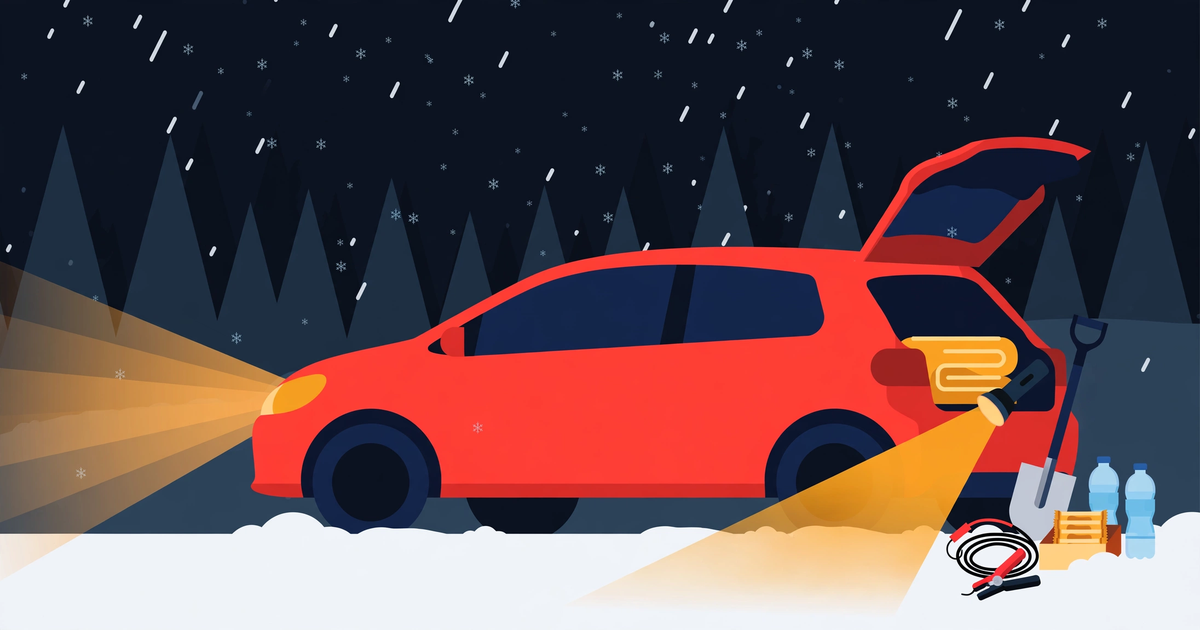
The kit is the plan
A car that will not start in summer is an inconvenience. The same car in a snowstorm is a cold shelter with a clock on it — and what is already in the boot decides how that wait goes. Winter storms can last hours or several days, cut off heat, power and communication, and put older adults, children, sick people and pets at greater risk. Ready.gov's list: jumper cables, sand, flashlight, warm clothes, blankets, bottled water, snacks — and a full tank.
Warmth first: blankets, clothes, boots
Cold is the first danger in a stranded car, and warmth is the first thing to pack. Put a blanket or a sleeping bag in the boot for every person who usually rides with you, plus extra hats, coats, mittens, dry socks and a spare pair of sturdy boots.
Keep the warm things where you can reach them: on a winter trip, move the blankets, water and food into the passenger area before you set off. Check the kit before the season starts and after any trip that used it — replace expired food, water and batteries, and recharge the phone battery pack.
Watch for the cold injuries Ready.gov names. Frostbite — numbness, white or grayish-yellow skin, firm or waxy skin — takes feeling and colour from the face, fingers and toes. Hypothermia, a temperature below 95 degrees, is an emergency: shivering, exhaustion, confusion, fumbling hands, memory loss, slurred speech, drowsiness. If someone shows those signs, get them warm, keep them dry and wrapped in blankets including the head and neck, and call your local emergency number.
Food, water and light
Pack bottled water and snacks that keep without cooking — granola bars, nuts, crackers, dried fruit. A stranded wait can stretch for hours, and hunger and thirst make the cold harder to bear. Do not count on melting snow: it takes time, fuel and a container.
Light is safety as much as comfort. A flashlight with spare batteries lets you check the car, clear snow and be seen — and a charged phone with a car charger and a portable battery pack is your way to call for help and give your location. Charge the power bank before you leave; a dead charger is just weight. Keep any daily medicines in the kit too, and a basic first-aid kit — a delay meant to last an hour can last a day.
Getting unstuck: shovel, sand, cables
Some of the kit is for getting moving again. A compact folding shovel fits in any boot and clears snow from around the wheels and the exhaust pipe. Sand or cat litter gives tyres grip on ice — scatter it in front of the driving wheels and try again gently, without spinning the wheels hard enough to dig in deeper. An ice scraper and snow brush clear the windscreen so you can see and be seen.
Jumper cables are on the official list for a reason: cold weather is hard on batteries, and a dead battery is the classic winter failure. They need a second car to work, so learn how to use them before you need them, in daylight, not in a blizzard. And do not overexert yourself digging or pushing: Ready.gov warns that winter storms raise the risk of heart attacks from overexertion, so work in short bursts.
Being seen and reaching help
A stranded car that nobody can see is a stranded car nobody can help. Pack flares or reflective triangles and a hi-vis vest, and a brightly coloured cloth — preferably red — to tie to the antenna or door. After the snow stops, raising the hood is the signal that you need help. At night, the dome light on while the engine runs makes the car visible to rescuers.
Before you leave, tell someone your route and when you expect to arrive, and keep your phone charged so you can give your location precisely if you call for help. Keep the fuel tank at least half full all winter, and fill it before any storm — a full tank gives you heat if you are stranded.
If you are stranded: stay with the car
Ready.gov puts it plainly: stay off the roads if at all possible, and if you are trapped in your car, stay inside. The National Weather Service warns that leaving the vehicle in wind-driven snow can quickly disorient you — a car is far easier for rescuers to find than a person on foot.
Call for help if you have service, give your location as precisely as you can, and then make the car visible: tie the bright cloth to the antenna or door, turn on the dome light at night, and raise the hood once the snow stops. Move your arms, legs, fingers and toes vigorously to keep blood circulating, and drink the water you packed. Do not fall asleep with the engine running, and do not leave the car to walk unless help is clearly within reach.
The exhaust pipe: carbon monoxide
The most serious hidden danger in a snowbound car is carbon monoxide. A tailpipe buried in snow can push exhaust gas back into the cabin, and carbon monoxide cannot be seen or smelled — so clear snow from the exhaust pipe before you run the engine, and check it again during heavy snow.
Run the motor about 10 minutes each hour for heat, as the National Weather Service advises, and open a window slightly while it runs so fresh air can come in. Never run the engine for long periods with the windows up, and never run it in an enclosed space. If anyone in the car develops a headache, dizziness or nausea, get fresh air at once and call your local emergency number.
Before you leave: the car itself
The kit is the backup plan; the car itself is the first one. Before winter, have a mechanic check the battery, antifreeze, tyres, wipers, lights and heater, fit winter tyres or chains where required, and make sure the defroster works.
Check the forecast before every winter trip, and if a winter storm warning is in effect, find shelter right away rather than driving into it — the safest place in a storm is not a car on an open road. If the trip can wait a day, let it wait.
What our records show, and what they miss
Our incident records log the winter crashes and the road closures, the blizzards and the rescues — but almost never what was in the car when the wait began: whether there was a blanket, a charged phone, a shovel, or a full tank. That half of the story is missing from nearly every record we publish, yet it is the half that decides whether a stranded driver waits it out or becomes the next incident on the list.
The short version
- Pack warmth, water, light and traction. Blankets, warm clothes and boots; bottled water and snacks; a flashlight, phone charger and power bank; a shovel, sand, ice scraper and jumper cables.
- Keep the tank at least half full all winter, and fill it before any storm.
- Stay off the roads if you can — and if you are trapped, stay with the car.
- Make the car visible. Bright cloth, preferably red, on the antenna or door; dome light on at night; hood up after the snow stops.
- Run the engine about 10 minutes an hour with a window open slightly — and keep the exhaust pipe clear of snow.
- Move to stay warm — arms, legs, fingers and toes — and watch for frostbite and hypothermia.
- Check the car and the kit before winter — battery, tyres, heater, defroster — and check the forecast before every trip.
Sources: Ready.gov — Winter Weather and National Weather Service — winter storm and stranded-vehicle guidance.