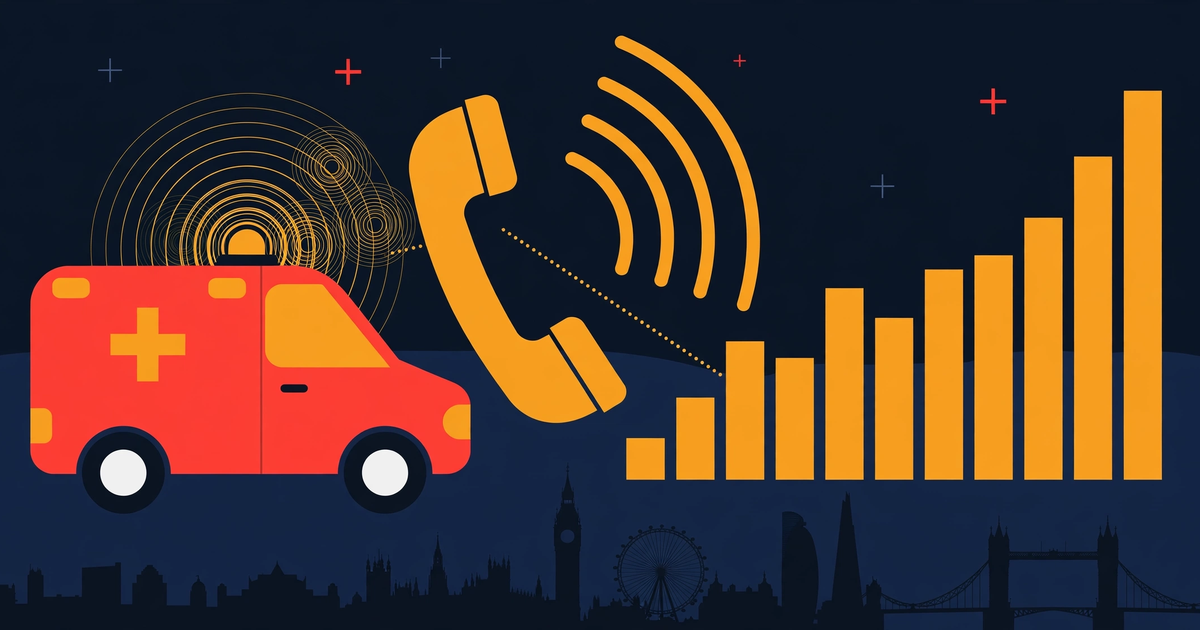
The London Ambulance critical incident was declared on Thursday 19 November after the service took more than 7,300 calls a day for three days in a row, according to the London Ambulance Service NHS Trust. As of Friday morning no stand-down had been published, and the Trust was asking Londoners to call 999 only in a genuine emergency and to use NHS 111 online or call 111 for urgent help that is not an emergency.
For patients, the effect is longer waits. The Trust said some people may wait longer than usual while the incident is in place, and that crews will always prioritise the most seriously ill or injured patients first. No hospital closure was named.
Why did 999 call numbers jump?
According to the London Ambulance Service NHS Trust, the service handled 7,326 calls on Monday, 7,366 on Tuesday and 7,369 on Wednesday — more than 7,300 calls per day for three days, and around 500 more calls per day than the previous week. BBC News, Sky News and The Independent all reported the same three daily totals from the Trust.
It was not just volume. According to the Trust, Category 1 calls — the most seriously ill or injured patients — were up 10% on Wednesday compared with the previous week. Calls for people with breathing difficulties were up 20%, according to the Trust. The Trust also said it had taken around 50% more calls last week than in the same week last year in connection with flu. The outlets reporting the story repeated those comparisons without publishing rival figures.
Three days above 7,300 matters because demand does not reset at midnight. By Wednesday the system is carrying one surge into the next.
London Ambulance critical incident: what does it change?
A critical incident declaration signals that demand has passed what normal staffing can comfortably absorb. According to the Trust and BBC News, London Ambulance Service is deploying extra resources and staff and working closely with NHS partners across London to speed up ambulance handovers at hospital. Faster handovers matter: an ambulance waiting outside an emergency department cannot answer the next call.
What the declaration does not do is close the service to anyone. The Trust was explicit that the most seriously ill or injured patients will always be prioritised. Chest pain, severe breathing difficulty, signs of stroke, severe bleeding, or someone collapsed and not breathing normally is still a 999 call. Our guides to first aid for fainting and when to call for help and stopping severe bleeding set out the warning signs that should never wait.
No specific hospital, emergency department closure or divert arrangement was named by the Trust, BBC News or Sky News. Do not assume your local hospital is closed. The change to expect is time: a longer wait for less urgent cases while crews work through the queue in priority order.
Should you call 999 or 111?
The Trust's advice was short: please only call 999 in a genuine emergency; if you need urgent medical help but it is not an emergency, please use NHS 111 online or call 111. BBC News reported the same advice. Sky News reported the Trust's flu and self-care advice alongside the declaration.
In practice, sort symptoms before you dial. Call 999 for life-threatening emergencies — chest pain, severe breathlessness, stroke symptoms, heavy bleeding that will not stop, seizures, severe allergic reactions, or someone unconscious or not breathing normally. Use NHS 111 for urgent problems that are not life-threatening, such as worsening flu symptoms. If you are unsure, 111 can assess and direct you, including sending an ambulance if needed.
The Trust also asked people to check on elderly and vulnerable neighbours. Spotting someone deteriorating early can turn a midnight Category 1 call into a daytime 111 assessment. Our explainer on hypothermia first aid covers another winter risk for vulnerable people.
What is driving the flu and breathing calls?
The Trust linked the surge to flu and breathing difficulties, and its numbers support that link without proving a single cause. A 20% rise in breathing-difficulty calls, according to the Trust, alongside around 50% more calls last week than in the same week last year in connection with flu, suggests respiratory illness is a large part of the pressure. The Trust did not publish a breakdown by diagnosis, age or borough, so this article will not invent one.
The self-care advice the Trust gave was basic: get the flu vaccine if you are eligible, wash hands, cover coughs and sneezes, and dispose of tissues. None of that treats someone already seriously ill. It reduces spread in households where one flu case often becomes three — and three cases with an older relative at home is how a manageable illness becomes an ambulance call.
Two recent reports show the same winter pattern at smaller scale. The Rotherham Legionnaires' disease outbreak turned on recognising a respiratory illness early. The Caribbean Princess outbreak, with 148 people sick, showed how quickly illness can overwhelm the medical team on board. London's setting is a city, not a ship or a single town, but the lesson is similar: early assessment beats late escalation.
What happens next, and what should you watch for?
As of Friday morning, no stand-down or escalation had been published. A search for a stand-down announcement returned only the original declaration reports. Until the Trust publishes a stand-down, assume the critical incident is still in place, waits may be longer than usual, and the 999-versus-111 advice still applies.
A stand-down statement, a further rise in Category 1 calls, or a named hospital divert would change this story. None had been published when this article was written. If you need help now, use 999 for emergencies and 111 for urgent non-emergencies.
If you call 999, stay on the line. Call handlers are triaging, not delaying — hanging up and redialling puts you back at the start of the queue.
What our records show, and what they miss
Our incident records log events with a place and a time — an explosion, a flood warning, an earthquake. A critical incident declared because 7,369 people phoned for help on a Wednesday does not fit that shape. There is no single scene to map. What the record can show is the threshold: three consecutive days above 7,300 calls, according to the Trust, was enough to trigger a formal declaration.
What our records miss is everything underneath that threshold — how long individual patients waited, which boroughs called most, and whether faster handovers freed crews up. The Trust has not published those breakdowns, and without them any borough-by-borough claim would be guesswork. The honest summary is narrower: demand rose sharply, the sickest patients rose with it, and the service asked the public to use 111 for everything that is not a genuine emergency. See also our guide to carbon monoxide safety at home.
The short version
- London Ambulance Service declared a critical incident on Thursday 19 November after more than 7,300 calls a day for three days: 7,326 on Monday, 7,366 on Tuesday and 7,369 on Wednesday, according to the Trust.
- Category 1 calls were up 10% on Wednesday versus the previous week and breathing-difficulty calls were up 20%, according to the Trust.
- Some patients may wait longer than usual; the most seriously ill or injured will always be prioritised, and no hospital closure or divert was named.
- Call 999 only in a genuine emergency; for urgent help that is not an emergency, use NHS 111 online or call 111.
- No stand-down had been published by Friday morning — assume the incident is still in place until the Trust says otherwise.
Sources: London Ambulance Service NHS Trust; BBC News; Sky News; The Independent; NHS 111 online.