What fainting is
Someone goes pale, sways, and drops to the floor. First aid for fainting starts with one move: lay them flat on their back and raise their legs, so blood can flow back to the brain. Fainting, also known as syncope, is a brief loss of consciousness caused by a temporary drop in blood flow to the brain. The American Red Cross puts it plainly: blood flow to the brain falls for a moment, the person loses consciousness, and then — usually after about a minute — they come round again.
Recovery is usually rapid and complete — most faints end on their own, quickly, with the person confused for a moment, then themselves again. Your job is not to wake them up by force. Your job is to put them in the position where blood can get back to the brain, keep them safe while they are down, and recognise the few cases where a faint is a sign of something more serious.
The signs before someone goes down
A faint often gives a warning, and catching it is the easiest save in first aid. The person may say they feel dizzy, light-headed or suddenly hot, that the room is spinning, or that their vision is greying or narrowing. Their face goes pale and they may break into a sweat.
If you see those signs, do not wait for the fall. Help the person lie down, right where they are, before they fall. If there is nowhere to lie down, help them sit and lean forward — but lying flat is better, and it is what every first-aid source recommends first. A fall from standing height onto a hard floor can injure someone far worse than the faint itself, so the first move is always to get them low and safe. If the fall does cause an injury, our sprains, strains and fractures first aid guide covers what to do next.
If you feel faint yourself, lie down on the ground until the feeling passes — do not try to push through it. Lying down is not giving in; it is the treatment.
First aid for fainting: lay them flat, raise the legs
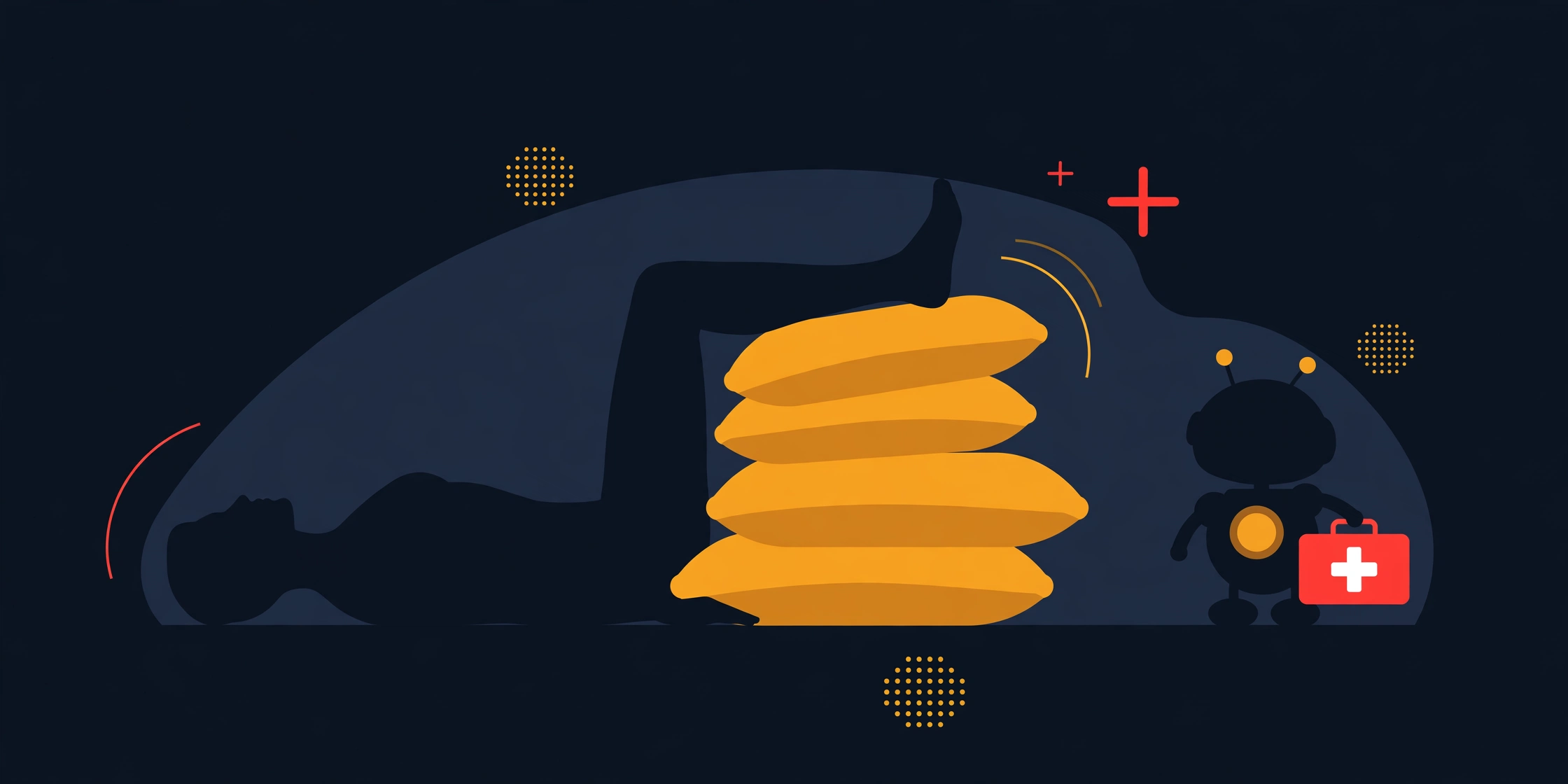
Once the person is down, lay them flat on their back. The reason is simple and it is the heart of fainting first aid: with the head at the same level as the heart, blood does not have to fight gravity to reach the brain. The Red Cross explains that this position helps blood flow return to the brain, and that is why the person usually recovers quickly once they are flat.
Then raise and support their legs — on a stool, a pile of cushions, or a rolled-up coat. Raising the legs improves the blood flow to the brain. You do not need to lift them high. Slightly raised, supported, and comfortable is enough.
Check that they are breathing. If they are breathing and there are no injuries, you can stay with this position and give them time. Most people come round within a minute or so. Talk to them calmly as they wake: tell them where they are, that they fainted, and that they are safe. That pale, clammy look can overlap with shock after an injury — our shock first aid guide explains how to tell the difference.
Fresh air and space
Loosen any tight clothing around the neck, chest and waist — a tie, a tight collar, a belt. Then give them air. Open a window or a door, move them into fresh air if you can do so without moving them far, and ask other people to stand back. A crowd around a person on the floor does two kinds of harm: it uses up the air and it adds stress to someone who is already frightened.
Keep them lying down for a few minutes after they come round, even if they say they feel fine and want to get up. St John Ambulance Victoria is clear on this: keep the person lying down for a few minutes, and offer them water only once they are fully conscious.
What not to do
Two old remedies are still widely believed, and both are wrong. Do not sit the person down with their head between their legs — St John Ambulance Victoria states plainly that this technique is not effective at preventing fainting or helping someone manage faintness. And do not splash their face with water. It does not help either, and it adds shock and discomfort to a person who is already unwell.
Do not give them anything to eat or drink while they are unconscious. A person who cannot swallow properly can choke, and food or drink in the mouth of someone who is not fully awake is a real danger.
If they do not wake up
Most faints end quickly. If the person does not regain consciousness quickly, the situation changes — act on it. The Red Cross advises that if symptoms do not improve within 1 to 2 minutes, or if symptoms come back or get worse, call your local emergency number.
If the person is unresponsive but breathing normally, and there are no injuries, place them in the recovery position — on their side, with the airway kept open — and call for help. The recovery position keeps the airway clear and stops the tongue from blocking it while you wait.
If the person is unresponsive and not breathing normally, call your local emergency number at once and begin CPR, using an AED if one is available and you know how. Our hands-only CPR guide for bystanders walks through the steps. That is no longer a simple faint, and the minutes matter. Do not hesitate — a person who is not breathing needs help now.
When to call for emergency help
Call your local emergency number at once if the faint followed a fall or a head injury, if the person hit their head as they went down. A fall can cause injuries that need checking even when the faint itself was harmless, and a head injury after a faint is never something to watch and wait on. If there is heavy bleeding from the fall, press firmly and keep pressure on — see our severe bleeding guide.
Call at once, too, if the fainting comes with chest pain, confusion that does not clear, or difficulty breathing — or if the person does not wake up quickly. St John Ambulance Victoria lists chest pain and confusion among the concerning symptoms that need emergency medical help immediately. Repeated fainting, fainting that happens again and again, is also a reason to get medical advice promptly rather than treating each episode on its own.
Cold can complicate a collapse outdoors in winter. If someone is found cold and unresponsive after exposure, our hypothermia first aid guide covers warming the core and calling for help.
What our records show, and what they miss
Our incident records log the falls and the rescues — but they almost never record whether anyone nearby knew the first aid. The records show the faint; they miss the one minute of help that decides whether a person comes round safely. That gap is why this guide relies on the American Red Cross and St John Ambulance guidance, and sits alongside our other first-aid guides in articles and reports.
The short version
- Fainting is a brief loss of consciousness when blood flow to the brain drops — most people recover within a minute or so.
- If someone looks faint, help them lie down before they fall — a fall can hurt more than the faint.
- Lay them flat on their back and raise and support their legs, so blood can flow back to the brain.
- Loosen tight clothing, give them fresh air, and ask other people to stand back.
- Do not sit them with their head between their legs, splash water on their face, or give them food or drink while unconscious.
- Keep them lying down for a few minutes after they come round; help them sit up slowly, and offer water only once fully conscious.
- If they do not wake up quickly, or symptoms do not improve within 1 to 2 minutes, call your local emergency number.
- If they are breathing but unresponsive, use the recovery position; if they are not breathing normally, start CPR and use an AED if available.
- Call for help at once if the faint followed a fall or head injury, or comes with chest pain, confusion or difficulty breathing.