Hypothermia first aid: the first five minutes matter
Hypothermia first aid starts with two actions: call your local emergency number, and get the person out of the cold. Hypothermia — when the body's core temperature falls below 95 degrees Fahrenheit (35 degrees Celsius) — is a medical emergency, and the first aid is simple but strict: move the person gently to a warm, dry place, remove wet clothing, wrap them in dry blankets, and warm the centre of the body slowly.
The danger is how quietly it arrives. Hypothermia usually develops slowly, and the person often does not realise what is happening — confusion is one of the symptoms. If someone is shivering hard, slurring their words, fumbling with their hands or growing drowsy in the cold, do not wait for it to pass.
How to spot hypothermia
According to the Mayo Clinic, hypothermia happens when the body loses heat faster than it can produce it, and the temperature falls below 95 degrees Fahrenheit (35 degrees Celsius), against a normal 98.6 degrees Fahrenheit (37 degrees Celsius). Left untreated, it can be life-threatening — and the cold does not have to be extreme. The CDC notes it can happen above 40 degrees Fahrenheit (about 4 degrees Celsius) if a person is wet and chilled.
The signs usually develop slowly. The Mayo Clinic lists shivering, though this may stop as body temperature drops; slurred speech or mumbling; slow, shallow breathing; a weak pulse; clumsiness; drowsiness; confusion or memory loss; and loss of consciousness. In infants, look for bright red, cold skin. The CDC adds exhaustion and fumbling hands.
Two signs deserve special attention. First, shivering that stops: the body has lost one of its last defences, and the situation is more serious, not less. Second, confusion or drowsiness: a person who cannot think clearly may sit down in the snow and never get up. Both mean call for help now.
Hypothermia first aid, step by step
The American Red Cross states the goal plainly: restore normal body temperature and care for any other conditions while waiting for emergency personnel. The steps below follow the Mayo Clinic and the Red Cross, and the two sources agree with each other.
1. Call for help. Call your local emergency number first, before anything else. If you are alone with the person, call, then start first aid. If others are nearby, send one of them to call while you stay with the person.
2. Be gentle. Handle the person gently and move them only as much as is necessary — the Mayo Clinic warns that jarring movements can trigger dangerous irregular heartbeats in a cold heart.
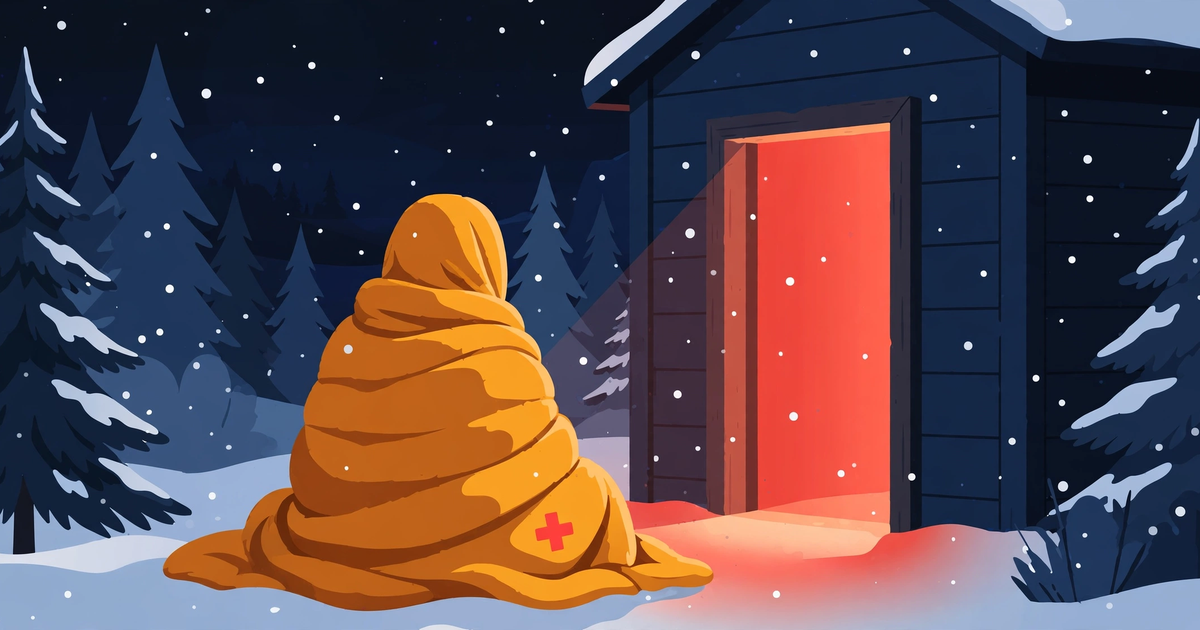
3. Move them out of the cold. Gently move the person to a warm, dry location if possible. If you cannot get indoors, protect them from the wind — especially around the neck and head — and lay a blanket underneath them to insulate them from the cold ground.
4. Remove wet clothing. Carefully take off any wet clothing and replace it with warm, dry coats or blankets — wet clothes keep stealing heat even after the person is out of the wind.
5. Cover them with blankets. Use layers of dry blankets or coats, and cover the head, leaving only the face exposed — the head loses heat fast.
6. Warm the centre, slowly. If further warming is needed, do it gradually and focus on the centre of the body — the neck, chest and groin. The Mayo Clinic suggests warm, dry compresses: a fluid-filled bag that warms when squeezed, or a hot water bottle wrapped in a towel. The CDC notes an electric blanket is another option. Warm the core first, not the arms and legs.
7. Warm drinks, only if alert. If the person is alert and able to swallow, offer a warm, sweet, nonalcoholic, noncaffeinated drink. Warm drinks help warm the body from the inside. Never try to give drinks to someone who is unconscious.
8. Watch breathing, start CPR if needed. Monitor breathing while you wait. If the person shows no signs of life — no breathing, coughing or movement — begin CPR until help arrives.
What never to do
The don'ts matter as much as the dos, because the wrong help can make hypothermia worse.
- Don't apply direct heat. Don't use hot water, a heating pad or a heating lamp, and don't put the person in a hot bath — the Mayo Clinic warns extreme heat can damage the skin or cause irregular heartbeats severe enough to stop the heart.
- Don't warm the arms and legs. Heating or massaging the limbs forces cold blood back toward the heart, lungs and brain, and the core temperature can drop further. The Mayo Clinic says this can be fatal.
- Don't massage or rub the person. Rubbing can damage cold skin and frostbitten tissue. Handle the person gently instead.
- Don't give alcohol or cigarettes. Alcohol hinders the rewarming process, and tobacco interferes with the circulation needed for rewarming, according to the Mayo Clinic. The Red Cross also says to avoid caffeine.
- Don't rewarm too quickly. No hot bath, no heating lamp. Slow and steady is the rule — the body needs time to warm safely.
- Don't leave them alone. Stay with the person until help arrives, and keep watching their breathing.
Who is most at risk
Anyone can develop hypothermia, but some face higher risk: older adults, who lose heat faster and may not feel the cold clearly; infants and small children, who lose heat through a larger skin surface relative to their size; people who are wet, tired or hungry; and people who have been drinking alcohol, which makes the body lose heat faster. Hikers, fishermen, drivers stranded in winter and anyone who falls into cold water face the same risk — and the CDC notes it can develop indoors too, in a cold house without heating. During a cold spell, check on older neighbours living alone.
How to prevent hypothermia
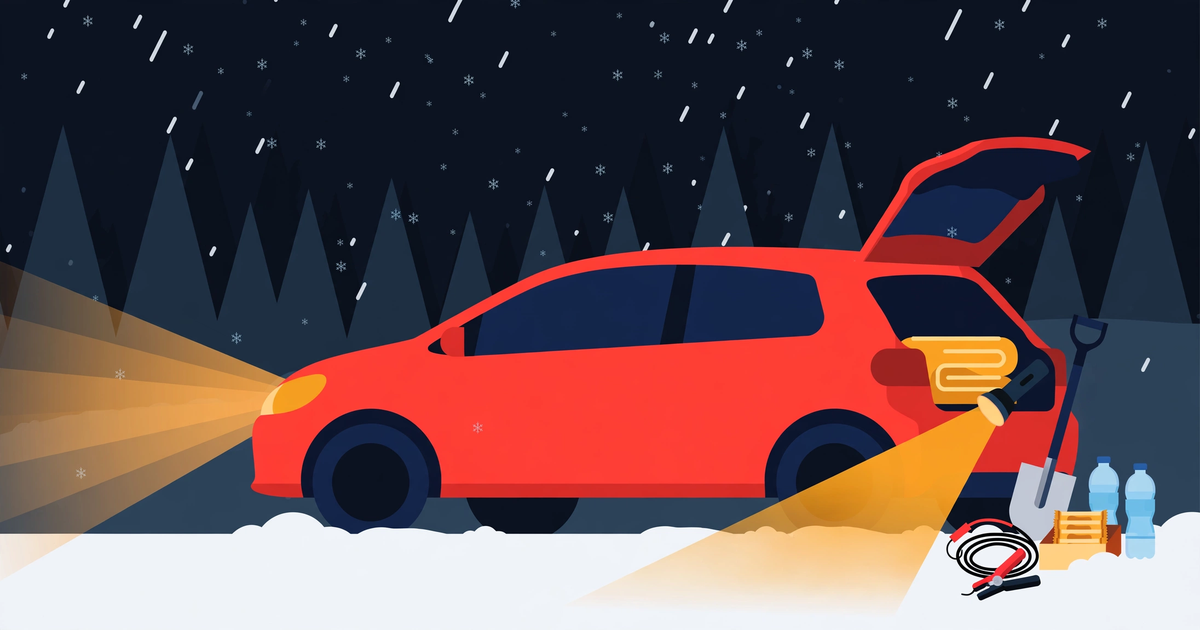
Prevention is mostly clothing and planning. Dress in layers, keep the head, neck, hands and feet covered, and stay dry — wet clothing is the fastest route to hypothermia, so change out of wet clothes as soon as you can. Eat and drink before going out in the cold, avoid alcohol, and take shelter from wind and rain. In a car, keep the winter emergency kit our earlier guide describes — blankets, water, a torch and a charged phone — because a stranded wait in winter is exactly when hypothermia develops.
What our records show, and what they miss
Our incident records log the cold — the blizzards, the stranded drivers, the rescues — but they almost never record whether anyone nearby knew the first aid. The records show the weather; they miss the five minutes of gentle, correct help that decide whether a cold person recovers.
The short version
- Call for help first. Hypothermia — core temperature below 95°F (35°C) — is a medical emergency.
- Be gentle and get them out of the cold. Move them to a warm, dry place, protect them from wind, and insulate them from the ground.
- Remove wet clothing, cover with dry blankets including the head, and warm the centre — neck, chest, groin — slowly.
- Warm sweet drinks only if the person is alert and can swallow. Never give alcohol, and never give drinks to someone unconscious.
- Never use direct heat, never warm or rub the arms and legs, and start CPR if there are no signs of life.