A federal jury in Los Angeles has convicted Jonathan Rinderknecht of deliberately starting the fire that became the Palisades Fire, the January 2025 blaze that killed 12 people and destroyed 6,837 structures across Pacific Palisades and Malibu, according to the U.S. Department of Justice. The Palisades Fire arson verdict, returned on Friday 20 November 2026 after a retrial, leaves Rinderknecht facing 5 to 40 years in federal prison at sentencing on 17 March 2027, according to the Department of Justice.
Prosecutors proved a small blaze lit just after midnight on New Year's Day burned unseen underground for nearly a week, then surfaced in Santa Ana winds on 7 January 2025 and became the most destructive wildfire in the history of the city of Los Angeles, according to the Department of Justice.
What did the Palisades Fire arson verdict decide?
According to the Department of Justice, Rinderknecht, 30, a former Los Angeles resident and former ride-share driver, was found guilty of one count of destruction of property by means of fire and one count of arson affecting property used in interstate commerce. Reuters reported the verdict came on the jury's third day of deliberations, and the Associated Press reported the same two convictions after a 14-day retrial.
Each count carries a mandatory minimum of five years and a maximum of 20 years, according to the Department of Justice. U.S. District Judge Anne Hwang scheduled sentencing for 17 March 2027, according to the Department of Justice. Rinderknecht has been in federal custody since October 2025, according to the Department of Justice.
He pleaded not guilty. The first charge was narrowed to the 1 January Lachman Fire; the second addresses the Palisades Fire, according to the Associated Press. He was convicted on both.
How did a New Year's Day fire become the Palisades Fire?
According to evidence summarised by the Department of Justice, Rinderknecht ignited the Lachman Fire just after midnight on 1 January 2025 while alone in a small clearing on Hidden Buddha Hill in Pacific Palisades. Environmental sensing platforms indicated the fire had begun at approximately 12:12 a.m. on 1 January 2025, according to the Department of Justice.
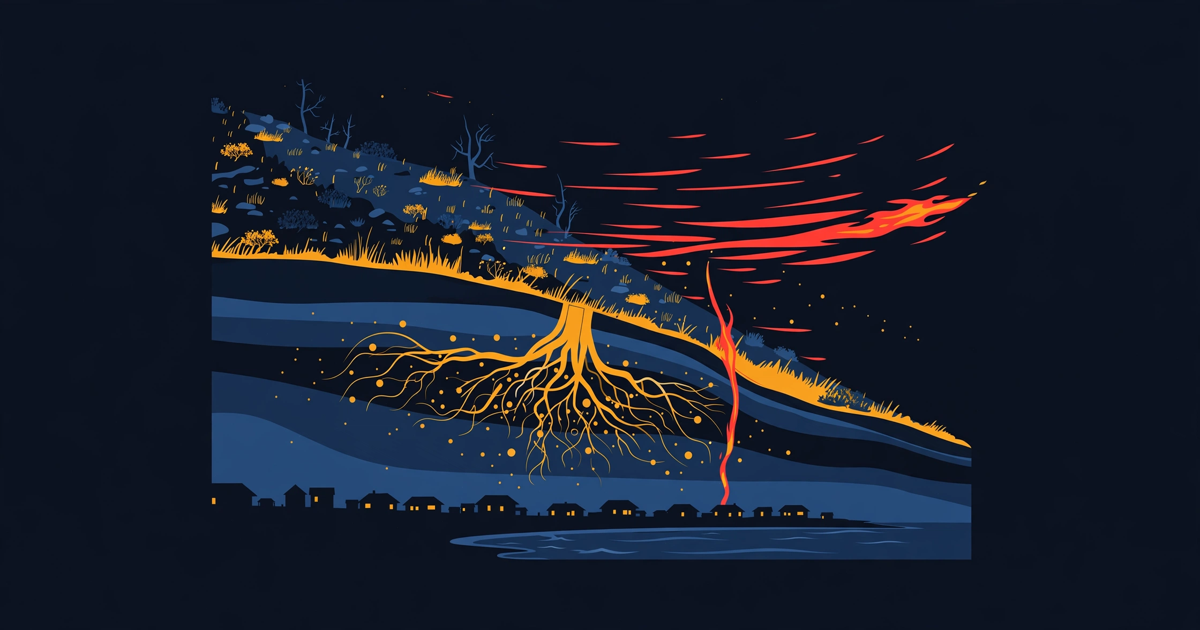
Firefighters suppressed the visible flames. What they could not see was fire continuing to smoulder underground within the root structure of dense vegetation. On 7 January 2025, heavy Santa Ana winds caused that underground fire to surface and spread above ground in what became known as the Palisades Fire, according to the Department of Justice.
A fire can look out and still be alive below the surface. Roots hold heat for days; wind does the rest. That holdover sequence was the centre of the prosecution case.
What did the Palisades Fire destroy?
The Palisades Fire burned 23,448 acres, killed 12 people and destroyed 6,837 structures, according to CAL FIRE, and caused an estimated $25 billion in damage, according to the Department of Justice. CAL FIRE recorded 6,837 structures destroyed and 1,017 damaged, with 12 civilian fatalities, according to CAL FIRE.
Reuters described the fire as one of the deadliest and most destructive wildfires in Los Angeles history, according to Reuters. It started on 7 January 2025 southeast of Palisades Drive in Pacific Palisades, according to CAL FIRE, and burned across Pacific Palisades, Topanga and Malibu before containment at the end of January.
A verdict does not rebuild homes. It assigns criminal responsibility for how the fire started.
Why was there a retrial?
The first trial ended in a mistrial in June 2026 after jurors deadlocked 10 to 2 in favour of acquittal, according to the Associated Press and Reuters. Prosecutors retried the case on a revised indictment, dropping a third charge of timber set afire and narrowing the first charge to the Lachman Fire only, according to the Associated Press.
Defence lawyers had argued no hard evidence tied Rinderknecht to arson and that the Lachman and Palisades fires were separate events, possibly involving errant New Year's Eve fireworks, according to City News Service. The second jury did not accept that account. Prosecutors argued he used a grill lighter to ignite hilltop vegetation around midnight on 31 December 2024, and that witness accounts, video, cellphone data and fire-pattern analysis proved he set it intentionally, according to City News Service. The Department of Justice said evidence showed extreme anger and frustration in the days leading up to the fire, according to the Department of Justice.
What happens next?
Sentencing is set for 17 March 2027 before U.S. District Judge Anne Hwang, according to the Department of Justice. The Bureau of Alcohol, Tobacco, Firearms and Explosives investigated with assistance from the Los Angeles Police Department and the U.S. Forest Service, according to the Department of Justice. Defence counsel has said an appeal is planned, according to Los Angeles Times reporting carried by City News Service. Civil claims and insurance disputes are separate matters and will run on their own tracks.
What should residents take from this verdict?
Two practical points stand out. First, holdover fire is real. If you see smoke or a small brush fire that crews have knocked down near dry vegetation, treat the area as unsafe until officials say otherwise, and report renewed smoke at once. The Lachman Fire looked handled on 1 January. It was not.
Second, wind changes everything. The Palisades Fire surfaced on a day of heavy Santa Ana winds, according to the Department of Justice. Ready.gov advises residents in wildfire-prone areas to know evacuation routes in advance, keep a go-bag ready, and leave early when ordered, according to Ready.gov. Our guide to wildfire evacuation: leave early, take what matters sets out the same steps. The National Fire Protection Association publishes home wildfire preparedness guidance for defensible-space work, according to NFPA.
Readers following California risk may also want our explainers on the Los Angeles earthquake near Commerce and the Pinnacles earthquake in Central California, plus household basics in first aid for fainting and carbon monoxide safety at home. For seismic context beyond California, see the Peru earthquake near Carhuamayo.
What our records show, and what they miss
Our incident records log the Palisades Fire as a wind-driven wildfire beginning on 7 January, with CAL FIRE figures for acreage, structures and fatalities. That is accurate as far as it goes. What a standard record misses is the six days before it: a small, apparently suppressed fire on 1 January, burning underground where no caller could see it. Incident databases are good at the day a disaster becomes visible. They are weaker at the quiet interval when a hazard is present but not yet observable.
The verdict exposes a second gap. Our records count structures and deaths. They do not capture the evidentiary chain — sensing platforms timestamping ignition at 12:12 a.m., cellphone data, fire-pattern analysis — that proved how the fire started. For prevention, that chain matters as much as the damage count. It shows where holdover risk hides, and what proof a jury will accept when nobody saw the match struck.
The short version
- A federal jury convicted Jonathan Rinderknecht on 20 November 2026 of starting the fire that became the Palisades Fire, according to the Department of Justice and Reuters.
- He lit the Lachman Fire just after midnight on 1 January 2025; it smouldered underground, then surfaced on 7 January 2025 in Santa Ana winds, according to the Department of Justice.
- The Palisades Fire killed 12 people, burned 23,448 acres and destroyed 6,837 structures, according to CAL FIRE.
- The first trial deadlocked 10 to 2 for acquittal in June 2026; the retrial convicted on both counts, according to the Associated Press.
- Sentencing is set for 17 March 2027; Rinderknecht faces 5 to 40 years in federal prison, according to the Department of Justice.