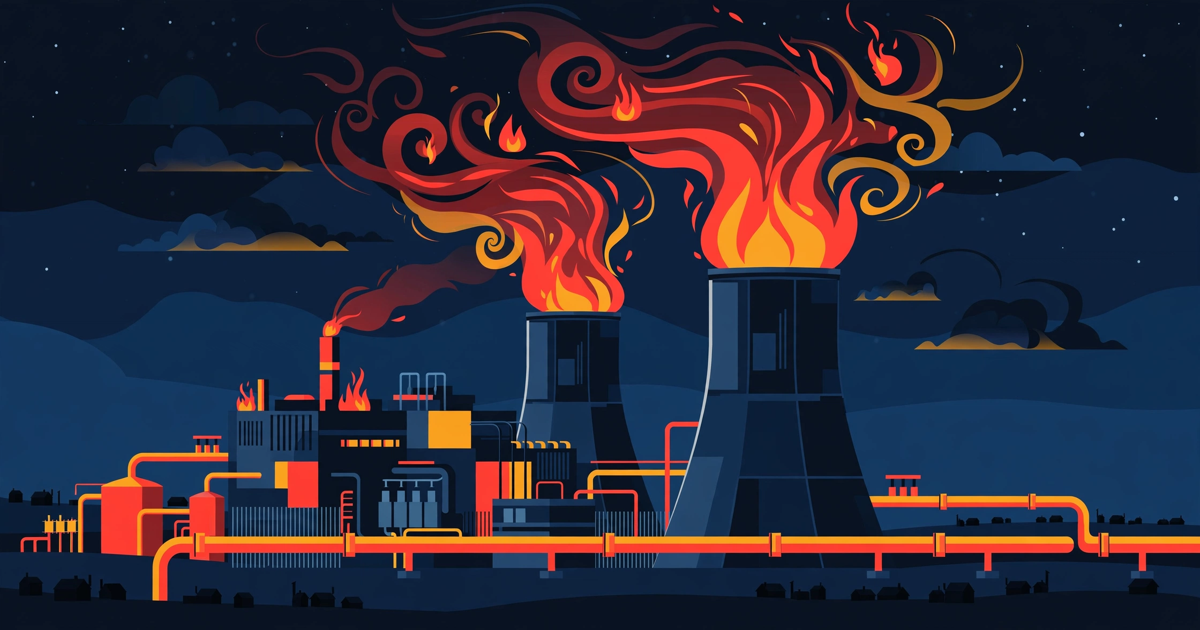
The Basra power station explosion killed at least four people and injured at least 30 after a gas pipeline feeding the Hartha power station caught fire on Saturday morning, 21 November 2026, according to the latest official toll carried by Iraq's state news agency INA and reported by Al Jazeera. The fire has been brought under control, according to INA via Al Jazeera, and the cause has not been officially confirmed.
Hartha sits about 20 kilometres north of Basra city, according to Reuters and The National. The blast was in a gas pipeline feeding the station. The people hurt mostly lived next door.
Basra power station explosion: what happened at Hartha?
Civil defence teams began fighting the fire at about 6 a.m. inside the station, according to 964media. The fire spread to neighbouring houses, portable cabins and informal homes, according to 964media and The National. Station operations stopped.
By later on Saturday, the fire was out. INA said the Civil Defence Directorate had brought the fire under control at Hartha and at the neighbouring houses, according to Al Jazeera. 964media reported the fire put out, the spread stopped and the site secured. Hartha police and the 83rd Mechanized unit cordoned the site, according to 964media.
The National reported crews battled the blaze for several hours, and dozens of homes and vehicles were damaged. A pipeline fire does not stay a pipeline fire when homes sit beside it.
How many people were killed and injured?
The figures moved through the day, and each step needs its source attached. The first count was a preliminary one. The Basra Health Directorate put the early toll at two dead and 28 injured, according to INA via 964media.
Reuters, citing security officials, then reported at least four killed and 30 injured. Australian Associated Press, carried by Port Macquarie News, reported the same four killed and 30 injured. Those two outlets agree on the floor, so this article uses at least four killed and at least 30 injured as the verified minimum.
The latest official update goes one step further on injuries. Al Jazeera, citing INA, reported four dead and 35 injured. 964media, citing the Interior Ministry and a statement from the Commander-in-Chief's office, also reported four dead and 35 injured. The National reported four killed and 35 injured and said the toll was expected to rise. Three separate reports carrying official sources point to 35 injured. Treat 30 as the earlier floor and 35 as the later official count, not as a final total.
The Interior Ministry, via 964media, said the count was preliminary and not final. The injuries were burns and smoke inhalation, according to the Interior Ministry via 964media. Most of the victims lived in informal homes next to the station, according to the Interior Ministry via 964media. No victim names have been published by officials in the reports read for this article, and none are given here.
Shafaq News reported eight dead and more than 30 injured, citing a single local source. Reuters and the later official update did not corroborate that figure. Until officials confirm it, it stays an unconfirmed outlier.
Do officials know what caused the explosion?
Not yet. Al Jazeera reported the cause was yet to be confirmed. The National reported the exact cause was not immediately clear. 964media reported an investigation was under way. Prime Minister Ali Al Zaidi ordered an urgent investigation and urgent measures, according to INA via 964media and Al Jazeera.
Claims circulating on social media about how the pipeline failed have not been confirmed by officials in the reports read for this article. We took the same line after the Tbilisi gas explosion in Ponichala, the Glace Bay explosion in Nova Scotia and the Clean Harbors explosion in Texas: confirm what officials confirm, leave the rest open.
What is the Hartha power station?
Hartha is a power station north of Basra, fed by a gas pipeline, according to Reuters, Al Jazeera and The National. Its capacity is reported two ways: 800 megawatts according to Al Jazeera and Australian Associated Press, 1,400 megawatts according to The National. The reports do not reconcile them.
The reports agree on the layout that made Saturday dangerous: portable cabins and informal housing sat next to an industrial gas line, according to 964media and the Interior Ministry via 964media. There was no empty buffer to absorb the heat.
If a gas pipeline or plant fire breaks out near your home, what should you do?
Get out and stay out. Do not go back for belongings. A gas fire can flare again, and damaged structures stay dangerous after the flames drop.
- Leave by the nearest safe route, away from the plant and away from smoke. Follow the route officials direct you to, not a shortcut.
- Call your local emergency number from a safe place outside. Give the location, what you saw, and whether anyone may still be inside.
- If you smell gas, do not touch electrical switches, do not light flames, and do not use a phone next to the leak. Move away first, then call.
- For burns or smoke inhalation, move to fresh air and seek medical help. Tell the clinician what you breathed in.
- Wait for officials to say the area is safe before returning. A fire that looks out can still leave hot debris and unstable structures.
Our guide to carbon monoxide safety at home explains the alarm that warns you when fuel burns badly indoors. Our guide to wildfire evacuation covers leaving early and knowing two ways out. The fuel is different. The minutes are the same.
What our records show, and what they miss
Our incident records show this event arriving in pieces. By Saturday afternoon the site held more than twenty records for the same Hartha fire, most of them duplicates with different tolls — two dead in one, four in another, eight in a third. Read together, they show a toll being revised as officials replaced a preliminary count with a later one.
The records capture the hard edges well: Hartha, Saturday morning, a gas pipeline, a fire under control. They capture the mechanism poorly, because officials have not confirmed one. They also flatten why the toll fell on neighbours: informal homes beside a gas line are the risk, and no single record says that plainly.
The capacity disagreement is the same problem in miniature. A record can carry a number without its source. This article attributes every figure, and uses at least four killed and at least 30 injured as the floor Reuters and Australian Associated Press both support, with 35 injured as the later official count. The investigation ordered by the prime minister, according to INA, will matter more than any early theory. For now the cause stays open.
The short version
- A gas pipeline feeding the Hartha power station north of Basra exploded and caught fire on Saturday 21 November 2026, according to Reuters, Al Jazeera and The National.
- At least four people were killed and at least 30 injured, according to Reuters and Australian Associated Press; the later official update carried by Al Jazeera, 964media and The National put injuries at 35.
- Most victims lived in informal homes next to the station, and injuries were burns and smoke inhalation, according to the Interior Ministry via 964media.
- Civil defence brought the fire under control, according to INA via Al Jazeera; the cause is not officially confirmed and an urgent investigation was ordered, according to INA.
- If a gas fire breaks out near you: leave, do not touch switches or flames if you smell gas, call emergency services from outside, and do not return until officials say it is safe.
Sources: Al Jazeera; The National; Reuters; 964media.