A brazil supercell storm tore through Tupanciretã in Rio Grande do Sul early on Friday 20 November 2026, killing at least three people and damaging at least 5,000 homes, according to Reuters reporting of the state Civil Defense count. Brazil's National Meteorological Institute (Inmet) recorded gusts of 114 kilometres per hour, according to Reuters, and the Civil Defense said a supercell caused the extreme weather. At least 60 people were injured, according to regional authorities reported early on Saturday, with a later count putting the injured higher.
By Saturday residents were clearing rubble and patching roofs. The figures are still moving. What follows sets out what officials and two major agencies confirmed, where counts differ, and what to do in this kind of storm.
What happened in the brazil supercell storm?
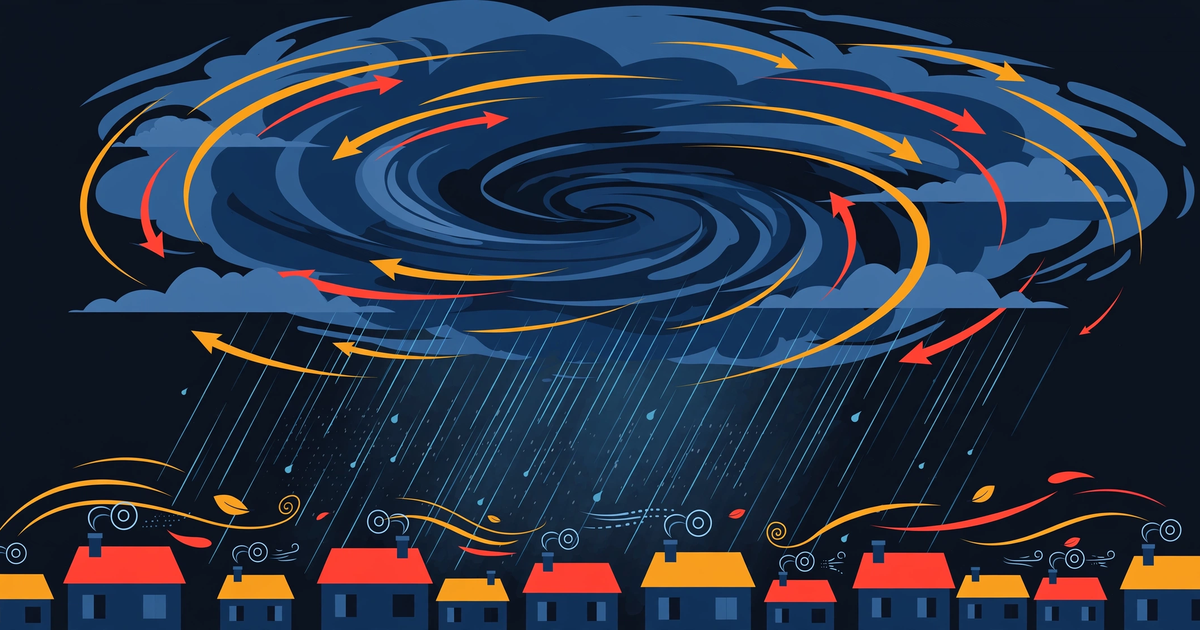
The storm hit Tupanciretã, an agricultural town in Brazil's southernmost state, early on Friday, according to Reuters. Inmet measured gusts of 114 kilometres per hour (71 mph), according to Reuters, and the Civil Defense attributed the damage to a supercell, a thunderstorm built around a rotating updraft.
AFP described residents picking through wrecked homes and climbing onto roofs to make temporary repairs. Reuters reported drone footage showing bent beams and tiles torn from a church roof. Neither agency described a confirmed tornado. The confirmed picture is violent wind and rain, arriving while most people were asleep.
Tupanciretã was not alone. The Civil Defense recorded 32 damage incidents in 28 municipalities, according to regional reporting. São Domingos do Sul had more than 1,430 people affected and Lagoa Vermelha about 820, according to the same reporting, with power cuts and blocked roads complicating the response. Our coverage of the California atmospheric river storm and the South Florida flooding shows the same pattern: the first count is a floor, not a total.
How many people were killed or injured?
At least three people died, according to Reuters, AFP and regional reporting. Vice Governor Gabriel Souza said a fourth death was being investigated, according to Reuters. It is not confirmed, so it is not counted here.
The injured count is where sources part company. Early regional reporting put the injured at 60, according to regional authorities. AFP later put the injured at 162. The gap is the kind that opens while hospital lists are still being compiled. Where sources disagree we use the lower figure: at least 60 injured, with AFP reporting 162. No victim names are given, because the sources checked carried no official identifications meeting our standard.
Homes tell a similar story. The Civil Defense count via Reuters is at least 5,000 homes damaged. Regional authorities put serious destruction at about 8,000 of 8,600 houses, according to regional reporting. We use the floor: at least 5,000 damaged, with local authorities estimating far more.
What is a supercell, and why does it do so much damage?
A supercell is a thunderstorm with a rotating updraft that lets it keep going for up to several hours, according to the NOAA National Severe Storms Laboratory. Ordinary thunderstorms pulse and fade. A supercell sustains itself, which is why it can produce severe weather over a wide path, according to NOAA.
Supercells can produce high winds, large hail and strong tornadoes, according to NOAA. Not every supercell produces a tornado, and the Tupanciretã sources confirm wind and rain damage without confirming one. Wind alone at 114 kilometres per hour, according to Inmet via Reuters, will strip roofs and bring down power lines.
A severe thunderstorm means hail of one inch or larger or gusts over 58 mph, according to the National Weather Service. Tupanciretã's 71 mph gust, according to Inmet via Reuters, sits well above that threshold — severe on wind alone.
What is the response, and what happens next?
Governor Eduardo Leite ordered a joint Civil Defense, fire service and military deployment, according to regional reporting. Two million reais was authorised at once for machinery and equipment, with seven million allocated in total, according to the same reporting. A further five million through Volta por Clima would pay up to 2,500 reais per affected low-income family, according to regional reporting.
Firefighters spent the early hours of Saturday bringing food and water to animals left at the municipal shelter, according to Reuters. Residents salvaged what the water had not ruined and covered what they could, according to AFP. If you must leave a damaged home, our guide to wildfire evacuation: leave early covers the same decisions — documents, medicines, chargers, pets.
More weather may follow. The Civil Defense kept alerts active for heavy rain, possible hail and strong gusts, with a high flood risk elsewhere, according to regional reporting. Weakened roofs then meet the next band of rain. Power cuts add a second risk. Never run a generator indoors, as our carbon monoxide safety guide explains, and treat anyone who collapses while clearing up as our first aid for fainting guide sets out.
What should you do in a supercell or severe thunderstorm?
Go inside a sturdy building, according to the National Weather Service. Move to an interior room or basement, away from windows. In a mobile home, move to a sturdy building before winds pick up, according to the National Weather Service. Keep away from trees and fallen power lines, which may be live.
Driving needs the same caution. Hold the steering wheel with both hands and slow down, according to the National Weather Service. Afterwards, stay informed until officials say the threat has passed. The Tupanciretã storm arrived early on a Friday morning, according to Reuters. The lesson that travels — to the United States, the United Kingdom and Europe — is that the warning only helps if the shelter decision is made before the wind arrives.
What our records show, and what they miss
Our records will carry Tupanciretã as a place, a date and a gust figure. That captures the meteorology and misses the recovery. The records do not show the injured count moving from 60 to 162, or the homes floor of 5,000 against a local estimate of about 8,000. They do not show the fourth death under investigation, according to the vice governor via Reuters, because an unconfirmed death should not become a statistic.
They also flatten geography. Thirty-two incidents in 28 municipalities, according to the Civil Defense tally, reads as one line. On the ground each town had its own road, power and hospital problems. If officials revise the figures, the record should change with them. Until then: at least three dead, at least 60 injured with AFP reporting 162, at least 5,000 homes damaged according to the Civil Defense, gusts of 114 kilometres per hour according to Inmet.
Sources: Reuters, 21 November 2026 (Inmet and Civil Defense); AFP via NAMPA, 21 November 2026; regional reporting of state authorities; NOAA and National Weather Service guidance. Where figures differed, we used the lower with "at least".
The short version
- At least three dead in Tupanciretã. The brazil supercell storm hit early on Friday 20 November 2026; a fourth death was being investigated, according to Vice Governor Gabriel Souza via Reuters.
- At least 60 injured, AFP reports 162. Early regional reporting put the injured at 60; AFP later put the figure at 162. We use the lower number as the floor.
- At least 5,000 homes damaged. That is the Civil Defense count via Reuters; regional authorities estimated serious destruction at about 8,000 of 8,600 houses.
- Gusts of 114 km/h from a supercell. Inmet recorded 114 kilometres per hour (71 mph), according to Reuters, and the Civil Defense attributed the storm to a supercell.
- Shelter inside, away from windows. That is the National Weather Service guidance for high wind and severe thunderstorms; keep clear of trees and fallen power lines afterwards.