Lightning safety: when thunder roars, go indoors
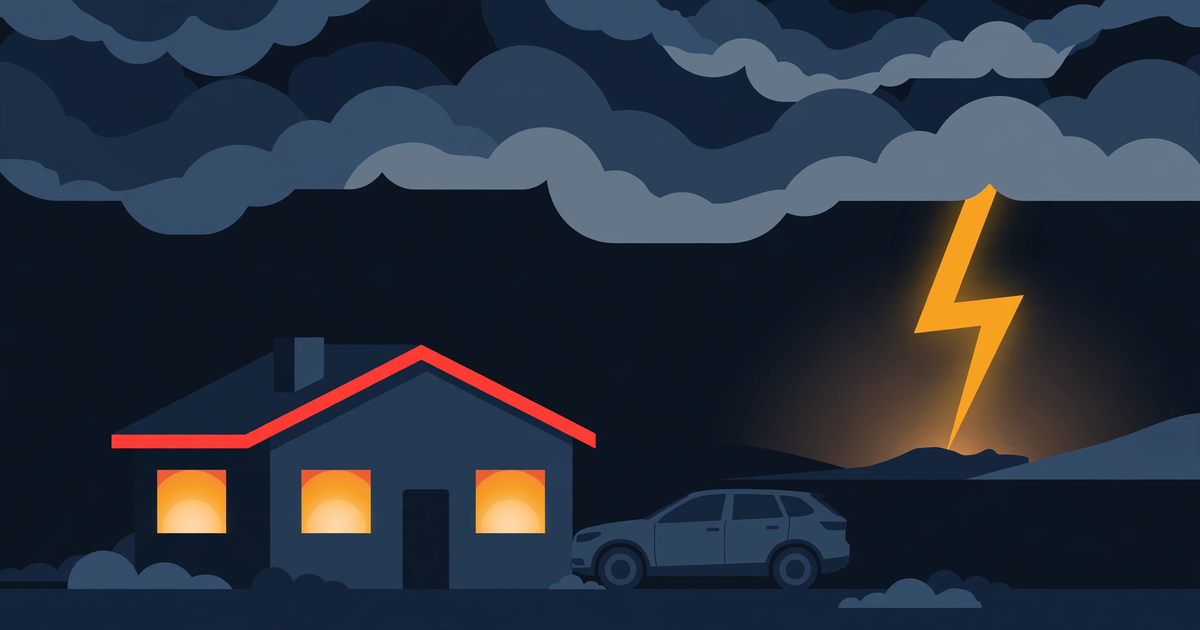
One rule does most of the work with lightning safety, and the National Weather Service has used the same sentence for years because it is easy to remember and because it is true: when thunder roars, go indoors. Lightning is one of the few weather dangers where a simple rule covers almost everything. Most lightning injuries happen to people who stayed outside a little too long — finishing the game, packing up the picnic, walking the dog for five more minutes while the sky darkened.
The rule is not about the rain. It is about the sound. If you can hear thunder, you are close enough to be struck by lightning. The National Weather Service is explicit: lightning can strike more than 10 miles away from the centre of a thunderstorm, well beyond the audible range of thunder — so hearing thunder means the storm is already within striking range. You do not need to see the lightning. You do not need to feel rain. Thunder is the warning.
So the first move is immediate, not gradual: at the first rumble of thunder, get into a fully enclosed building or a hard-top vehicle. Do not wait for the storm to arrive overhead, do not finish what you are doing first, and do not watch the sky to judge how close it is. The storm does not send a second warning.
What counts as safe shelter
Safe shelter is specific, and it is narrower than most people think. A fully enclosed building with plumbing and electrical wiring is safe shelter — the wiring and plumbing give the lightning a path to the ground that does not go through you. A hard-topped metal vehicle with the windows closed is also safe shelter, for the same reason: the metal shell carries the charge around the people inside, not through them.
What does not count: a tent, a picnic shelter, a bus stop, a porch, a carport, or any open structure. A convertible with the top down is not safe shelter. A shed with no wiring is not safe shelter. The National Weather Service puts it without exception — no place outside is safe when a thunderstorm is in the area, and a partial shelter is not shelter at all. The shelter logic overlaps with our tornado safety guide — get inside a sturdy building first, then worry about the details.
The 30-minute rule
Getting inside is only half the rule. The other half is staying inside: wait 30 minutes after the last sound of thunder before going back outdoors. The trailing clouds of a storm still carry a charge after the heavy rain stops, and they can still produce lightning on the back edge of the storm — sometimes several minutes after the rain has ended. People are struck because they went back outside while the storm was still close, not because they stayed out through the worst of it.
There is a second rule that goes with it, the 30-30 rule. After you see lightning, count the seconds until you hear the thunder. If you cannot count to 30 before the thunder comes, the storm is close enough to be dangerous — go inside at once. Then stay inside for 30 minutes after the last thunder. Thirty seconds in, thirty minutes out. Both numbers are worth memorising, because they are the only measuring tools you need.
Caught outside with no shelter
Sometimes there is no building and no car — a hike, a field, a boat, a beach. The first thing to know is that nothing you do outside makes you safe. There is no safe position outdoors in a thunderstorm. What follows is only about reducing the risk while you get to shelter as fast as you can.
Get off high ground and away from water. Lightning seeks the highest point and travels easily across water, so a hilltop, a ridge, a lakeshore or the water itself are the worst places to be. Avoid isolated trees — a lone tree is a lightning rod, and sheltering under one is one of the most dangerous choices you can make. Avoid metal objects too: fences, poles, tools, and anything you are carrying that conducts. Thunderstorm rain can also push water indoors fast — our guide on what to do when floodwater comes inside covers that side of the storm.
As a last resort only, crouch low with your feet together, your head tucked down, and your ears covered — and keep moving toward shelter as soon as you can. Crouching does not make you safe. It only makes you smaller while you are exposed. The real answer is always the same: get inside, or get into a hard-top vehicle.
Inside: what to avoid during the storm
Being inside a safe building is not the end of it. Lightning travels through wiring and plumbing, so during the storm, stay away from windows and doors, and avoid water taps, showers and baths, and electrical equipment — corded phones, plugged-in appliances, computers on mains power. The strike does not need to hit your house to reach you through its wires and pipes. It is the same home-safety habit as keeping smoke alarms working and a fire escape plan ready — know the risk before you need the plan.
If you are in a car when the storm hits, pull over in a safe place away from trees and power lines, close the windows, and wait it out inside the vehicle. Do not touch metal parts — the steering wheel, the radio, the door handles — during the storm. The car is your shelter; the wait is the price of it. A winter car emergency kit helps if the wait turns into a longer stop.
If someone is struck
Lightning victims do not carry a charge. They are safe to touch, and the old fear that you will be shocked by touching them is wrong — it has cost lives by making bystanders hesitate. If someone near you is struck, go to them as soon as it is safe to do so, and call your local emergency number at once.
If the person is not breathing normally, start CPR — the hands-only CPR guide on this site covers the compressions. Lightning often stops the heart and the breathing together, and CPR started quickly is what brings people back. If they are breathing, keep them still, keep them warm, and watch them until help arrives. A person who has been struck needs medical attention even if they seem fine — internal injuries are not always visible, and the heart can stop again.
What our records show, and what they miss
Our records log lightning and thunderstorm incidents — where they happened, what warnings were in force, and what followed. They show the pattern the guidance warns about: people caught outside when a storm was close. What they miss is the part that matters most: whether anyone heard the thunder in time, whether safe shelter was nearby, and how long they waited after the last rumble. No record answers that, so the rule has to be learned before the storm, not during it.
The short version
- When thunder roars, go indoors — if you can hear thunder, you are close enough to be struck.
- Safe shelter is a fully enclosed building with plumbing and wiring, or a hard-topped metal vehicle with the windows closed.
- No place outside is safe in a thunderstorm — not a tent, a porch, a picnic shelter or a carport.
- Wait 30 minutes after the last thunder before going back outside, and restart the clock every time you hear thunder again.
- The 30-30 rule: if you cannot count to 30 between lightning and thunder, the storm is dangerously close — go inside at once.
- Lightning can strike more than 10 miles from the centre of the storm, well beyond the sound of thunder.
- Caught outside, avoid water, isolated trees and metal; never shelter under a lone tree; crouch low only as a last resort.
- Indoors, stay away from windows and doors and avoid water taps and electrical equipment during the storm.
- Lightning victims do not carry a charge — call for help and start CPR if they are not breathing normally.