Stroke signs come on suddenly — that word matters
Stroke signs do not build up over a day. They arrive. One minute the person is making tea and talking normally; the next, one side of the mouth will not lift, an arm feels heavy and strange, or a simple sentence comes out tangled. The Centers for Disease Control and Prevention (CDC) lists the warning signs the same way every time, and the word it repeats is sudden: sudden numbness or weakness in the face, arm or leg, especially on one side of the body; sudden confusion or trouble speaking; sudden trouble seeing; sudden dizziness or loss of balance; a sudden severe headache with no known cause.
That suddenness is the clue. Tiredness creeps. A stroke switches. If someone was fine a moment ago and now cannot do something ordinary — smile evenly, hold both arms up, say a short phrase clearly — treat it as an emergency until a professional tells you otherwise.
How do you run the FAST check?
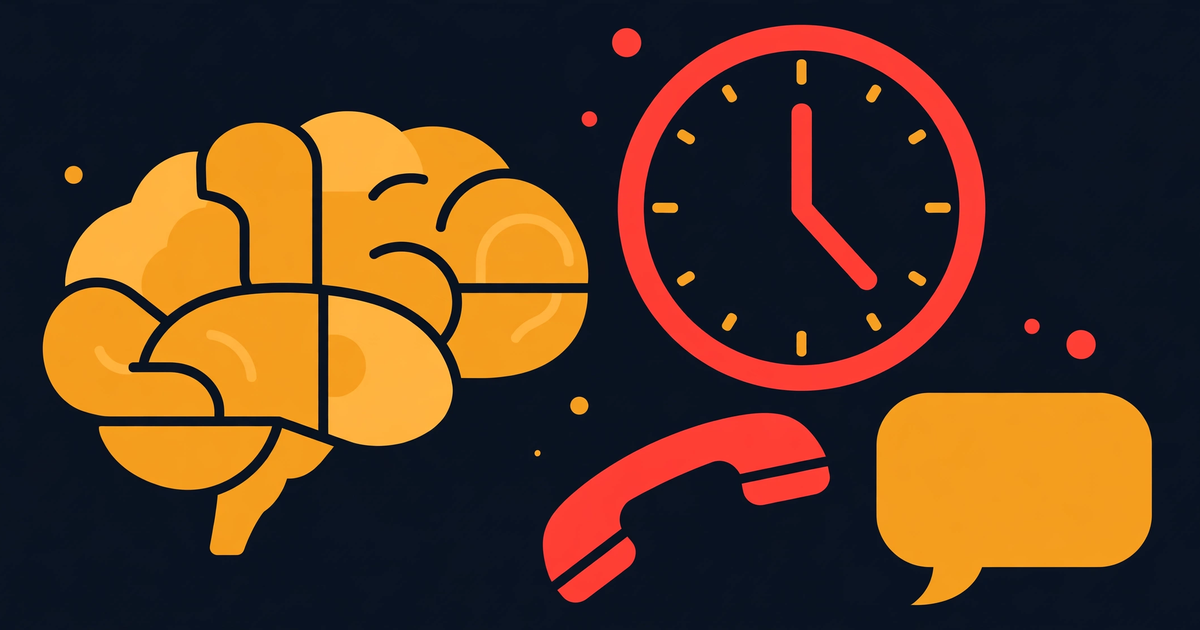
The FAST check exists because nobody remembers a medical list under pressure. Four letters, three quick tests, one decision. Mayo Clinic and the American Heart Association teach it the same way, and it takes less than a minute.
F — Face. Ask the person to smile. Does one side of the face droop? A smile that is crooked, or a mouth that only lifts on one side, is a warning sign. So is sudden numbness on one side of the face.
A — Arms. Ask them to raise both arms and hold them up. Does one arm drift downward, or feel weak or numb? One arm that will not stay where it was put is a warning sign, even if the person insists it is nothing.
S — Speech. Ask them to repeat a simple phrase — "the sky is blue" is the one often used. Is the speech slurred, strange, or hard to understand? Can they get the words out at all? Trouble understanding what you say counts too.
T — Time. If you see any of these signs, call your local emergency number right away. Not after a cup of tea. Not after seeing whether it passes. Right away — and note the time the symptoms first appeared, because the emergency team will ask, and the answer shapes what treatment is possible.
What about balance and eyes?
FAST covers the signs people miss most often, but it is not the whole list. The CDC now teaches B.E. F.A.S.T., adding two more sudden changes to watch for: balance loss — sudden dizziness, trouble walking, or loss of coordination — and eye or vision changes, such as sudden trouble seeing in one or both eyes. Add a sudden severe headache with no known cause, and sudden confusion, and you have the full picture. Any one of them, arriving suddenly, is enough to make the call.
Why does the clock matter so much?
Because treatment has a window, and the window is short. According to the CDC, the stroke treatments that work best are available only if the stroke is recognised and diagnosed within 3 hours of the first symptoms. That single fact explains every instruction in this guide. Minutes spent hoping it will pass are minutes taken from that window. The American Heart Association puts it plainly: fast treatment at hospital can have better results — and that treatment can only start once the person is on the way.
This is also why noting the time matters. "When did it start?" is one of the first questions the emergency team asks. If you can say "the smile went crooked at about ten past nine," you have given them something they cannot reconstruct later. Write it down, or say it out loud to someone else in the room so it is not lost.
What should you do while help is coming?
Keep the person safe and still. Sit them down or lay them down somewhere comfortable, loosen tight clothing, and stay with them. Give nothing to eat or drink — swallowing can be affected, and food or water can go the wrong way. Do not give any medicine unless emergency professionals direct it.
Do not drive them yourself if an ambulance is coming. It feels faster. It usually is not, and it loses something important: paramedics can begin assessing and treating on the way, and the hospital can be ready before the doors open. Your job is the call, the time note, and keeping the person calm and still until help arrives. Pale, clammy skin can overlap with shock after an injury — our shock first aid guide explains how to tell the difference. And if the sudden weakness caused a fall with heavy bleeding, press firmly and keep pressure on — see our severe bleeding guide.
If the person becomes unresponsive and is not breathing normally, start CPR — the hands-only CPR guide on this site covers the compressions. Tell the emergency operator what has changed; they will stay on the line and talk you through it.
What if the signs go away?
Call anyway. Signs that fade within minutes can still mean a stroke or a warning of one to come, and only medical assessment can tell the difference. "It passed" is not the same as "it was nothing." A brief faint that passes on its own is a different pattern — our first aid for fainting guide covers that — but stroke signs that fade still need the emergency call, the time noted, and the person kept still and watched until professionals take over.
What our records show, and what they miss
Our incident records log medical emergencies by place and time, but they rarely capture the first minutes — who noticed the crooked smile, whether anyone ran the FAST check, how long passed before the call. The records show the emergency; they miss the bystander. Yet that bystander, with four letters and a phone, is where the 3-hour window is won or lost. No database can do that part. It has to be learned before it is needed — which is why this guide sits alongside our other first-aid guides in articles and reports.
The short version
- Stroke signs arrive suddenly: face drooping, arm weakness, slurred speech, vision trouble, balance loss, confusion, or a sudden severe headache.
- Run FAST: smile (face), raise both arms (arms), repeat a simple phrase (speech) — any failure means call your local emergency number at once (time).
- Note the time symptoms first appeared and tell the emergency team — the best treatments depend on quick recognition, within 3 hours according to CDC.
- Keep the person safe and still, loosen tight clothing, give nothing to eat or drink.
- Do not drive them yourself if an ambulance is coming; treatment can begin on the way.
- Call even if the signs go away — only medical assessment can rule a stroke out.
- If the person is unresponsive and not breathing normally, start CPR.