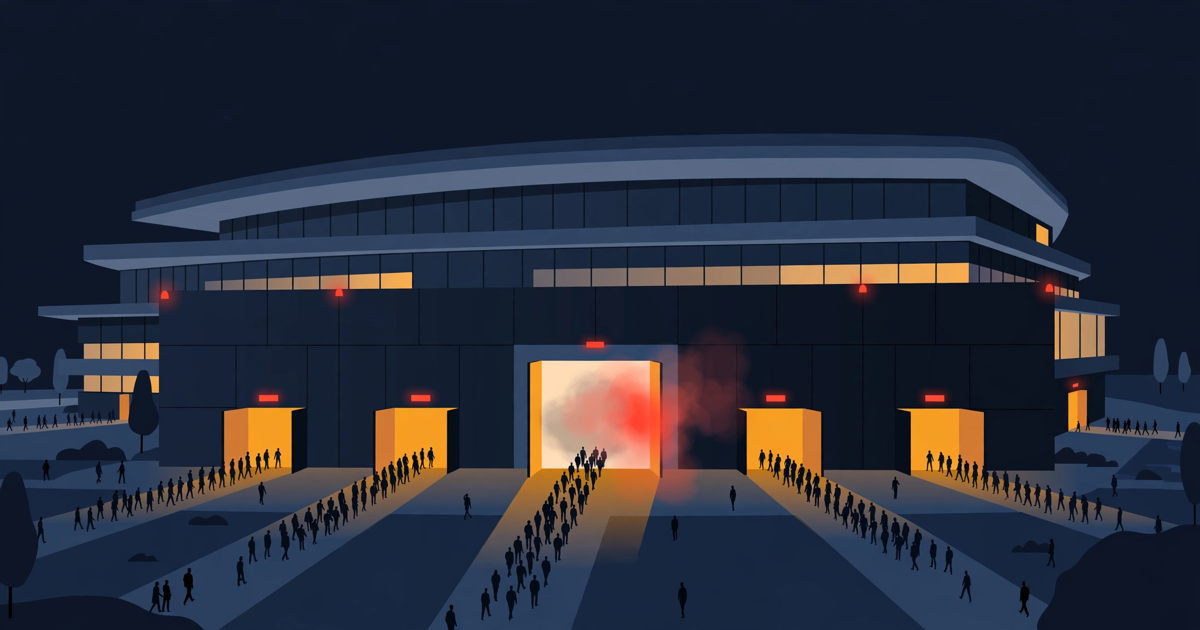
Police declared a major incident and emptied Britain's largest indoor arena on Sunday night after a substance believed to be tear gas was let off in the crowd. The manchester co-op live evacuation began at about 10 p.m. on 22 November 2026, during a concert by the American rapper Don Toliver, and Greater Manchester Police said no serious injuries had been reported.
Everyone inside was moved out as a precaution, and people who showed signs of being affected were supported by emergency services at the scene, according to police. What the substance actually was, and who let it off, has not been established.
What happened during the manchester co-op live evacuation?
Don Toliver, 32, was performing his NITROUS show at Co-op Live in Manchester on Sunday evening. Fans had been able to enter from 6.30 p.m., according to the Manchester Evening News. Witnesses said the standing area was cleared at around 10 p.m. while Toliver was on the venue's B stage, towards the end of the concert.
Footage online showed concert-goers coughing and rubbing their eyes as they left. Attendees told the Manchester Evening News a smoke canister had been thrown into the crowd. An announcement ended the show and directed anyone needing medical help to staff or the Level 0 concourse.
In a statement published at 23:23 GMT on 22 November, Greater Manchester Police said it was understood that a substance believed to be tear gas was let off in the crowd towards the end of the concert. Officers and other emergency services personnel were at the arena, all attendees were being safely evacuated as a precaution, and those showing signs of being impacted were being supported, with no serious injuries reported. The full police statement was carried by The Sun and LADbible.
Police asked the public to stay away while emergency services helped concert-goers reach their transport home, and said a major incident had been declared so agencies could coordinate a safe response. The Manchester Evening News reported shortly after midnight that the arena was closed off with police still outside.
Why declare a major incident if nobody was seriously hurt?
A major incident declaration is about coordination, not casualty numbers. It lets police, ambulance, fire and venue teams work to one plan and control the area around the building. Co-op Live holds 23,500 people, making it the largest indoor arena in the United Kingdom, and moving that many people out at night without a crush at the doors is itself the operation.
Was it really tear gas?
That is not confirmed. Greater Manchester Police used careful wording: a substance believed to be tear gas. Witnesses described a smoke canister. Those accounts can both describe the same device, but neither identifies the chemical.
Police had not announced any arrests as of early Monday, and neither Co-op Live nor the North West Ambulance Service had issued its own statement. Until testing settles it, the honest description is a suspected irritant released in a crowd. Symptoms at the scene fit an irritant, but symptoms alone cannot name a substance.
What does tear gas do to people?
Tear gas, usually CS gas in the UK context, is an irritant rather than a true gas. According to the UK Health Security Agency's CS gas general information, exposure causes intense tear production, eye pain, chest tightness, coughing and sneezing. Skin contact can bring burning and stinging, with possible redness and blistering.
The effects are usually short-lived. According to UKHSA, people usually recover within 15 to 30 minutes after a brief exposure, though redness may last a few hours. The US Centers for Disease Control and Prevention gives a similar picture for riot control agents.
According to UKHSA, exposure to large amounts in a confined space over a long time may result in lung damage, and people with asthma or other breathing conditions face a worse version of the same exposure. Getting everyone into fresh air quickly was therefore the right first move.
What should you do if you are exposed to tear gas?
Official advice is consistent across UK and US guidance:
- Get to fresh air. Leave the confined space. According to UKHSA, CS gas disperses in fresh air within a few minutes and complete recovery should be rapid.
- Do not rub your eyes. Rubbing can make symptoms worse, according to UKHSA.
- Do not wash skin straight away. Water immediately after exposure may spread CS around the body, according to UKHSA. Blot exposed skin gently with dry, absorbent material instead.
- Remove contact lenses and irrigate affected eyes with lukewarm water for at least 10 to 15 minutes if symptoms persist, according to UKHSA.
- Remove contaminated clothing without pulling it over your head, and seal it in a plastic bag, according to UKHSA.
- Seek medical advice if symptoms last longer than 30 minutes, or sooner if breathing is difficult, according to UKHSA and the CDC.
What makes a concert evacuation safe or dangerous?
The gas was only part of the risk. In a packed arena the dangerous moment is the movement: thousands heading for the same exits at once, some coughing with streaming eyes. Calm, directed movement prevents a crush.
Three things helped here: the show was stopped rather than paused, staff named a place to get medical help, and police kept the area outside clear. Those are the same principles behind any good evacuation plan. Our guide to smoke alarms and a home fire escape plan covers the household version, and leaving early in a wildfire evacuation covers the decision-making side.
For anyone attending large events: note your nearest exit on arrival, agree an outside meeting point, and move first when told to evacuate. If someone near you collapses, basic first aid buys time — see first aid for fainting and stopping severe bleeding.
What happens next?
Greater Manchester Police's Sunday night statement remained its latest update early on Monday. For now the verified facts are narrow but clear: a suspected irritant was released in a crowd of thousands, the arena was emptied, and nobody was reported seriously injured.
What our records show, and what they miss
Our incident records track official warnings and verified events, and a concert evacuation sits at the edge of what they capture. They record the emergency response well but are weaker on the hours afterwards, when a substance is identified or arrests are made, because those follow-ups rarely trigger a fresh alert.
The gap matters for readers. The first reports said tear gas; the police said believed to be tear gas; witnesses said smoke canister. If the substance turns out to be something else, the correction will travel more slowly than the original claim. We will update this article if police confirm the substance or announce arrests. Indoor venues turn small releases into building-wide incidents, and exits, announcements and outside space matter as much as door searches. Related reading: carbon monoxide safety at home and lightning safety when thunder roars.
The short version
- Co-op Live in Manchester was evacuated at about 10 p.m. on Sunday 22 November after a substance believed to be tear gas was let off in the crowd during Don Toliver's concert, according to Greater Manchester Police.
- Police declared a major incident to coordinate the response; all attendees were evacuated as a precaution and no serious injuries were reported.
- The substance has not been confirmed and no arrests had been announced as of early Monday; witnesses described a smoke canister.
- According to UKHSA, CS gas effects usually ease within 15 to 30 minutes in fresh air; do not rub eyes, and seek medical advice if symptoms persist beyond 30 minutes.
- At any large event, note your nearest exit on arrival, agree an outside meeting point, and move promptly when told to evacuate.